
The God of War franchise is one of gaming’s most fascinating narrative evolutions. What began as a brutal revenge story rooted in Greek mythology gradually transformed into an emotionally layered saga about fatherhood, regret, and redemption. Across multiple console generations, players have followed Kratos from a rage-driven warrior to a deeply introspective character trying to break the cycle of violence.
Not every entry contributes equally to that journey. Some games prioritize spectacle over storytelling, while others push the character and themes into new territory. Ranking the God of War games by story is less about which game is “better” overall and more about which one delivers the most meaningful narrative experience.
Let’s break down each major title, expanding on how they handle character development, themes, and emotional impact, and determine which truly stand out.
7. God of War: Ascension
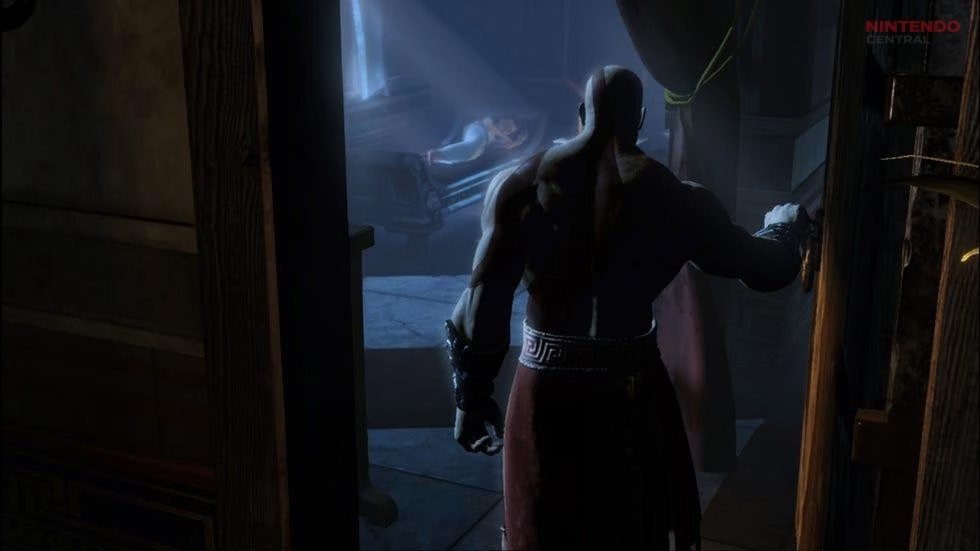
God of War: Ascension attempts to explore one of the most psychologically interesting phases of Kratos’ life, the period immediately after he breaks his oath to Ares. On paper, this should have been a powerful story. It deals with guilt, punishment, and the consequences of defying a god.
However, the execution struggles to deliver emotional clarity. The narrative structure jumps between timelines, blending past memories with present events in a way that often feels disjointed. Instead of building tension, these shifts dilute the impact of key moments. The Furies, who serve as the main antagonists, are conceptually interesting but lack the depth needed to make their conflict with Kratos truly compelling.
Another major issue is character progression. Kratos remains largely static throughout the game. While there are glimpses of internal conflict, they never fully develop into meaningful growth. Compared to later entries, where his personality evolves significantly, Ascension feels like it is treading water.
That said, the game still contributes to the broader lore. It reinforces the idea that Kratos is trapped in a cycle of punishment and violence, a theme that becomes crucial in later stories. But as a standalone narrative, it lacks cohesion and emotional weight, placing it at the bottom of the list.
6. God of War: Chains of Olympus
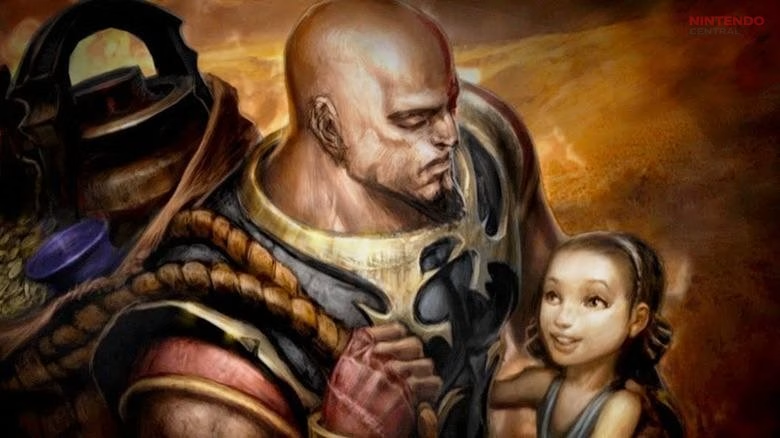
Chains of Olympus is a much more focused story compared to Ascension, and it succeeds in delivering one of the earliest emotional breakthroughs in the series. Set during Kratos’ servitude to the gods, the game explores his internal struggle between duty and personal desire.
The standout element is his relationship with his daughter, Calliope. When Kratos is given the chance to reunite with her in a dreamlike afterlife, the story reaches a level of emotional depth rarely seen in the early games. His eventual decision to abandon that illusion and return to his duty is genuinely tragic.
This moment hints at the more introspective storytelling that would define the Norse era. It shows that Kratos is capable of more than just rage. He is a character burdened by loss, constantly forced to sacrifice what little happiness he has.
However, the rest of the narrative remains relatively simple. The conflict with Persephone and Atlas is engaging but not particularly complex. The story does not significantly push the overarching plot forward, and its themes are not explored as deeply as they could be.
Even so, Chains of Olympus deserves recognition for planting the seeds of emotional storytelling. It proves that the series could go beyond action and spectacle, even if it does not fully realize that potential.
5. God of War
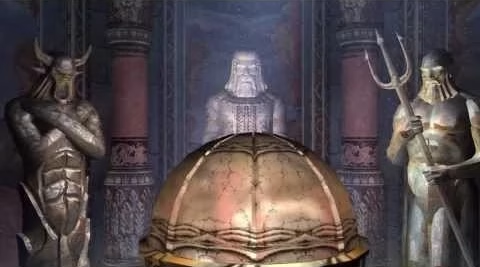
The original God of War lays the foundation for everything that follows. Its story is simple but effective, centered on Kratos’ quest for revenge against Ares after being manipulated into killing his own family.
What makes this narrative impactful is its clarity. The motivation is straightforward, but the emotional core is strong. Kratos is not just seeking revenge. He is trying to escape the guilt that defines his existence. This gives the story a tragic undertone that elevates it beyond a typical action plot.
The game also introduces key elements of the franchise’s identity, including its use of mythology and its focus on larger-than-life conflicts. Ares serves as a powerful antagonist, embodying the chaos and destruction that Kratos himself represents.
While the storytelling is not particularly nuanced, it is effective in establishing Kratos as a compelling protagonist. His pain and anger are easy to understand, even if they are not deeply explored.
In many ways, this game is the blueprint for the Greek saga. It may lack the complexity of later entries, but it remains one of the most important stories in the series.
4. God of War III
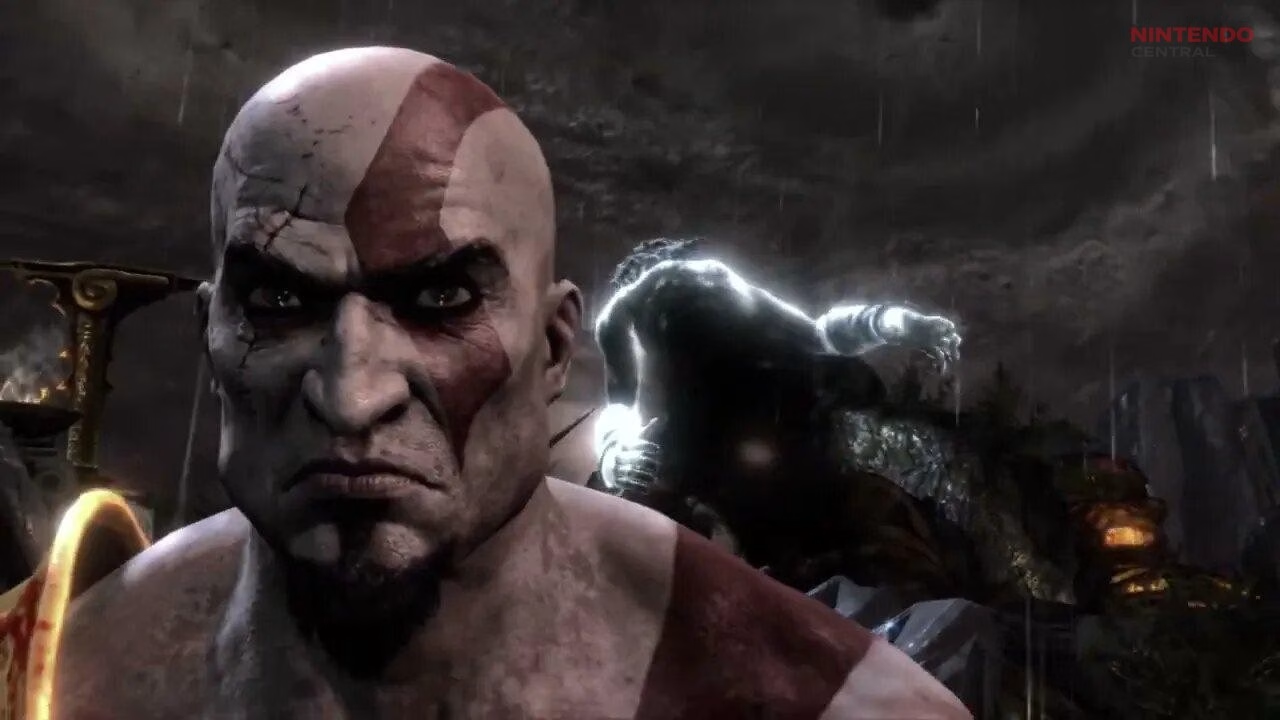
God of War III is the explosive conclusion to the Greek saga, and it delivers on spectacle in a way few games can match. The scale is massive, with Kratos taking on the entire Olympian pantheon in a relentless quest for revenge.
Narratively, the game doubles down on its central theme of rage. Kratos is no longer just a tragic figure. He becomes a force of destruction, tearing through gods and reshaping the world around him. This intensity creates some unforgettable moments, particularly in his confrontations with Zeus.
However, this focus on revenge comes at the cost of character depth. By this point, Kratos is almost entirely consumed by his anger. While this is consistent with his arc, it limits the emotional range of the story.
The introduction of Pandora adds a layer of humanity, offering glimpses of the compassion Kratos once had. Her presence serves as a contrast to his brutality and provides one of the game’s most poignant moments.
Ultimately, God of War III succeeds as a climactic ending. It delivers closure to the Greek saga, even if it does not offer the same level of emotional complexity as later titles.
3. God of War II
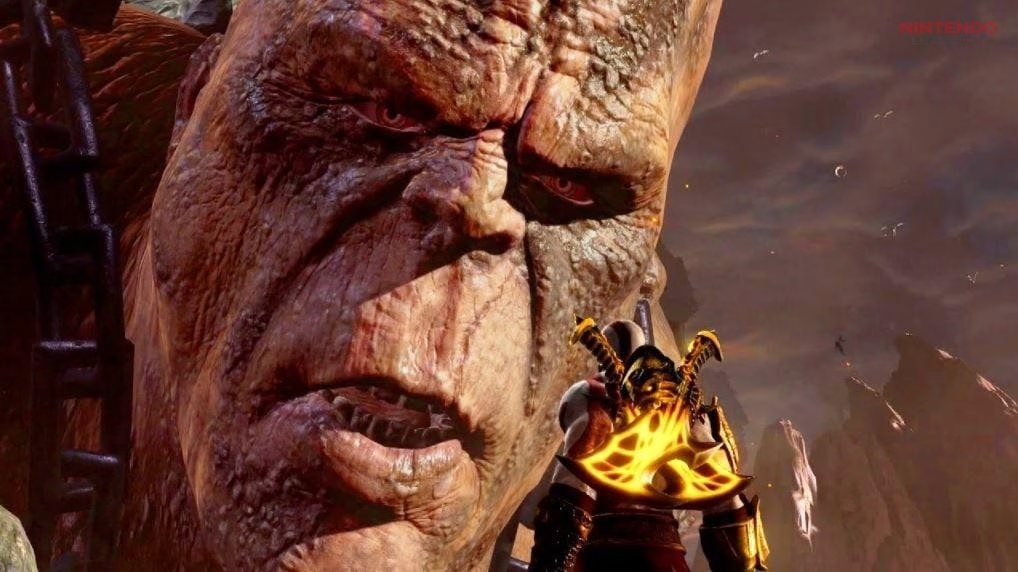
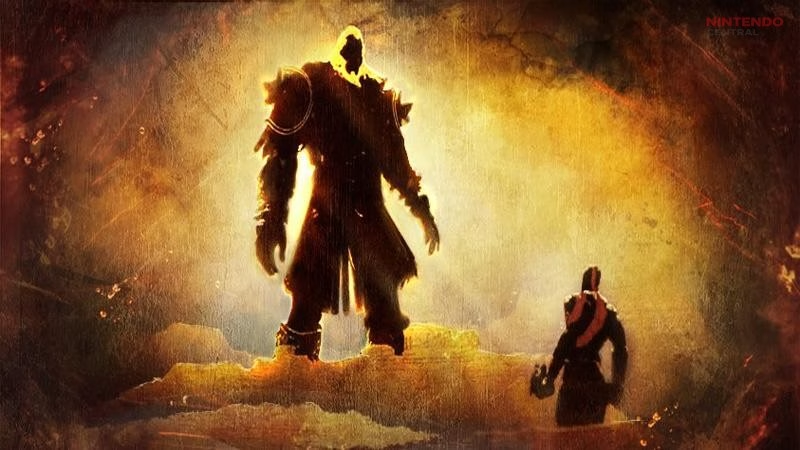
God of War II is where the series begins to evolve narratively. The story introduces Zeus as a central antagonist, adding layers of betrayal and personal conflict that deepen the overall plot.
The opening act, where Zeus strips Kratos of his power and kills him, is one of the most stunning moments in the franchise. It sets the tone for a story that is more complex and emotionally engaging than its predecessor.
Kratos’ journey through the Underworld and his eventual alliance with the Titans expand the scope of the narrative. The stakes feel higher, and the world becomes more interconnected.
While revenge is still the driving force, the story begins to explore themes of destiny and defiance. Kratos is no longer just reacting to events. He is actively shaping his own fate.
This game serves as a crucial bridge between the simplicity of the original and the scale of God of War III. It refines the storytelling formula and sets up one of the most iconic finales in gaming.
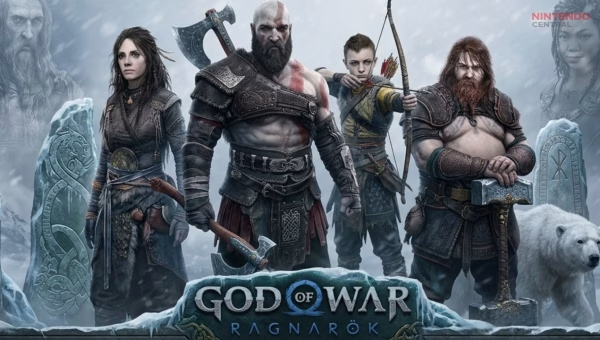
2. God of War Ragnarök
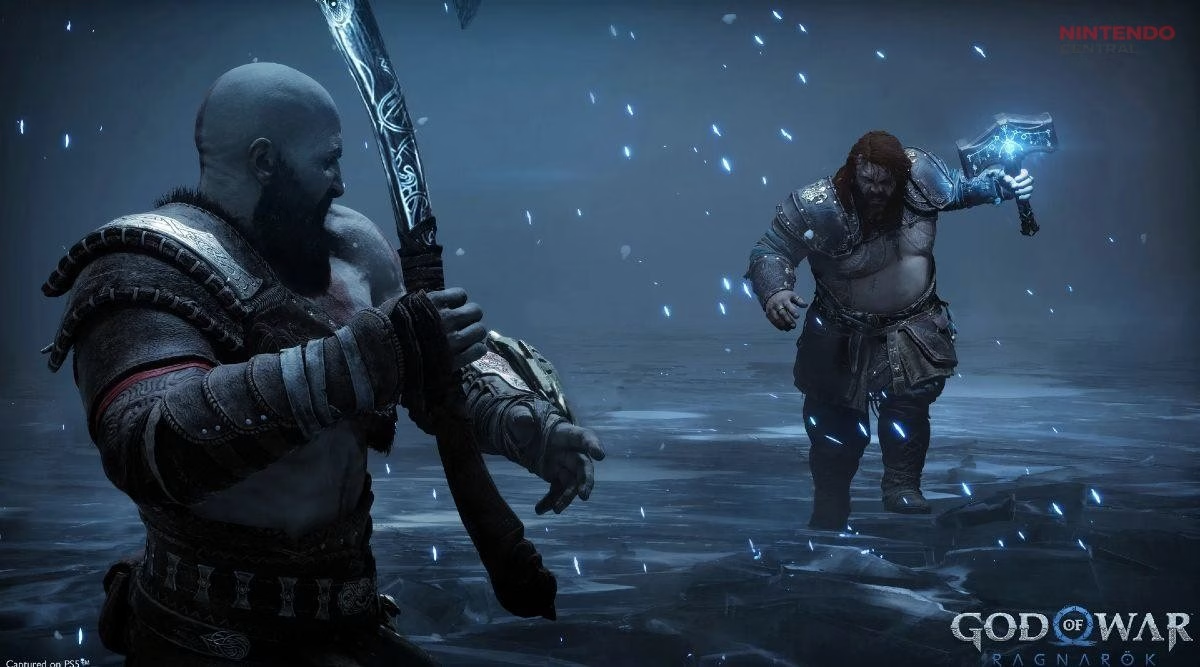
God of War Ragnarök is an ambitious and emotionally rich continuation of the Norse saga. It expands the story significantly, exploring themes of destiny, identity, and legacy.
The relationship between Kratos and Atreus remains the heart of the narrative. Both characters undergo meaningful growth, with Atreus seeking independence and Kratos struggling to let go of control. This dynamic creates a compelling emotional core that drives the story forward.
The game also introduces a wide range of characters, including Odin and Thor, who are portrayed with surprising depth. These antagonists are not just obstacles. They are fully realized individuals with their own motivations and complexities.
One of Ragnarök’s strengths is its ability to balance large-scale events with intimate moments. The looming threat of the end of the world adds urgency, while personal interactions keep the story grounded.
While the narrative occasionally feels stretched due to its scope, it remains one of the most impactful entries in the series. It successfully concludes the Norse saga while reinforcing the themes of growth and redemption.
1. God of War
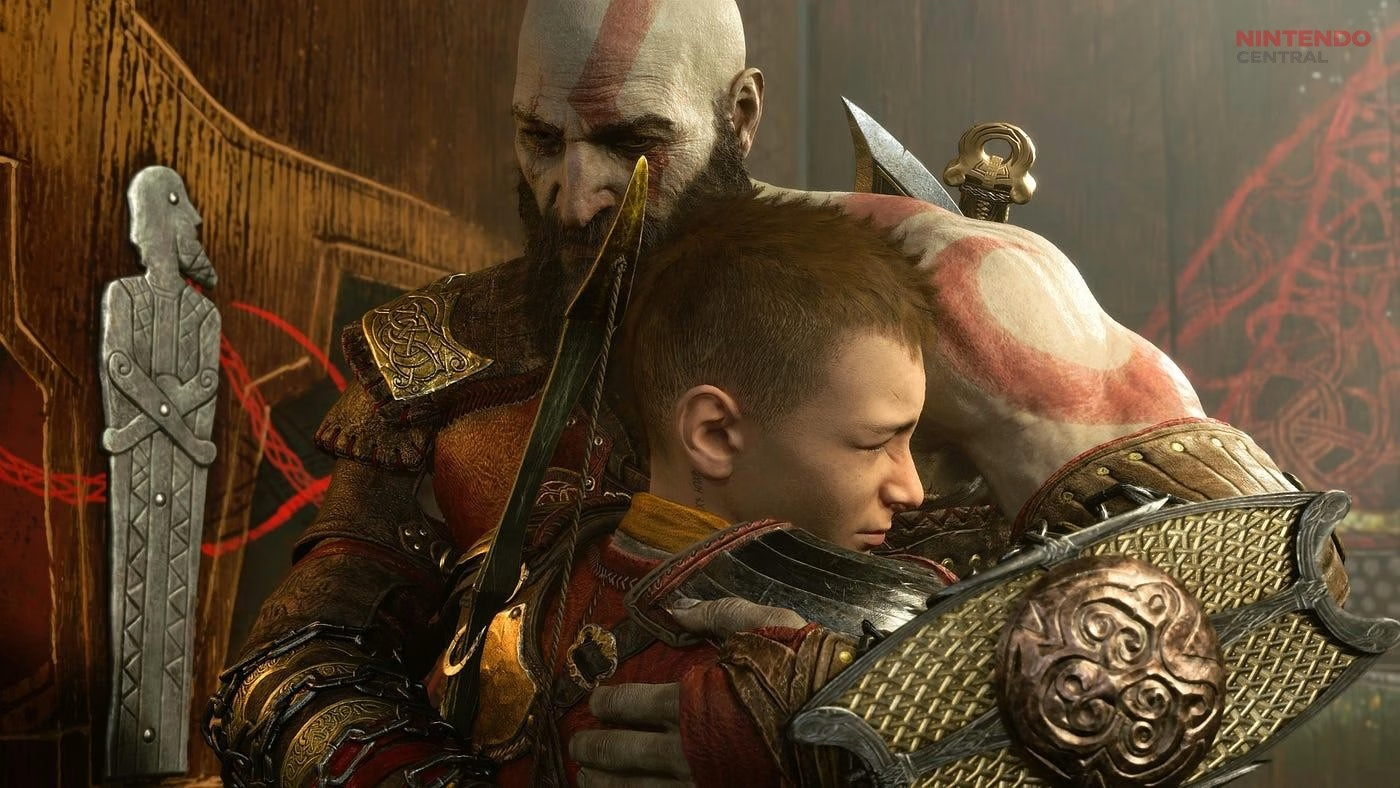
God of War (2018) is the definitive narrative achievement of the franchise. It reimagines Kratos as a character and transforms the series into something far more mature and emotionally resonant.
At its core, the story is about a father and son fulfilling a simple request, scattering the ashes of Atreus’ mother. But this journey becomes a powerful exploration of grief, responsibility, and change.
Kratos is no longer defined solely by his anger. He is restrained, reflective, and deeply aware of his past mistakes. His relationship with Atreus is layered and evolving, filled with tension, growth, and genuine affection.
The game’s storytelling is enhanced by its presentation, particularly its seamless camera work and natural dialogue. Every moment feels intentional, drawing players deeper into the narrative.
The conflict with Baldur adds another layer, mirroring Kratos’ own struggles and reinforcing the game’s themes.
Ultimately, God of War (2018) succeeds because it prioritizes character over spectacle. It proves that even the most brutal stories can be deeply human.
The God of War series stands as one of gaming’s most impressive storytelling evolutions. It begins with raw emotion and spectacle, but it grows into something far more meaningful.
The Norse era represents the peak of this transformation, offering narratives that are both epic and deeply personal. At the same time, the Greek saga provides the foundation that makes this evolution possible.
In the end, the best God of War stories are not just about gods and monsters. They are about change, redemption, and the struggle to become something better.