
Kratos’ arrival in Midgard marks one of the most significant shifts in the God of War series, transitioning the story from Greek mythology to Norse mythology. While this change may seem sudden at first, there are several explanations, both official and implied, that help piece together how Kratos made this long and mysterious journey.
To understand how Kratos reached Midgard, it is necessary to revisit the ending of God of War III. At the conclusion of that game, Kratos appears to sacrifice himself after killing the Olympian gods, including his father, Zeus. The destruction of Olympus leads to chaos across Greece, including a massive flood that engulfs the land. Although Kratos is shown collapsing in a pool of blood, a later scene reveals that his body is gone, leaving behind only a trail of blood. This strongly suggests that he survived and left the area rather than dying.
Following these events, it is believed that Kratos fled the ruined Greek world in search of a new life. According to statements from Cory Barlog, Kratos did not use any magical portals or shortcuts to reach the Norse lands. Instead, he physically traveled across different regions over many years. This journey was likely long and difficult, reflecting his desire to leave behind his past and the destruction he caused. Some interpretations suggest that he may have used a boat to escape the floodwaters, which could have carried him beyond Greece into other parts of the world.
Kratos Travels Through Interconnected Mythological Lands Guided By Fate, Prophecy And Mysterious Forces
An important concept in the God of War universe is that different mythologies exist in separate geographical regions within the same world. This means that Kratos did not travel to a different dimension but rather moved from one part of the world to another. By leaving Greece, he effectively entered a region governed by Norse gods, eventually arriving in Midgard. This idea helps explain how the series transitions between mythologies without contradicting its internal logic.
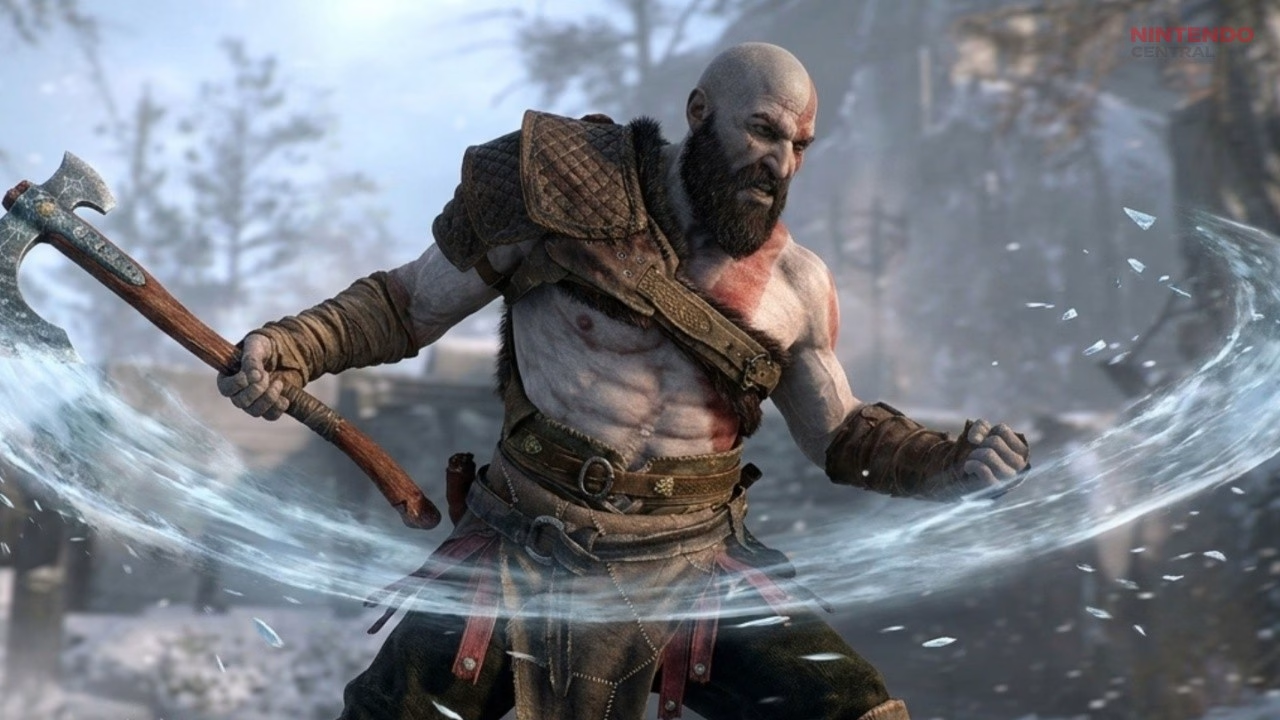
There are also additional details from expanded material that provide further insight into his journey. The novelization of God of War suggests that Kratos may not have traveled entirely on his own. It hints that three mysterious wolves guided or forced him toward the Norse lands. These wolves are often associated with Sköll and Hati from Norse mythology, creatures tied to cosmic events. While this detail is not explicitly shown in the games, it adds a layer of mystery and suggests that larger forces may have influenced Kratos’ path.
Another widely discussed theory involves Faye, Kratos’ second wife. Faye is revealed to be a giant with knowledge of future events. Many believe that she played a role in guiding Kratos to Midgard, either directly or indirectly. If this is true, it would mean that Kratos’ arrival was not entirely accidental but part of a larger plan connected to the events of the Norse saga. This theory aligns with the idea that Kratos and his son Atreus are central figures in the unfolding prophecy of Ragnarök.
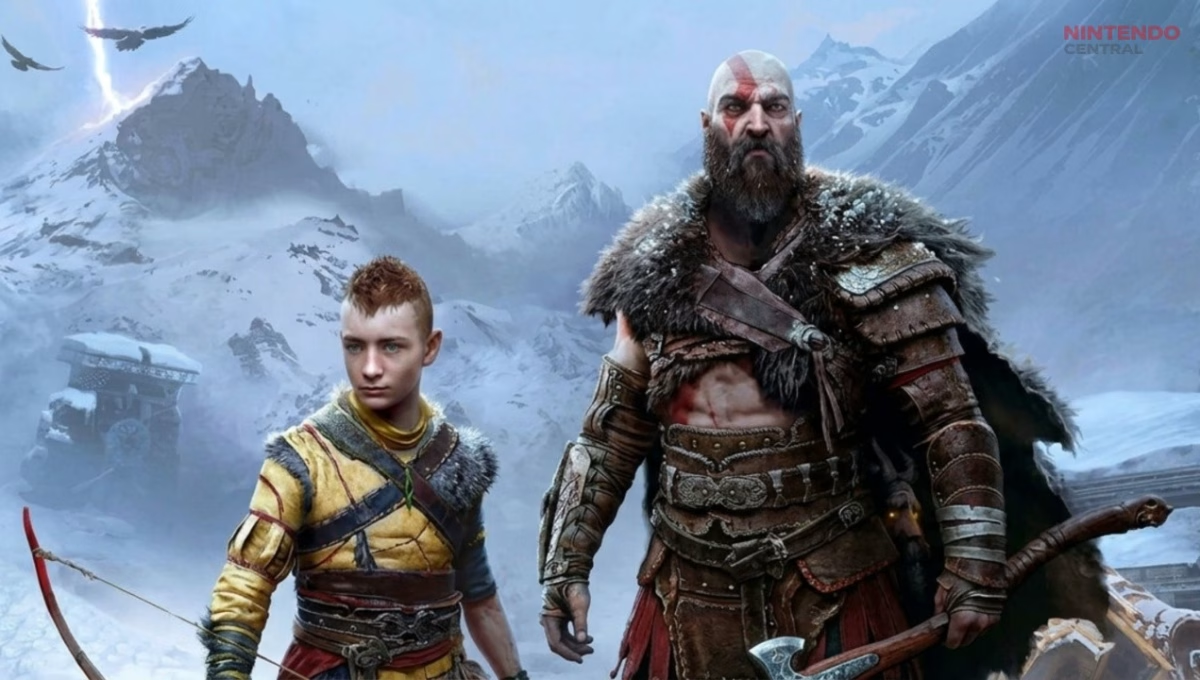
Before settling in Midgard, Kratos is thought to have spent time wandering through other lands. During this period, he likely tried to suppress his violent nature and live a quieter life. This explains the calmer and more restrained version of Kratos seen in the 2018 game compared to his earlier appearances. Eventually, he reaches Midgard, where he meets Faye. The two build a life together and have a son, Atreus, marking a new chapter for Kratos as both a husband and a father.
Kratos’ Long Journey from Greek Ruins to a New Life in Midgard and Beyond
By the beginning of the 2018 game, Kratos is already living in Midgard, mourning Faye’s death. The story begins with him and Atreus setting out to fulfill her final wish of scattering her ashes from the highest peak in the realms. This journey introduces players to the Norse world and sets the stage for the events that continue in God of War Ragnarök.
The time gap between the fall of Olympus and the events in Midgard is also significant. It is estimated that more than a century has passed, which explains why Kratos appears older and more reflective. This long period allows for the transition between mythologies to feel more natural, as it suggests that Kratos had ample time to travel, change, and rebuild his life.
Kratos’ origins remain firmly rooted in Greek mythology. He began as a Spartan warrior who was manipulated by Ares into killing his own family. This tragedy led him down a path of vengeance, eventually becoming the God of War and overthrowing the Olympian gods. Despite his new life in Midgard, his past continues to shape his actions and relationships, particularly in how he raises Atreus.
It is also important to note that Kratos is not a figure taken directly from real mythology. He is a fictional character created for the God of War series, inspired by mythological themes rather than based on a specific legend. This creative freedom allows the developers to place him in different mythological settings and explore new stories without being restricted by historical accuracy.
Kratos’ journey from Greece to Midgard represents more than just a physical transition. It symbolizes a shift in his character and the tone of the series. Moving away from the chaos of his past, he seeks redemption and a chance to live differently. This change is central to the narrative of the newer games, where themes of family, responsibility, and growth take precedence over pure revenge.
While not every detail of his journey is explicitly shown, the combination of in-game clues, developer statements, and expanded lore provides a coherent explanation. Kratos survives the fall of Greece, travels across the world over many years, and eventually finds himself in Midgard, where a new story begins.