
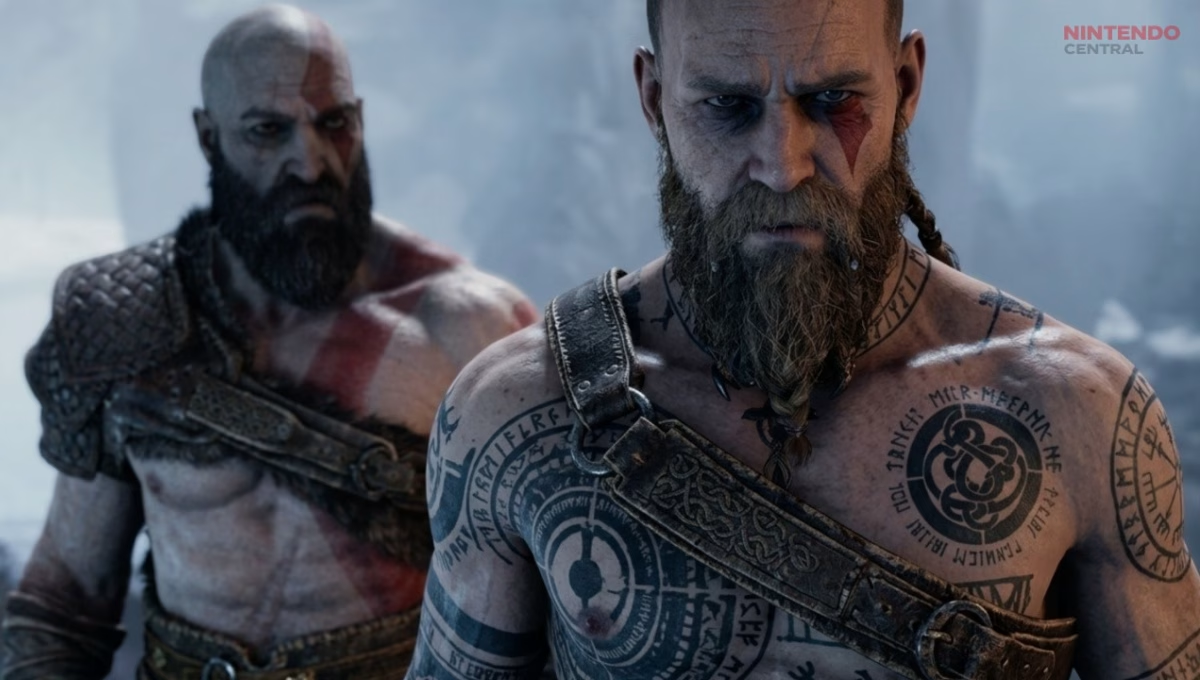
The God of War series is ultimately a long, interconnected story about Kratos, a Spartan warrior whose life is shaped by rage, loss, and the consequences of divine manipulation. Across multiple games, spin-offs, and timelines, the franchise builds one continuous narrative that begins in ancient Greece and later shifts into Norse mythology. While the series is known for intense combat and large-scale action, its core focus has always been storytelling, character development, and emotional themes such as vengeance, regret, fatherhood, and redemption.
The journey of Kratos begins in the original Greek era of the series. In the first game, Kratos is introduced as a Spartan general who serves Ares, the Greek god of war. Ares deceives Kratos into killing his own wife and daughter, leaving their ashes permanently bound to his skin. This transforms him into the “Ghost of Sparta,” a figure driven by guilt and rage. Seeking revenge, Kratos completes a series of trials that eventually allow him to confront and kill Ares. With Ares defeated, Kratos becomes the new God of War, but this position does not bring peace.
In God of War II, Kratos is shown as a powerful but unstable god who uses his strength to lead Spartan armies in destruction across Greece. His actions anger Zeus and the other Olympian gods. Zeus ultimately betrays Kratos and kills him, but Kratos is saved by the Titan Gaia. This event reveals that Kratos is actually Zeus’s son, making him a demigod. This discovery deepens his hatred toward the Olympian gods and pushes him toward rebellion against Olympus.
The story escalates in God of War III, where Kratos launches a full assault on Mount Olympus. He kills major gods such as Poseidon, Hades, Hermes, and Hercules. Each victory brings greater destruction to Greece, which gradually becomes a ruined and uninhabitable land. The final confrontation is with Zeus, who is eventually killed by Kratos after a long and destructive battle. With Olympus destroyed and the Greek pantheon eliminated, Kratos appears to end his own life by jumping from Mount Olympus, leaving his fate uncertain.
Several spin-off titles, including Chains of Olympus, Ghost of Sparta, and Ascension, expand on Kratos’ backstory but do not significantly alter the main storyline. These games explore different parts of his life, including his relationships with his family, his service to the gods, and earlier conflicts with mythological forces. While important for understanding his character, they mainly reinforce the same themes of violence, manipulation, and tragedy.
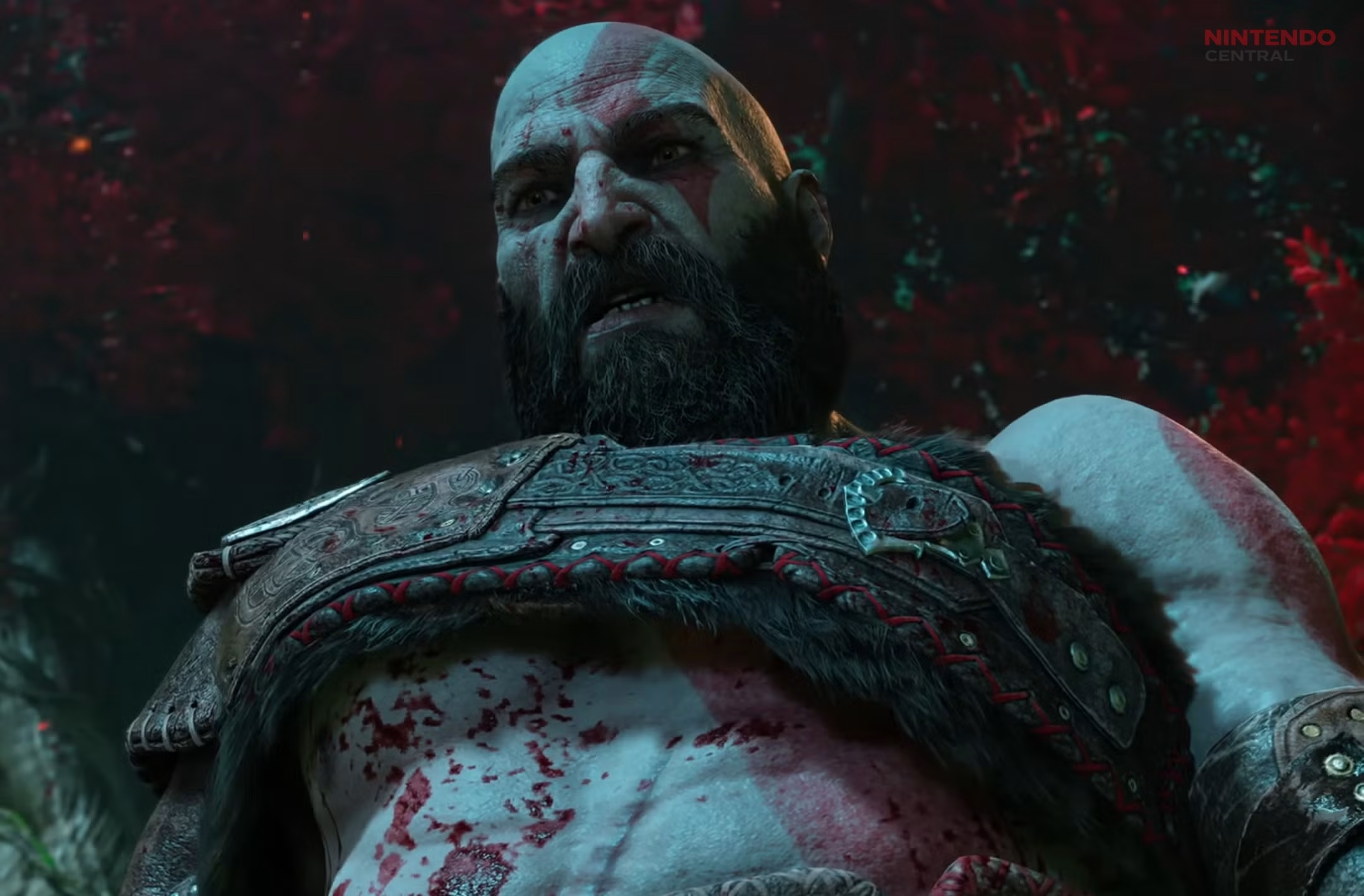
Kratos And Atreus begin a new journey through Norse Realms After Faye’s death
The series then transitions into a new era with God of War (2018), which acts as both a continuation and a soft reboot. The story shifts from Greek mythology to Norse mythology, where Kratos now lives in Midgard, one of the Nine Realms. He has left behind his past life in Greece and is now living with his second wife, Faye, and his young son, Atreus. The game begins after Faye’s death, as Kratos and Atreus set out to fulfill her final wish of spreading her ashes from the highest peak in the realms.
This journey introduces players to the Norse world and its gods, including Odin, Thor, Baldur, and Freya. Along the way, Kratos and Atreus meet allies such as Mimir, the wise severed head, and the dwarven blacksmith brothers Brok and Sindri. These characters help guide them through the Nine Realms and provide important tools and knowledge.
The relationship between Kratos and Atreus becomes the emotional center of the 2018 game. Kratos, once a symbol of rage and destruction, tries to suppress his violent past and teach his son discipline and survival. Atreus, meanwhile, struggles with his identity and the truth that he is part god. As the story progresses, Atreus learns he is also Loki, a figure tied to Norse prophecy. This revelation adds tension between father and son but also strengthens their bond.
Throughout their journey, Kratos and Atreus face multiple challenges, including battles with Baldur, encounters with the World Serpent Jormungandr, and conflicts with Thor’s sons Magni and Modi. Kratos eventually kills Baldur after protecting Freya, which triggers a cycle of revenge from the Norse gods. The game ends with Kratos and Atreus completing their mission in Jotunheim, where they learn that Faye was actually a giant and that a prophecy about Ragnarök has already begun
.
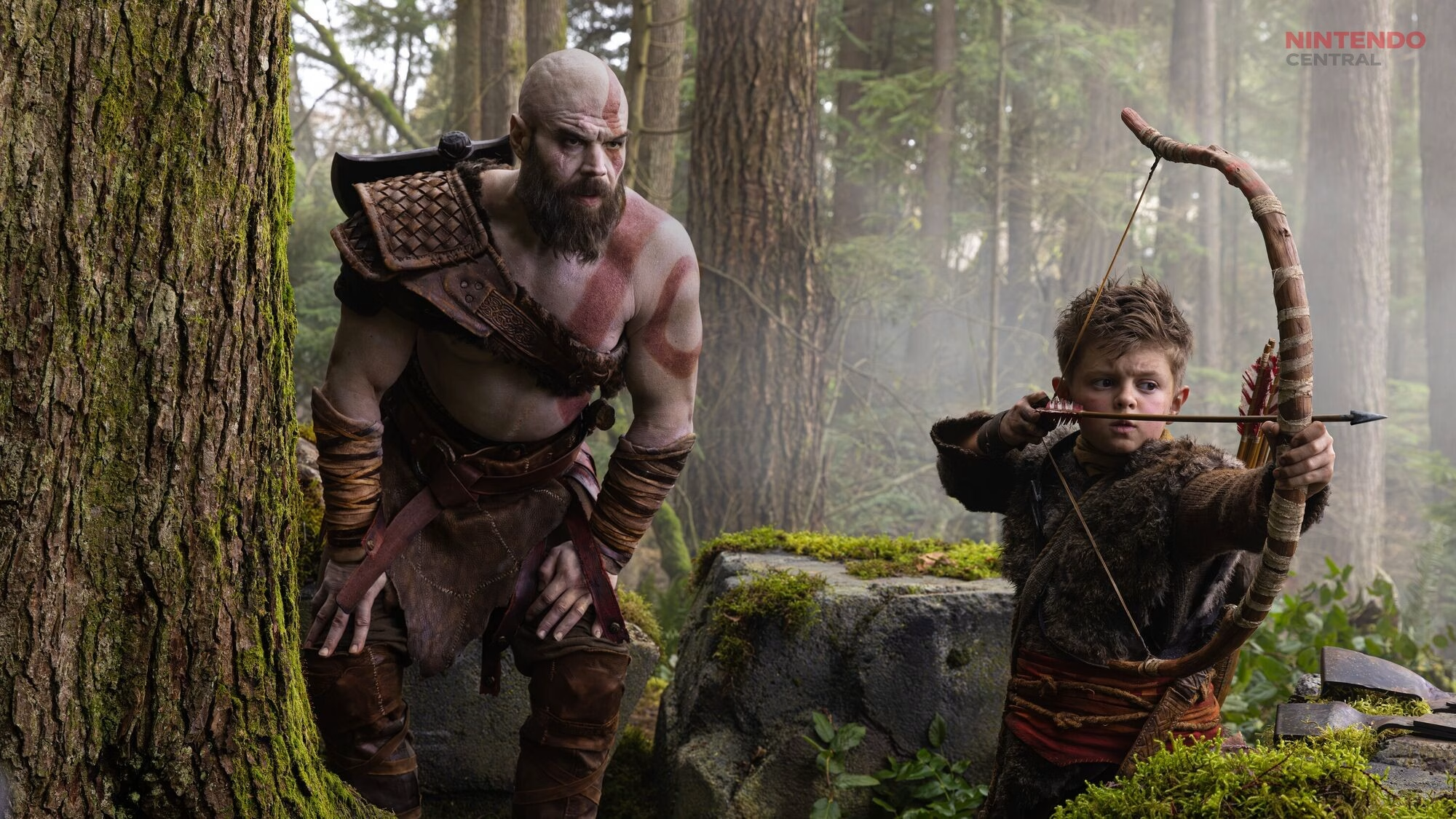
Fimbulwinter Begins As Ragnarök Looms, Shaping Kratos And Atreus Journey
The final moments of the 2018 game reveal that the death of Baldur has triggered Fimbulwinter, a long winter that signals the coming of Ragnarök, the Norse apocalypse. This sets the stage for the next chapter in the series.
God of War Ragnarök continues directly from these events. It expands the story of Kratos and Atreus as they face growing threats from Odin and Thor. The game deepens character relationships and explores themes of destiny, choice, and consequence. Atreus continues to develop his identity, while Kratos struggles with whether fate can be changed or simply accepted.
Across the entire series, a major theme is transformation. Kratos evolves from a rage-driven warrior seeking revenge in Greece into a more reflective and controlled father in the Norse world. His journey is not just physical but emotional, as he moves from destruction toward redemption. Atreus represents the next generation, carrying both divine power and the potential to break cycles of violence.
The world-building of the series also plays a major role. Each mythology is presented as part of a larger world rather than as a separate universe. This allows the transition from Greek to Norse mythology to feel like a change in region rather than reality itself. It also opens the possibility for other mythologies to exist within the same world structure.
The God of War series tells a long and complex story that spans multiple mythologies, generations, and emotional arcs. It begins with vengeance and destruction in Greece and gradually shifts toward themes of family, identity, and fate in the Norse world. Kratos’ journey is central to everything, but the emotional weight of the story is shared with characters like Atreus, who represent change and the future. The series combines action with storytelling in a way that makes its narrative one of the most detailed and continuous in modern gaming.