


One of the most common questions new and returning players ask in Pokémon GO is whether they should catch every Pokémon they see. On the surface, the answer seems simple. Catching more Pokémon means more Stardust, more Candy, and more chances at shinies or strong IVs. However, as players progress and storage fills up quickly, the decision becomes more strategic.
Pokémon storage is limited unless upgraded, and constantly managing what to keep or transfer becomes part of the core gameplay loop. Official Pokémon GO systems like Candy rewards, appraisal tools, and transfer bonuses are designed to encourage selective catching rather than hoarding everything. According to Niantic’s support systems, transferring Pokémon provides Candy, which is essential for powering up and evolving stronger species.
Understanding what to catch, what to keep, and what to transfer is critical for efficient progression. Whether you are playing casually or optimizing for raids and PvP, smart inventory management can save time, resources, and frustration.
Why Catching Every Pokémon Still Has Value
Catching every Pokémon you encounter is not a bad strategy, especially for beginners. Every catch provides Stardust and Candy, which are two of the most important resources in Pokémon GO.
Stardust is used for powering up Pokémon, trading, and unlocking second Charged Moves. Since Stardust gains are relatively small per catch, consistent farming becomes essential. Catching more Pokémon is one of the most reliable ways to build a strong Stardust reserve over time.

Candy is equally important. Each Pokémon species has its own Candy pool, and catching duplicates allows players to evolve and strengthen their Pokémon. Official Pokémon GO mechanics confirm that catching and transferring Pokémon both contribute to Candy accumulation.
There is also the chance of encountering shiny Pokémon or high-IV Pokémon randomly. Since shiny rates are low outside events, the best way to find them is simply by checking as many Pokémon as possible.
For these reasons, many experienced players follow a “catch everything, sort later” approach during events or grinding sessions. This ensures maximum resource gain before making decisions about storage.
The Real Problem Is Storage Management
The biggest reason players question whether to catch everything is storage limitations. Pokémon storage fills up quickly, especially during Community Days or large events with boosted spawn rates.
While players can upgrade storage using PokéCoins, these upgrades are limited and can become expensive over time. As a result, efficient storage management becomes essential.
Pokémon GO’s built-in appraisal system helps players evaluate their catches. The modern appraisal feature shows IV stats directly, making it easier to identify strong Pokémon worth keeping. High IV Pokémon are generally more valuable for raids and Master League PvP.
However, IVs are not the only factor. Movesets, typing, rarity, and future event potential also influence whether a Pokémon should be kept or transferred.
This is where many players make mistakes. Keeping too many low-value Pokémon leads to cluttered storage and wasted time managing inventory.
Which Pokémon You Should Always Keep
Not every Pokémon is equal in Pokémon GO. Some are far more valuable than others due to rarity, combat performance, or long-term usefulness.
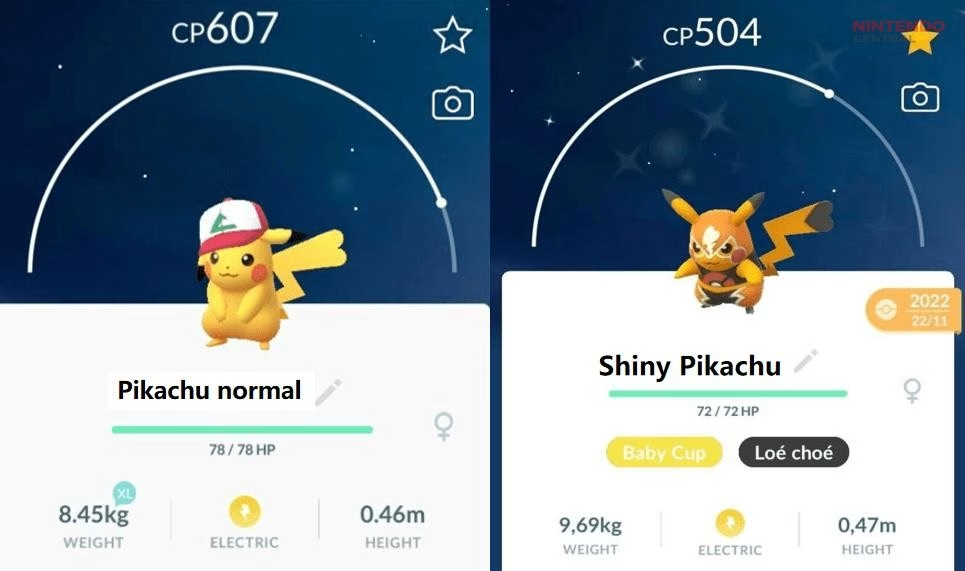
Shiny Pokémon should almost always be kept. Their rarity and visual uniqueness make them valuable regardless of their IVs. Even low-stat shinies are often saved for collection purposes or future trades.
Legendary and Mythical Pokémon are also worth keeping in most cases. These Pokémon are usually difficult to obtain and are often strong in raids or PvP. Even duplicate Legendaries can be useful for trading or building raid teams.
High IV Pokémon are another priority. Pokémon with near-perfect stats are ideal for powering up and using in raids or Master League battles.
PvP-specific Pokémon should also be considered carefully. Some Pokémon with lower Attack IVs but high Defense and HP perform better in Great League or Ultra League formats. This means players should not automatically transfer low-CP Pokémon without checking their PvP potential.
Event-exclusive Pokémon and costume Pokémon are also worth keeping. These Pokémon may not return frequently, making them valuable for collectors.
Which Pokémon You Should Transfer
Knowing what to transfer is just as important as knowing what to keep.
Common Pokémon with low IVs are usually safe to transfer. Species like Pidgey, Rattata, or other frequently spawning Pokémon rarely need to be kept in large numbers unless required for specific evolution strategies.
Duplicate Pokémon without strong stats should also be transferred. Keeping multiple copies of the same Pokémon only makes sense if they serve different purposes, such as PvP builds or raid teams.
Pokémon with poor IVs and no PvP relevance are generally the first candidates for transfer. The appraisal system makes it easy to identify these quickly.
Another category includes Pokémon that are no longer useful after evolution. Once a player has evolved a strong version of a species, additional weak copies often become redundant.
Transferring these Pokémon provides Candy, which can be used to strengthen better versions of the same species.
Some players also use “mass transfer” strategies after events to quickly clear storage while maximizing Candy gains.
The Role of IVs, PvP Stats, and Movesets
IVs play a major role in determining a Pokémon’s value, but they should not be the only factor.
For raids and gyms, high IV Pokémon are generally preferred because they deal more damage and survive longer. This makes them more efficient in PvE content.
However, PvP works differently. Lower Attack IVs can sometimes be beneficial because they allow Pokémon to stay under CP limits while maximizing bulk. This creates a different kind of “perfect” Pokémon for PvP formats.
Movesets are also important. Some Pokémon become significantly stronger when they have access to specific moves, especially legacy or event-exclusive moves.
This means players should think carefully before transferring Pokémon that could gain better moves during future events.
The key takeaway is that value in Pokémon GO depends on context. A Pokémon that seems weak at first glance may become useful later depending on game updates or meta shifts.
Why Events Change What You Should Keep
Events are one of the biggest factors influencing Pokémon value.
During Community Days, certain Pokémon become extremely common, making it easier to find high IV or shiny versions. After the event ends, those Pokémon may become rare again.
This means players should be more selective during events. Catching everything is useful, but keeping only the best versions helps maintain storage efficiency.
Some events also introduce exclusive moves that are only available during specific time windows. Pokémon with these moves often become more valuable than standard versions.
Seasonal events and raid rotations also affect Pokémon usefulness. A Pokémon that is weak today might become valuable in a future raid meta or PvP format.
Because of this, experienced players often keep a few extra copies of useful species in case they become relevant later.
Smart Strategies for Managing Your Pokémon Storage
Efficient storage management requires a combination of habits and tools.
Regularly reviewing your Pokémon list helps prevent clutter. Sorting by recent catches, CP, or favorites can make this process faster.
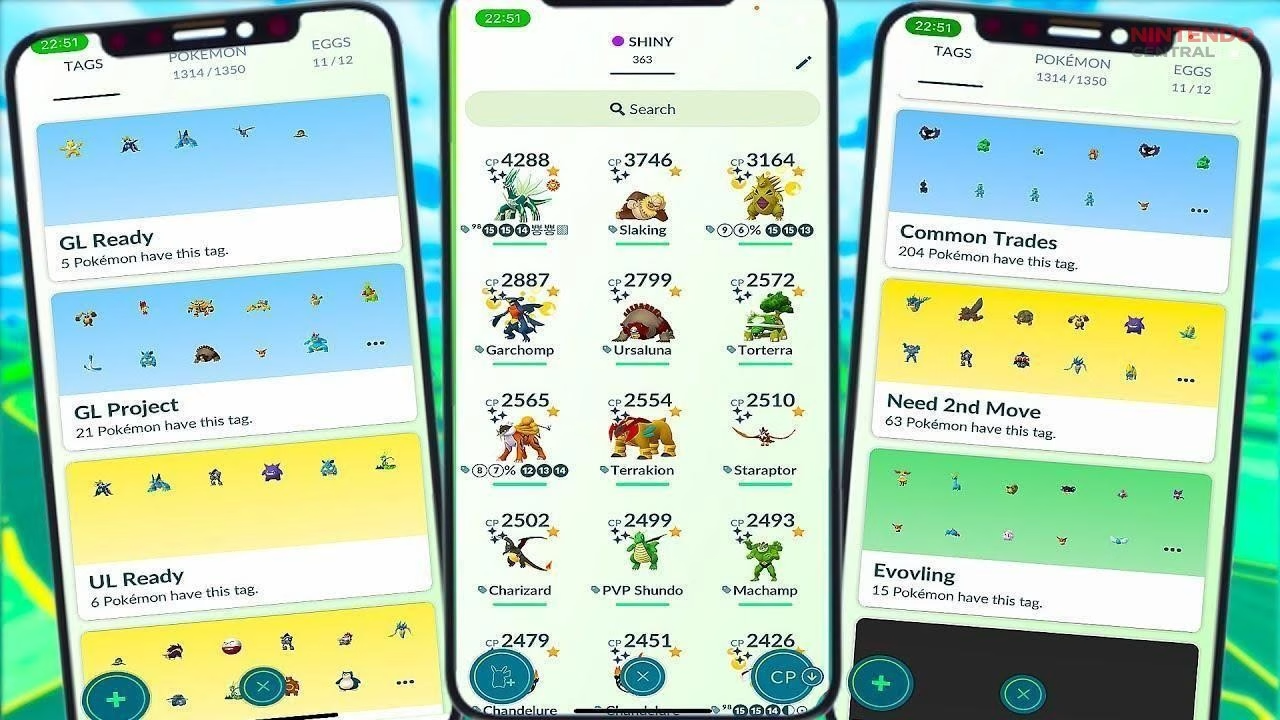
Using tags is another useful strategy. Players can tag Pokémon for PvP, trading, evolution, or powering up. This makes it easier to organize large collections.
Favoriting important Pokémon prevents accidental transfers. This is especially useful for shinies, Legendaries, and high IV Pokémon.
Mass transferring low-value Pokémon after events saves time and keeps storage under control.
Players should also prioritize upgrading storage gradually using PokéCoins earned from gyms. This reduces the need for constant micromanagement.
The goal is not to avoid catching Pokémon, but to create a system that makes managing them easier.