
Tracking Pokémon has always been one of the most important parts of the Pokémon GO experience. Ever since the game launched in 2016, players have searched for reliable ways to locate rare spawns, shiny Pokémon, raid bosses, and event-exclusive encounters more efficiently. Over the years, Pokémon GO’s tracking systems have evolved significantly, replacing the original broken footprint mechanic with modern Nearby tabs, Sightings systems, Routes, Daily Adventure Incense, and event-based tracking tools.
At the same time, tracking has also become controversial because of third-party radar apps and spoofing tools that violate Niantic’s policies. Many unofficial trackers were shut down after launch due to server abuse and unfair gameplay concerns. Official statements from Niantic confirmed that unauthorized tracking services negatively affected server stability and gameplay integrity.
Today, safe Pokémon tracking focuses on using official in-game systems and legal community-driven methods rather than risky cheating tools. Understanding how these mechanics work can help players find rare Pokémon more efficiently while protecting their accounts from warnings or bans.
Here is a complete guide to how Pokémon tracking works in Pokémon GO in 2026 and the safest methods players should use.
The Nearby Radar Is Pokémon GO’s Main Tracking System
The Nearby radar remains the core tracking mechanic in Pokémon GO. Accessible from the bottom-right corner of the map screen, the Nearby feature shows Pokémon currently spawning close to the player’s location.
According to Pokémon GO community documentation, the modern Nearby Screen is divided into several tabs, including Pokémon, Raids, Routes, and Power Spots. The Pokémon tab itself separates encounters into Nearby Pokémon and Sightings.
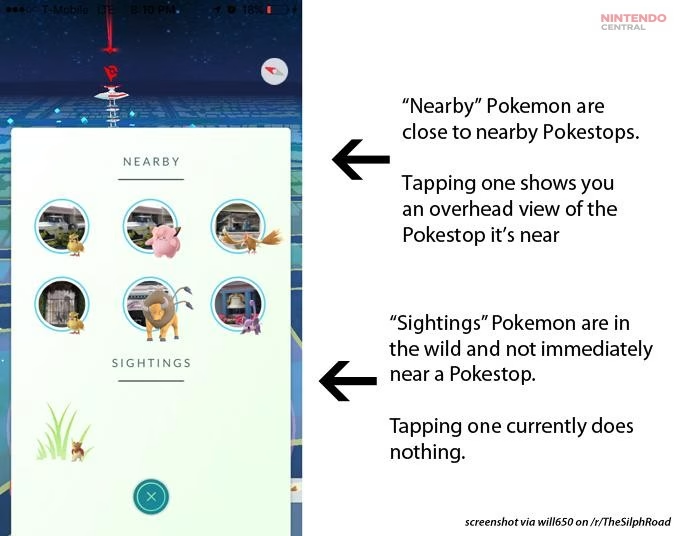
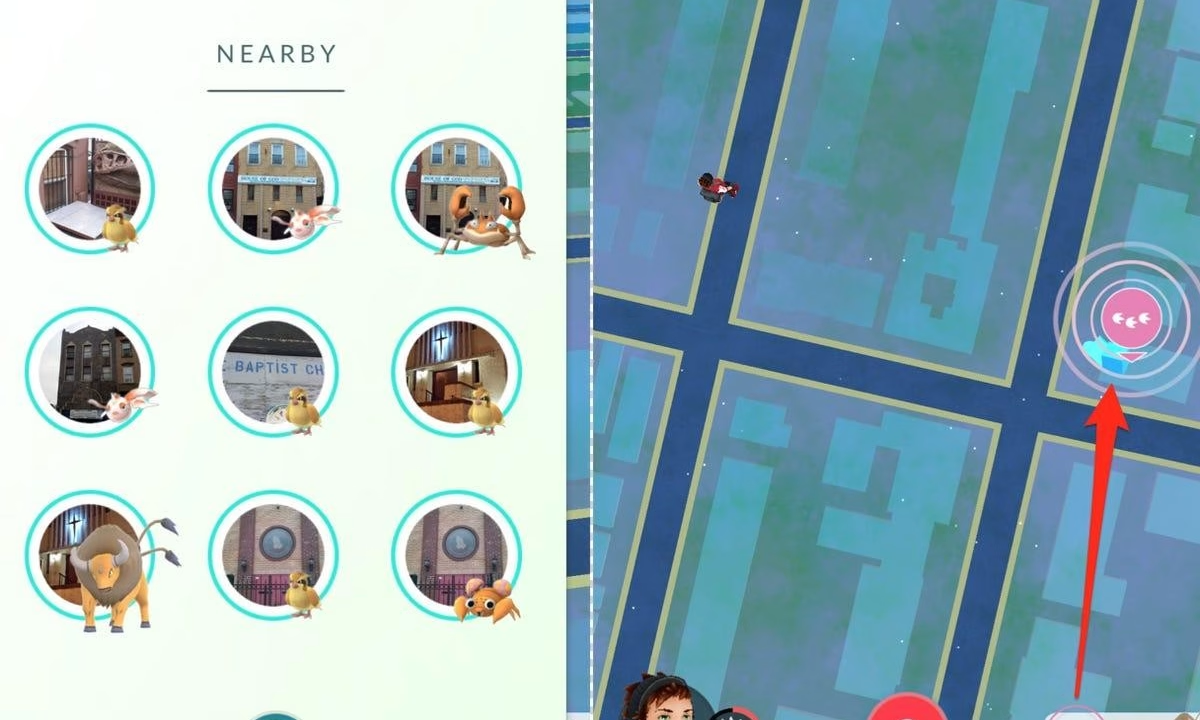
Nearby Pokémon are tied directly to PokéStops. When a player taps a Pokémon icon on the radar, the game highlights the associated PokéStop and briefly zooms the map toward its location. This makes navigation significantly easier compared to Pokémon GO’s original launch-era tracking system.
The radar also prioritizes Pokémon that are not yet registered in the Pokédex. Silhouetted Pokémon appear first on the list, helping trainers focus on new catches more efficiently.
Sightings work slightly differently. These encounters are not always connected to PokéStops and instead represent nearby wild Pokémon within a general radius.
The Nearby system refreshes dynamically while the player moves, meaning walking through different neighborhoods or parks constantly updates the available encounters.
How Pokémon Tracking Distance Actually Works
One of the biggest misconceptions in Pokémon GO involves tracking range. Community testing over the years showed that Pokémon appear on the Nearby and Sightings radar only within a limited detection radius.
Older Pokémon GO tracking discussions on Reddit and The Silph Road documented how players used movement patterns to estimate spawn positions. Trainers discovered that Pokémon disappearing from the Nearby list often indicated movement outside the encounter radius.
Modern tracking is much simpler than the original “footprints” era, but movement still matters heavily.
The best approach is walking steadily in straight lines while monitoring radar updates. Community advice consistently recommends avoiding tight circles because Pokémon GO tracks meaningful directional movement more effectively.
Players also noticed that Pokémon closer to the top-left side of older radar grids tended to be physically closer to the trainer. Although the interface has changed over time, the general principle remains similar: radar ordering still helps estimate encounter proximity.
Understanding spawn timing also matters. Wild Pokémon eventually despawn after fixed durations, meaning efficient movement is important once a desired encounter appears.
Daily Adventure Incense Is One of the Best Modern Tracking Tools
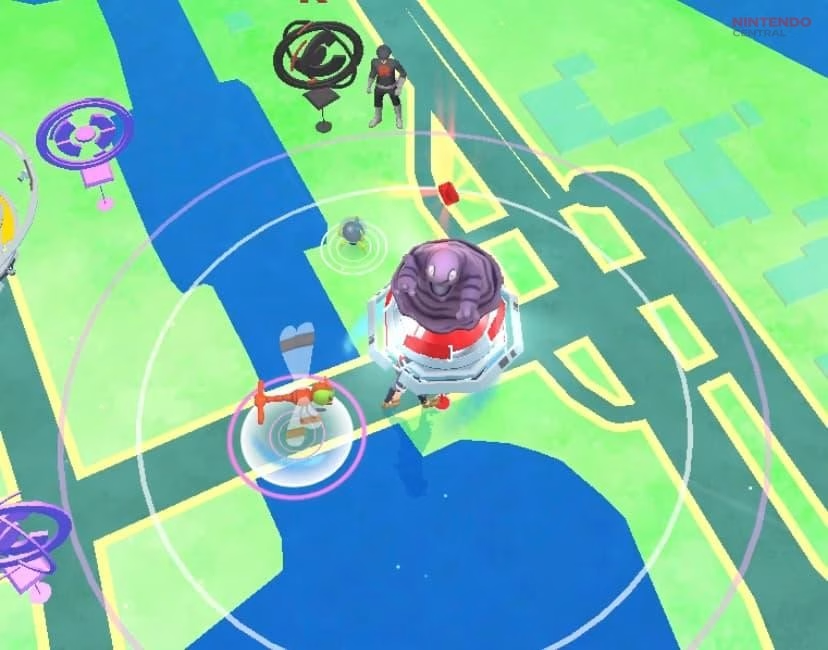
Daily Adventure Incense fundamentally changed how many players approach Pokémon tracking.
Unlike standard wild tracking, Daily Adventure Incense actively generates Pokémon encounters while the player walks. Official Pokémon GO updates describe the feature as an exploration-focused mechanic designed to reward outdoor movement with special encounters.
The system is especially important because it can spawn rare Pokémon unavailable through normal tracking alone. Galarian Articuno, Galarian Zapdos, and Galarian Moltres became strongly associated with Daily Adventure Incense encounters after the feature launched.
Movement directly affects Incense efficiency. Trainers walking continuously receive significantly more encounters than stationary players. Community tracking discussions consistently show that long straight walking routes generate the best results during Daily Adventure Incense sessions.
Many players now combine Daily Adventure Incense with traditional Nearby radar tracking. This allows them to chase visible nearby Pokémon while simultaneously generating additional Incense encounters.
For rural players especially, Daily Adventure Incense became one of the most valuable tracking tools because it helps compensate for lower natural spawn density.
Routes and Spawn Locations Improve Rare Pokémon Tracking
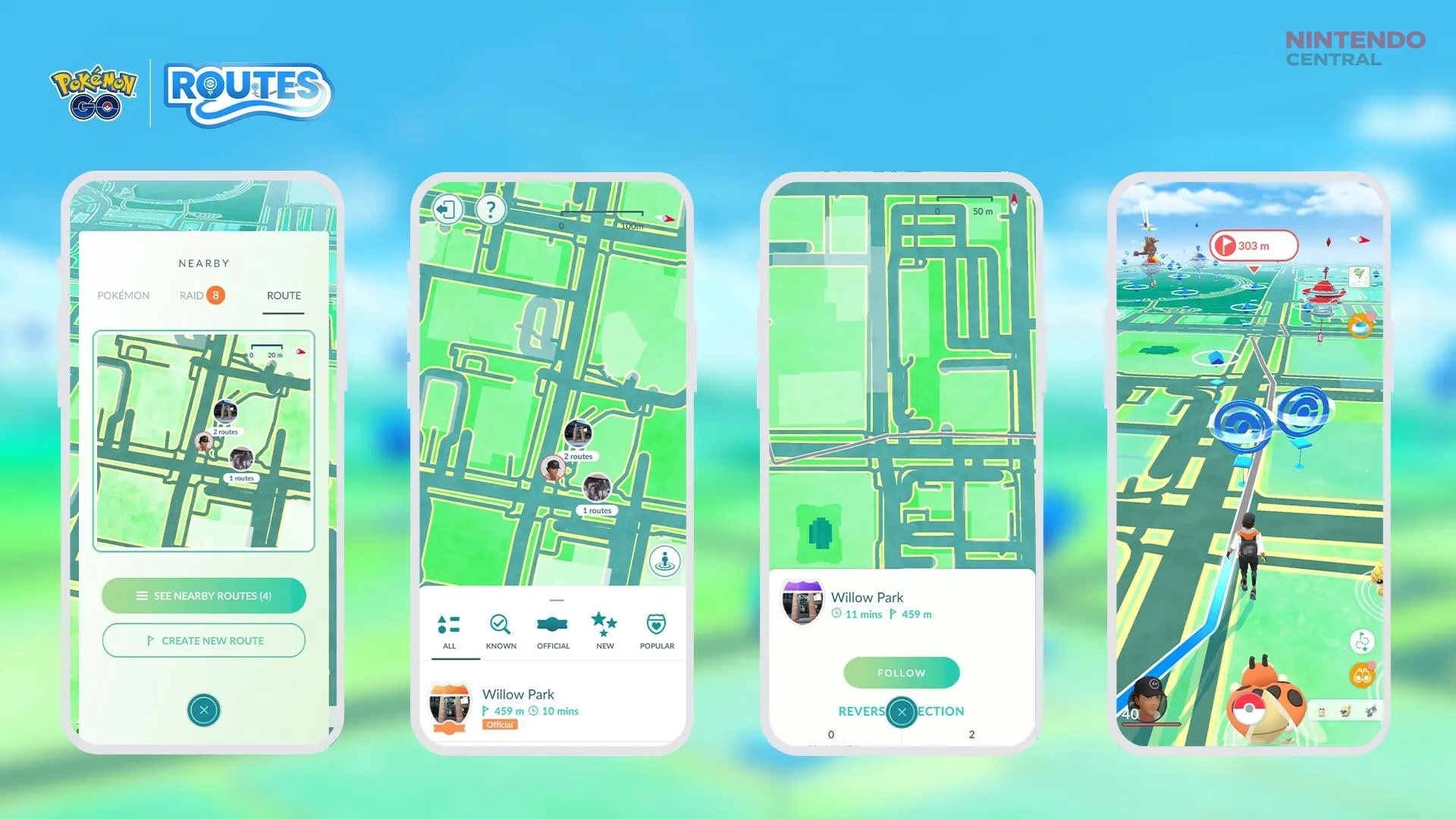
Routes introduced another layer to Pokémon GO’s exploration systems. Routes are player-created walking paths connected to PokéStops and Gyms.
While Routes themselves do not directly reveal exact Pokémon locations, many players use them strategically because high-traffic walking areas usually contain stronger spawn density.
Community-created spawn maps have existed since Pokémon GO’s launch. Older Reddit tracking guides discussed manually learning spawn patterns within neighborhoods to improve hunting efficiency.
Even today, experienced trainers often memorize “nest” locations where certain Pokémon species appear frequently during seasonal rotations.
Parks remain especially important because Pokémon nests rotate regularly and often feature increased spawn rates for specific species. During events, these nest rotations can become excellent shiny hunting locations.
Urban downtown areas with dense PokéStop clusters also improve tracking efficiency because the Nearby radar becomes much more populated.
Players hunting rare Pokémon usually combine several factors simultaneously:
Strong spawn density, active event bonuses, weather boosts, and Daily Adventure Incense usage all work together to improve encounter quality.
Safe Tracking Methods Players Should Use
The safest Pokémon tracking methods are always the official in-game systems supported directly by Niantic.
These include:
The Nearby radar, Sightings, Daily Adventure Incense, Routes, Campfire coordination tools, and community event callouts.
Players should also rely on legitimate communication communities such as local Discord servers, Facebook groups, and Reddit communities where trainers share legal spawn information manually.
Crowdsourced tracking has existed since Pokémon GO’s launch. Apps like PokéRadar originally became popular because players manually reported sightings rather than directly hacking game servers.
However, players should still be cautious with third-party apps. Many unofficial services make misleading claims about “live tracking” or “real-time spawn maps.” Some may violate Pokémon GO’s terms of service or request dangerous account permissions.
The safest rule is simple:
Never provide Pokémon GO login credentials to third-party tracking tools.
Official systems already provide enough tracking functionality for most players without risking account security.
Why Spoofing and Illegal Tracking Tools Are Risky

Spoofing remains one of the biggest risks connected to Pokémon tracking.
Spoofing tools manipulate GPS locations artificially, allowing players to appear in different regions without physically traveling there. Although some communities discuss “safe spoofing methods,” Niantic’s policies clearly prohibit location falsification and unauthorized software modifications.
Account punishments can include warning strikes, temporary suspensions, or permanent bans.
Niantic has also aggressively targeted unauthorized tracking services historically. Official explanations from the company stated that third-party radar tools created server strain and disrupted gameplay stability during Pokémon GO’s early years.
Modern anti-cheat systems are much stronger than during launch-era Pokémon GO. Suspicious travel patterns, modified apps, and impossible movement speeds are more likely to trigger enforcement systems now.
For players investing years into their Pokémon collections, account safety is far more valuable than temporary tracking shortcuts.
Weather, Events, and Biomes Affect Tracking Results
Tracking efficiency depends heavily on timing.
Weather boosts influence which Pokémon spawn more frequently. Rain boosts Water-types, windy weather increases Dragon and Flying spawns, while fog benefits Ghost and Dark Pokémon.
Event periods are even more important. Seasonal events dramatically modify spawn pools, causing specific Pokémon to appear far more frequently on Nearby radar systems.
Community Days represent the clearest example. During these events, featured Pokémon dominate Nearby tracking results across entire cities.
GO Fest and Safari Zone events similarly increase rare encounter opportunities, making radar tracking much more rewarding.
Biome systems also continue influencing spawn pools. Waterfront areas produce more Water-types, parks generate grass-oriented spawns, and urban environments favor electric and poison species more frequently.
Experienced trainers often choose tracking locations based on both biome advantages and current event bonuses simultaneously.