
Egg hatching has remained one of the most important progression systems in Pokémon GO since its launch in 2016. While raids, PvP, and seasonal events have evolved significantly, eggs still play a crucial role in obtaining rare Pokémon, farming Stardust, and completing the Pokédex. However, not all eggs offer the same value, which leads to a common question among players in 2026: are 2km, 5km, or 10km Eggs actually worth prioritizing?
Each egg tier is designed with a different purpose. Lower-distance eggs focus on accessibility and fast hatching, while higher-distance eggs are built around rarity and stronger rewards. Niantic also rotates egg pools frequently through seasonal updates and live events, which means the best egg type can change depending on current content. According to egg tracking data from Leek Duck and Pokémon GO Hub, modern hatch pools now include event exclusives, baby Pokémon, PvP-relevant species, and rare evolutions across all egg tiers.
Let’s break down how 2km, 5km, and 10km Eggs compare and which one actually gives the best rewards depending on your playstyle.
How Egg Tiers Work in Pokémon GO
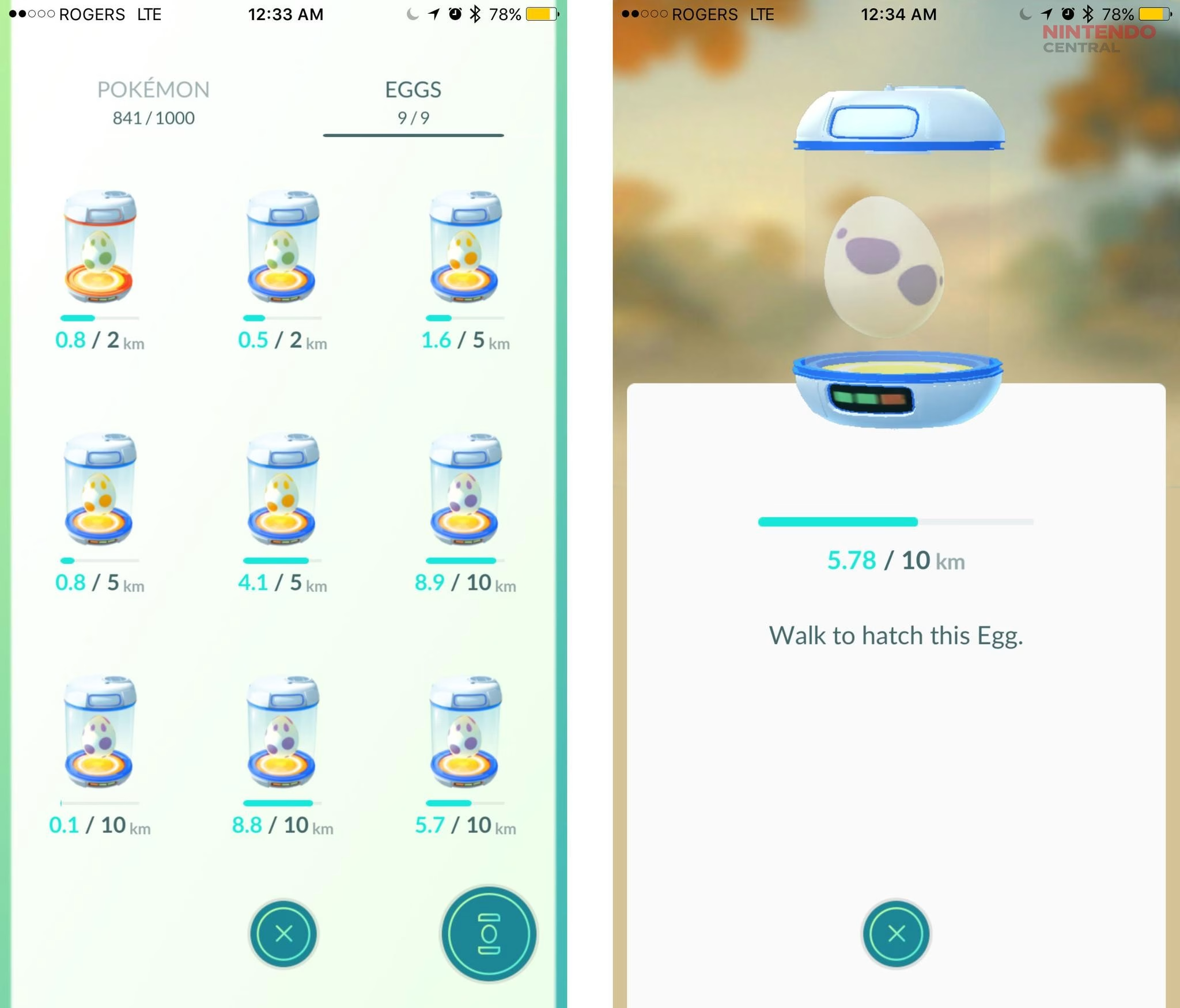
Pokémon GO currently features multiple egg categories, but the most common standard eggs are 2km, 5km, and 10km Eggs obtained from PokéStops and Gyms. The number attached to each egg represents the distance required to hatch it, which directly affects both time investment and reward potential.
Lower-distance eggs hatch quickly and are designed for frequent use, while higher-distance eggs take longer but generally offer stronger rewards. According to Pokémon GO Wiki data, egg rewards scale with distance, meaning 10km Eggs provide significantly higher Stardust and Candy compared to 2km Eggs.
However, egg pools are not static. Niantic rotates hatch Pokémon regularly through seasonal updates, which means the value of each egg type changes depending on the current event or rotation. This dynamic system is why some players prefer fast egg cycling, while others focus on rare hatch chances.
Why 2km Eggs Are the Most Efficient
2km Eggs are the fastest and easiest eggs to hatch in Pokémon GO. Because they require minimal walking distance, players can cycle through multiple eggs quickly, especially during events that reduce hatch distance or increase bonuses.
In modern Pokémon GO seasons, 2km Eggs often include a mix of baby Pokémon, seasonal species, and event-exclusive hatches. This makes them particularly valuable during limited-time events, where Niantic sometimes adds rare or shiny-eligible Pokémon into lower-distance eggs to encourage more activity.
The biggest advantage of 2km Eggs is efficiency. A player using the free infinite incubator can hatch several 2km Eggs in the time it takes to hatch one 10km Egg. Over long play sessions, this results in more total hatches, which means more chances for Stardust, Candy, and potential shiny Pokémon.
This efficiency becomes even more important during special events. Reduced hatch distance bonuses can turn 2km Eggs into one of the most rewarding options in the game, especially when combined with boosted hatch rates or rare Pokémon pools.
The downside is consistency. Outside of events, 2km Eggs often contain common Pokémon, which makes them less exciting compared to higher-tier eggs. This is why many players only prioritize them during specific hatch-focused events.
Why 5km Eggs Sit in the Middle
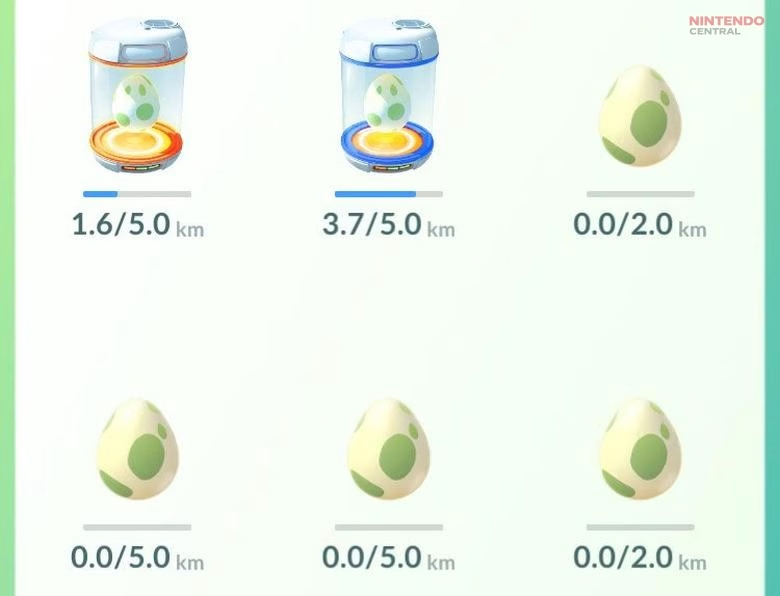
5km Eggs represent the middle ground between efficiency and rarity, but they have historically been the most debated egg category in Pokémon GO.
They require more effort than 2km Eggs while usually offering less exclusive Pokémon than 10km Eggs. Because of this, many players initially considered them the weakest egg type. However, this perception has shifted in recent years due to changes in hatch pools.
Modern 5km Eggs are frequently used for seasonal Pokémon, regional variants, and PvP-relevant species. They often include Pokémon that are not extremely rare but still valuable for evolution, battle leagues, or Pokédex completion.
Adventure Sync rewards have also increased the value of 5km Eggs. Special Adventure Sync eggs sometimes feature different hatch pools compared to standard PokéStop eggs, including Pokémon that are otherwise difficult to obtain.
The main advantage of 5km Eggs is balance. They offer better rewards than 2km Eggs while still being significantly easier to hatch than 10km Eggs. This makes them a practical option for players who walk regularly but do not want to commit to long-distance hatching.
The drawback is inconsistency. Because 5km Eggs often mix medium-value Pokémon with less desirable ones, they can feel less rewarding compared to the clearer identity of 2km and 10km Eggs.
Why 10km Eggs Have the Best Rewards
10km Eggs are widely considered the premium egg type in Pokémon GO because they consistently offer the highest-value Pokémon and rewards.
Historically, 10km Eggs have included some of the rarest and most powerful Pokémon in the game. Even in 2026, they continue to feature pseudo-legendaries, rare evolutions, and highly sought-after species such as Dreepy, Deino, and Charcadet.
These Pokémon are often important for raids, PvP, or long-term progression, which makes 10km Eggs especially appealing to dedicated players. In addition to stronger hatch pools, 10km Eggs also provide the highest Stardust and Candy rewards per hatch.
According to Pokémon GO Wiki data, 10km Eggs offer significantly higher XP and Stardust compared to lower-distance eggs. This makes them the best option for players focused on maximizing rewards from individual hatches.
However, the main drawback is time investment. Walking 10 kilometers for a single hatch can feel slow, especially for casual players or those relying only on the free incubator. This often leads to frustration when the hatch does not result in a high-value Pokémon.
Despite this, 10km Eggs remain the best option for rare Pokémon and high-value rewards outside of special events.
Which Egg Type Gives the Most Stardust
From a purely reward-based perspective, 10km Eggs provide the highest Stardust and XP per hatch. This makes them the strongest option for players focused on maximizing individual rewards.
However, efficiency changes when considering time and distance. Players can hatch multiple 2km Eggs in the time required for one 10km Egg. During events with reduced hatch distances, rapid 2km Egg cycling can actually result in higher total Stardust over time.
This creates an important distinction between single-hatch value and long-term efficiency. 10km Eggs offer the best rewards per hatch, while 2km Eggs can sometimes provide better total rewards when farmed consistently.
5km Eggs again sit in the middle, offering moderate Stardust gains without requiring extreme walking distances.
Which Egg Type Is Best for Rare Pokémon
10km Eggs are generally the best option for rare Pokémon because they consistently include high-value species. These often include pseudo-legendaries and Pokémon that are difficult to find in the wild.

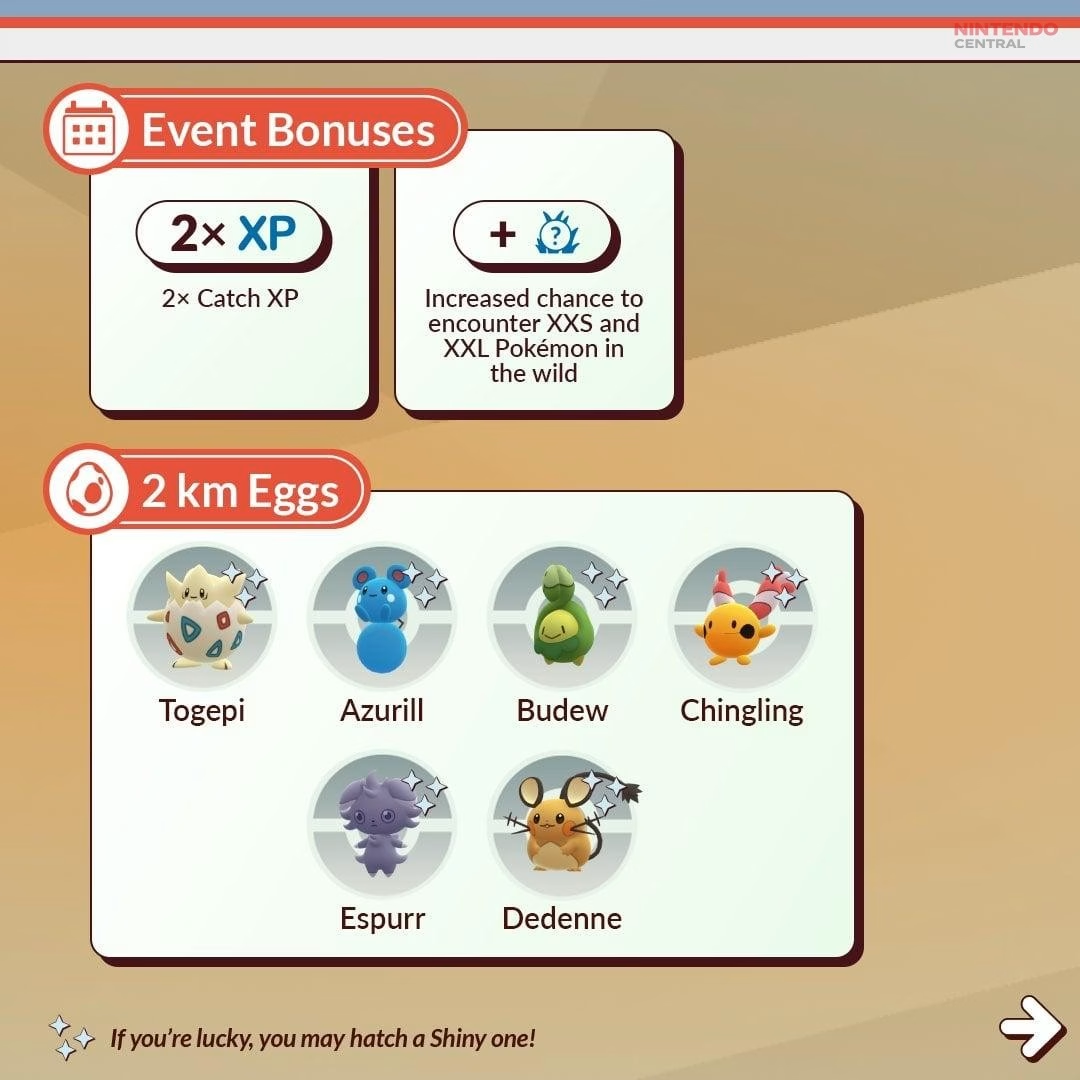
However, this changes during events. Niantic frequently moves rare or shiny-eligible Pokémon into 2km Eggs during hatch-focused events. This temporarily increases the value of low-distance eggs and makes them more efficient for rare Pokémon hunting.
Because of this rotation system, the best egg type for rare Pokémon depends heavily on current events. Outside of events, 10km Eggs are the most reliable source of rare Pokémon. During events, 2km Eggs can sometimes become the better option.
Which Egg Type Is Best for Casual Players
For most casual players, 2km Eggs are usually the best option because they are easy to hatch and require minimal time investment. Players using only the free incubator benefit greatly from their efficiency, as they can hatch multiple eggs without long walking sessions.
5km Eggs are a solid middle option for players who walk regularly but do not want to commit to long-distance hatching. They offer decent rewards while still being manageable for everyday play.
10km Eggs are best suited for players who are willing to walk longer distances or use premium incubators. They provide the highest rewards but require more commitment, which may not suit every player.
Which Egg Type Is Best in 2026
There is no single best egg type in Pokémon GO because the system is designed to change through seasonal rotations and events.
In terms of raw rewards and rare Pokémon, 10km Eggs are the strongest option. They consistently offer the highest-value hatches and the best individual rewards.
In terms of efficiency and farming potential, 2km Eggs are often better, especially during events that reduce hatch distance or increase shiny rates. Their fast hatch time makes them ideal for continuous play.
5km Eggs remain the most balanced option, offering moderate rewards without requiring extreme effort.
The best strategy in 2026 is not choosing one egg type, but adapting to current events and balancing all three. Pokémon GO’s rotating hatch pools ensure that every egg type can become valuable under the right conditions, which is why understanding their differences is more important than focusing on a single category.
Another important factor to consider when choosing between egg types is incubator efficiency and resource management. Players who rely only on the free infinite incubator will naturally benefit more from 2km Eggs because they maximize the number of hatches over time without requiring extra investment.
On the other hand, players who use Super Incubators can extract more value from 10km Eggs by reducing hatch distance and accelerating rare Pokémon farming. This creates a strategic layer where the “best” egg type depends not just on rewards, but also on how many incubators a player is willing to use and how efficiently they manage their walking distance.