
2km Eggs have been one of Pokémon GO’s core mechanics since the game launched in 2016. While they originally contained mostly common Pokémon, Niantic gradually transformed 2km Eggs into an important part of seasonal events, baby Pokémon releases, shiny hunts, and limited-time hatch pools. Over the years, these eggs evolved from beginner-friendly rewards into event-driven collectibles that frequently feature rare or exclusive Pokémon.
Unlike 5km, 7km, or 10km Eggs, 2km Eggs are designed for fast hatching. Players only need to walk two kilometers to open them, making them ideal for events focused on Candy farming, shiny hunting, or rapid egg cycling. Niantic has repeatedly used 2km Eggs during seasonal celebrations, GO Fest events, hatch-focused bonuses, and limited-time rotations to encourage active gameplay. According to official Pokémon GO seasonal announcements, 2km Egg pools continue rotating regularly as part of each season’s gameplay changes.
Let’s break down how Pokémon GO 2km Eggs work, which Pokémon can hatch from them, and how event changes transformed the hatch pool over time.
How 2km Eggs Work in Pokémon GO
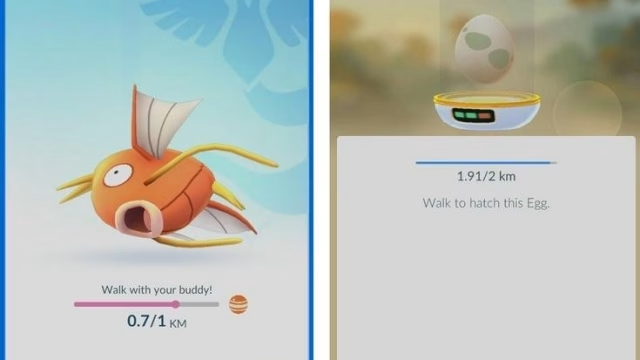
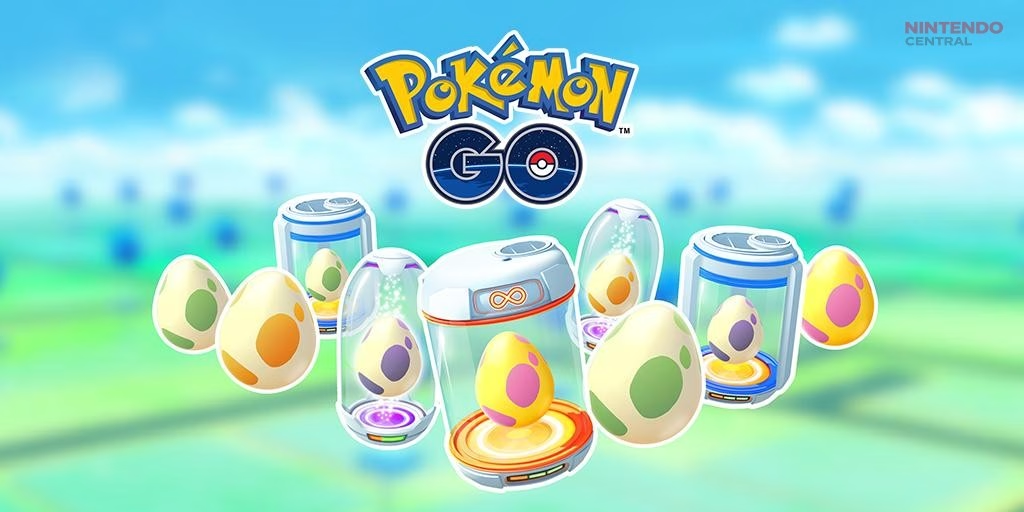
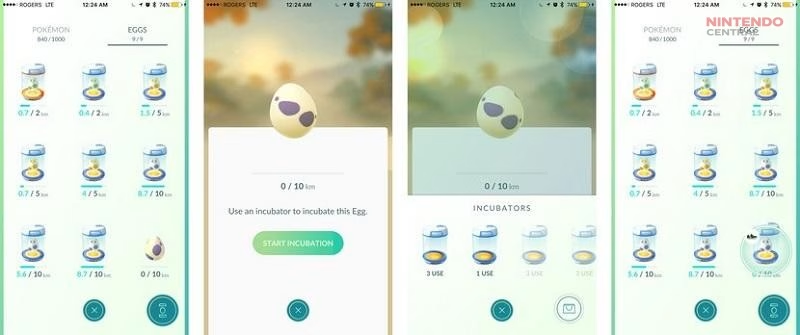
2km Eggs are the shortest-distance eggs available in Pokémon GO. Players receive them primarily by spinning PokéStops and Gyms when they have open egg inventory slots. Once placed into an Incubator, the egg hatches after the player walks two kilometers.
Because of their low distance requirement, 2km Eggs are often considered the easiest eggs to farm efficiently. Trainers can hatch multiple 2km Eggs quickly during events featuring reduced hatch distances or bonus incubator effects.
At launch, 2km Eggs mainly contained common Pokémon intended for newer players. Species like Pidgey, Caterpie, Weedle, and Zubat were frequently associated with low-distance eggs during Pokémon GO’s early months.
However, Niantic gradually expanded the system by introducing Baby Pokémon, event-exclusive hatch pools, and seasonal rotations. This change dramatically increased the value of 2km Eggs over time.
According to Bulbapedia’s documented Pokémon GO Egg history, 2km Egg pools have changed repeatedly through major seasonal events and limited-time celebrations since 2017.
Early 2km Eggs and the Original Hatch Pool
During Pokémon GO’s launch era in 2016, 2km Eggs mostly focused on common Kanto Pokémon. These eggs were intended to help players gather easy Candy and complete basic Pokédex entries.
At the time, rarer Pokémon were generally reserved for 5km and 10km Eggs. Pokémon like Lapras, Dratini, Snorlax, and Aerodactyl were strongly associated with high-distance eggs, while 2km Eggs were viewed as less valuable.
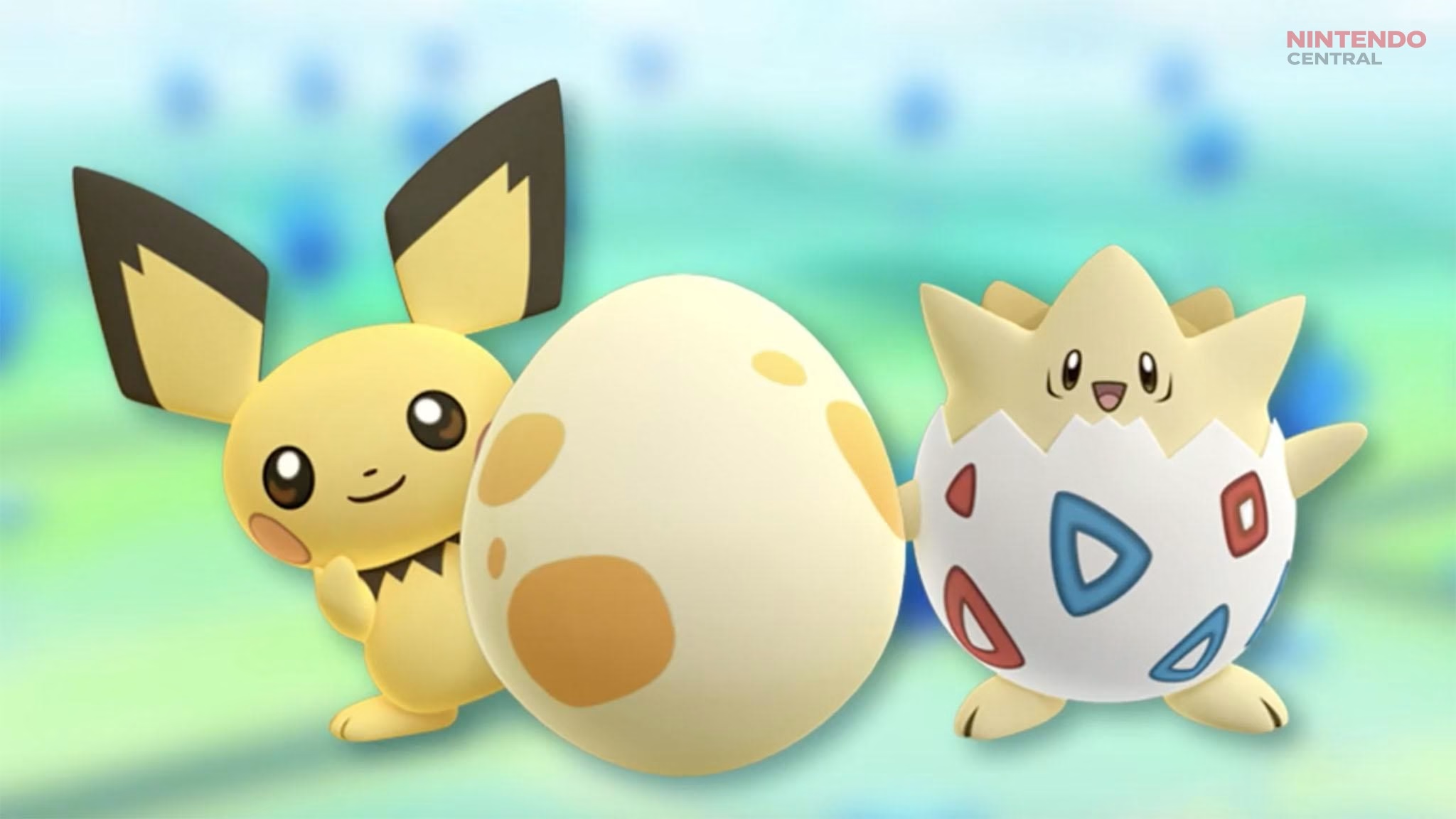
This perception began changing when Baby Pokémon were introduced during the Gen 2 Johto update. Pokémon such as Pichu, Cleffa, Magby, and Igglybuff became closely linked with egg hatching systems. According to Wired’s Pokémon GO egg guide, several Baby Pokémon became available primarily through 2km and 5km Eggs after the Johto expansion.
The addition of Baby Pokémon gave players a major reason to actively hatch low-distance eggs for the first time. Togepi, Pichu, and other babies quickly became highly desirable because they could not initially be found in the wild.
This marked the beginning of 2km Eggs becoming more event-focused and collector-oriented instead of simply functioning as beginner rewards.
How Events Changed 2km Eggs
Niantic eventually started using 2km Eggs as part of major seasonal events and hatch-focused celebrations. One of the earliest examples was the 2017 Eggstravaganza event.
According to Bulbapedia and Wired coverage, the Eggstravaganza event temporarily replaced the normal 2km Egg pool with a much larger selection of rare Pokémon. Trainers suddenly had chances to hatch Pokémon like Lapras, Aerodactyl, Scyther, Magby, Elekid, and other highly valuable species from 2km Eggs.
This change dramatically altered player perception of 2km Eggs. Instead of being viewed as low-value rewards, they became central parts of limited-time events and shiny hunting opportunities.
Niantic continued expanding this concept through later events. During Water Festival 2018, special Water-type Pokémon hatch pools were added to 2km Eggs. Community discussions on Reddit highlighted the excitement surrounding rare hatches like Lapras and Feebas appearing in low-distance eggs during the event.
Adventure Week 2019 later introduced Rock-type hatch pools in 2km Eggs, including Pokémon like Aerodactyl, Cranidos, Shieldon, and Larvitar. Hatch-themed events increasingly encouraged players to use multiple incubators and maximize walking efficiency.
Over time, these event rotations became a standard part of Pokémon GO’s seasonal structure.
Baby Pokémon and 2km Egg Popularity
One of the biggest reasons 2km Eggs became popular was their strong association with Baby Pokémon.
Throughout Pokémon GO’s history, Baby Pokémon frequently appeared in 2km Eggs during special events. Pokémon like Togepi, Elekid, Magby, Budew, Mantyke, and Azurill became recurring highlights in hatch pools.
Events focused on babies or friendship mechanics often increased interest in 2km Eggs dramatically because these Pokémon were sometimes unavailable elsewhere.
For example, Polygon’s coverage of the “Young and Wise” event explained that Baby Pokémon hatch pools became major attractions during limited-time celebrations focused on hatching bonuses and shiny opportunities.
These hatch pools also became important for shiny hunters because many Baby Pokémon have limited shiny availability outside eggs. Trainers often used Super Incubators aggressively during these events to maximize hatch counts.
The low hatch distance made 2km Eggs particularly valuable compared to longer-distance eggs when hunting shiny Baby Pokémon.
Seasonal Rotations and Modern 2km Eggs
Modern Pokémon GO seasons introduced even more frequent changes to 2km Egg hatch pools. Instead of remaining static for long periods, egg contents now rotate seasonally alongside event schedules.
Niantic’s official “Memories in Motion” seasonal announcement confirmed that seasonal egg rotations remain a core feature in Pokémon GO during 2026. The company regularly updates which Pokémon appear in 2km Eggs as part of each new season.
Recent seasons have included Pokémon like:
Dunsparce, Wimpod, Tadbulb, Sizzlipede, Fidough, and Snom in lower-distance egg rotations.
Event-specific Pokémon are also frequently added temporarily. During the “Powerful Potential” event, shiny Charcadet became available across multiple egg tiers, including 2km Eggs. Polygon’s event guide noted that Niantic used reduced hatch distance bonuses to encourage more incubator usage during the event.
Similarly, the Spring into Spring 2025 event temporarily featured Pokémon like Magby, Budew, and Mantyke in 2km Eggs alongside hatch bonuses and increased Candy rewards.
These rotating pools ensure that 2km Eggs remain relevant even years after Pokémon GO’s original release.
Which Pokémon Have Been the Most Valuable 2km Hatches?
Several Pokémon became especially memorable because of their appearances in 2km Eggs during specific events.
Lapras remains one of the most iconic examples. Originally associated with 10km Eggs, Lapras became temporarily available in 2km Eggs during special events, creating enormous excitement within the community.
Baby Pokémon like Togepi and Riolu also became highly desirable 2km hatches because of their rarity and strong evolutions.
Larvitar and Beldum were similarly important because their evolutions became top-tier raid attackers. Hatch events featuring these Pokémon encouraged heavy incubator use from competitive players.
In more recent years, Pokémon like Charcadet and Wimpod generated strong interest because of their rarity and valuable evolutions.
The value of a 2km Egg often depends heavily on current event rotations rather than the egg tier itself.