
One of the most underrated mechanics in Pokémon Sun and Moon is Poké Pelago, a feature that quietly transformed how players managed training, item farming, breeding, and passive progression. Introduced in Generation VII, Poké Pelago allowed Pokémon stored in PC Boxes to actively help the player through a collection of upgradeable islands. Instead of leaving boxed Pokémon unused, the system gave them practical roles ranging from berry farming to EV training.
Unlike many side mechanics in earlier Pokémon games, Poké Pelago was surprisingly useful throughout the entire game. Competitive players used it for efficient EV training and friendship management, while casual players benefited from item collection, egg hatching, and wild Pokémon recruitment. The system also encouraged long-term progression because islands became stronger as players upgraded them with Poké Beans and additional Pokémon.
According to official guides from Pokémon.com and detailed breakdowns from Serebii, Poké Pelago was designed as a passive management system that rewarded consistent engagement.
Here is a full breakdown of how Poké Pelago works and why it still matters years after the release of Pokémon Sun and Moon.
What Is Poké Pelago?
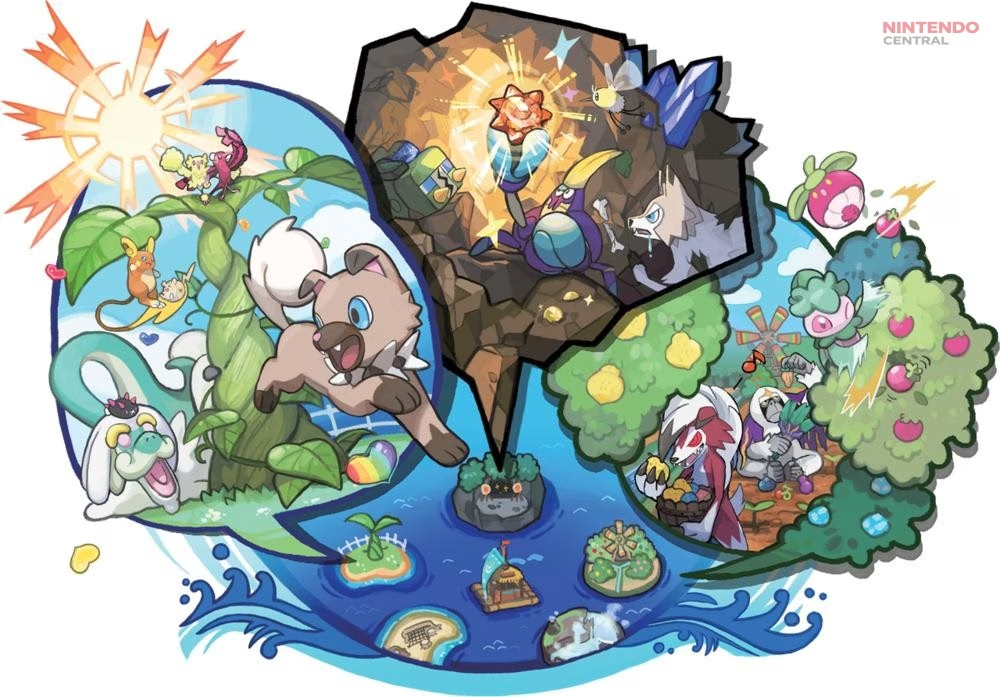
Poké Pelago is a collection of islands accessible through the PC system in Pokémon Sun and Moon. Players unlock it after reaching Akala Island and meeting Mohn, who introduces the mechanic.
The feature revolves around five separate islands, each with a unique function. Pokémon stored in the PC Boxes can be assigned to these islands to complete passive tasks over time. Instead of actively grinding for resources or EVs, players can let Poké Pelago handle many tasks automatically while they continue playing normally.
Poké Beans act as the central resource system. These beans power island functions, reduce timers, and help improve efficiency. There are three main bean categories: Plain Beans, Patterned Beans, and Rainbow Beans. According to Smogon’s detailed Poké Pelago guide, Rainbow Beans provide the strongest bonuses and longest timer effects.
Each island can also be upgraded up to Level 3. Upgrades require a certain number of Pokémon stored in the PC and a supply of Plain Beans.
The overall design made Poké Pelago feel like a background management simulator integrated directly into the Pokémon experience.
Isle Abeens Is the Core of Poké Pelago
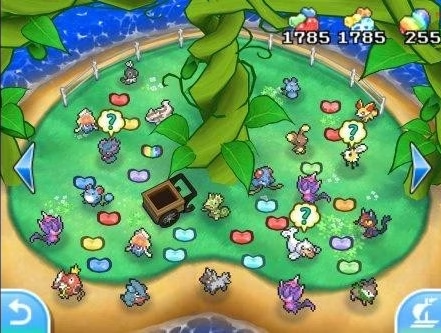
The first island players unlock is Isle Abeens, and it remains the most important part of the system because it generates Poké Beans.
Players collect beans by tapping the Poké Bean tree located in the middle of the island. These beans fuel almost every other activity within Poké Pelago, making Isle Abeens the foundation of the entire mechanic.
One of the most interesting features of Isle Abeens is visiting wild Pokémon. Random Pokémon occasionally appear on the island and may decide to join the player if interacted with consistently. According to Bulbapedia’s Poké Pelago documentation, the available Pokémon change depending on progression through the Alola storyline.
This gave players another method for obtaining certain species without traditional encounters.
Upgrading Isle Abeens increases bean production significantly. Community guides on Reddit and Smogon consistently recommend prioritizing this island first because stronger bean generation improves every other island later.
The island also created a satisfying daily routine. Players regularly checked in to collect beans, recruit Pokémon, and maintain resource generation.
Isle Aplenny Simplifies Berry Farming
Berry farming has always been an important but sometimes tedious mechanic in Pokémon games. Isle Aplenny simplified the process dramatically.
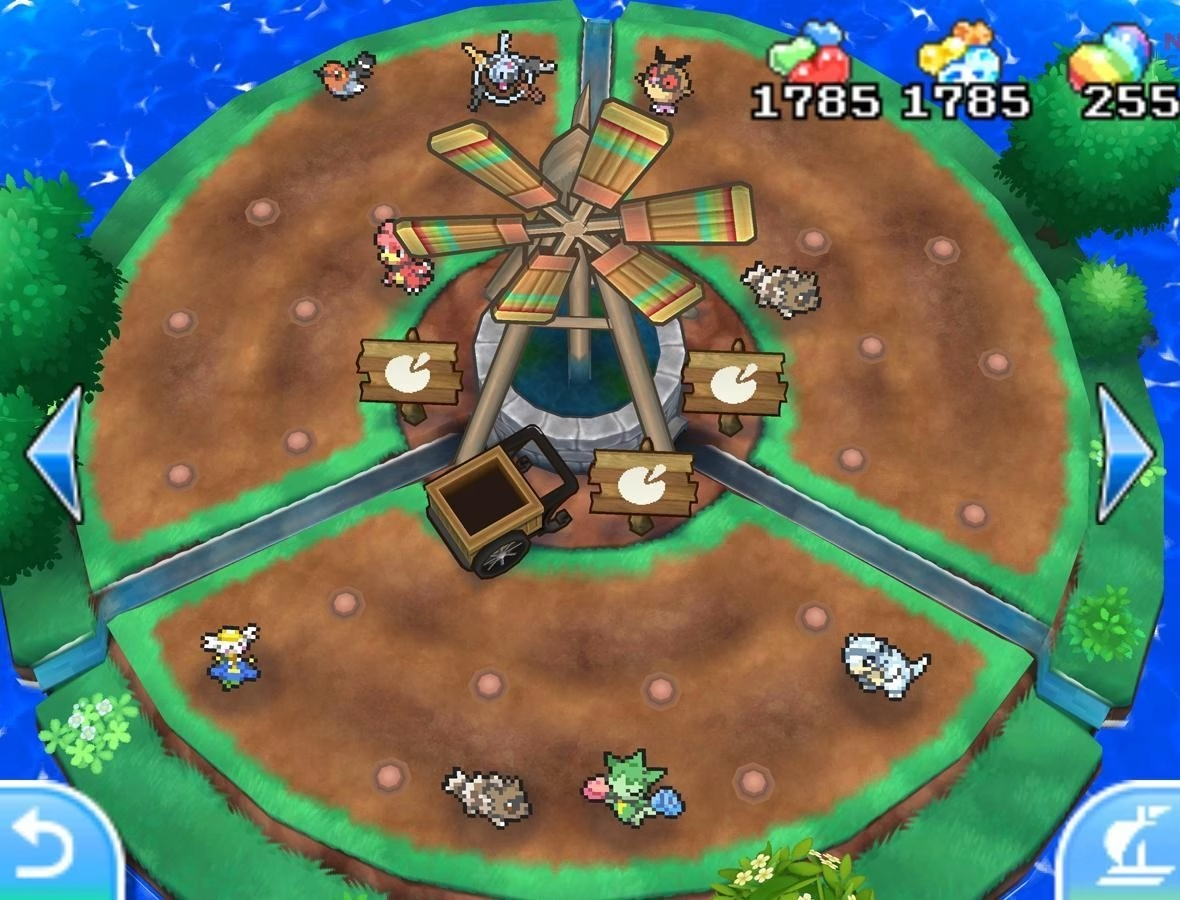
Instead of manually planting and watering berries across multiple routes, players could assign Pokémon to automatically grow berries on Isle Aplenny.
Different berry trees produce different harvests over time, and upgrading the island increases the number of available planting spots. According to Player. One’s Poké Pelago guide, the highest island level, allows up to 18 berry trees simultaneously.
This feature became especially useful for competitive players because berries are important for healing, EV reduction, and advanced battle strategies.
The passive nature of Isle Aplenny made resource collection much less time-consuming than earlier Pokémon games. Players could simply check back later to collect large batches of berries instead of maintaining individual farming routes manually.
Even casual players benefited because berries became much easier to stockpile for in-game healing and Pokémon Refresh interactions.
Isle Aphun Is One of the Best Passive Item Farms
Among competitive and completionist players, Isle Aphun became one of the most valuable Poké Pelago islands because of its item farming system.
Pokémon assigned to Isle Aphun explore caves and return with random rewards. Depending on the island level, players can target specific item categories including shards, evolution stones, treasures, and rare items.
Evolution stones are especially important because certain stones can be difficult to acquire consistently through normal gameplay. Community discussions around Poké Pelago frequently mention Isle Aphun as one of the best ways to farm Ice Stones and other rare evolution items.
The higher-level treasure routes also provide valuable sellable items like Nuggets and Bottle Caps.
Bottle Caps became increasingly important in Generation VII because Hyper Training allowed players to maximize Pokémon IVs artificially. This made Isle Aphun highly valuable for competitive breeding preparation.
Unlike repetitive grinding methods, Isle Aphun functioned passively in the background, rewarding players simply for checking in periodically.
That convenience is one of the biggest reasons many players still remember Poké Pelago so fondly.
Isle Evelup Revolutionized EV Training
Before Generation VII, EV training could be tedious and repetitive. Players often battled specific wild Pokémon repeatedly while tracking stat values manually. Isle Evelup dramatically simplified the process.
The island allows Pokémon to train specific stats automatically over time using themed training sessions. Different drink options correspond to different EV categories like Attack, Speed, or Defense.
According to Player.One’s guide, each training session grants four EVs every 30 minutes, though Poké Beans can reduce the timer significantly. Competitive players immediately recognized how valuable this system was.
Instead of manually grinding hundreds of battles, players could assign Pokémon to Isle Evelup while focusing on other gameplay activities. This passive EV training system removed much of the frustration surrounding competitive preparation.
Upgrading the island increases the number of Pokémon that can train simultaneously, making large-scale team preparation much easier.
Although newer Pokémon games introduced other convenience systems later, Isle Evelup remains one of the cleanest and most user-friendly EV training mechanics the series has ever had.
Isle Avue Helps With Happiness and Egg Hatching
Breeding and friendship management are two of the most time-consuming activities in many Pokémon games. Isle Avue addressed both issues at once.
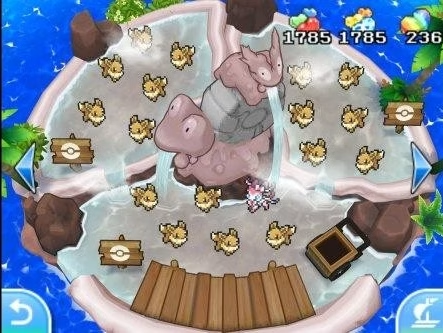
The island contains hot springs where Pokémon and eggs can rest passively. Eggs hatch over time without requiring manual walking, while Pokémon gradually increase friendship levels.
This feature was extremely useful for friendship evolutions like Crobat, Sylveon, and Lucario. Instead of running around endlessly to raise happiness, players could leave Pokémon in Isle Avue while continuing other activities.
Egg hatching also became much less tedious. Competitive breeding often requires hatching large numbers of eggs to find ideal IVs or natures. Isle Avue automated much of that process.
According to official Pokémon strategy guides, higher island levels increase the number of eggs and Pokémon that can use the hot springs simultaneously.
Although the process was slower than active cycling methods, the passive convenience made it popular among players multitasking other activities.