
When Pokémon GO launched in 2016, the game became a global phenomenon because of its augmented reality concept and real-world exploration. However, visually, the game was fairly simple compared to modern mobile titles. The original version relied on low-detail Pokémon models, flat textures, basic lighting, and minimal environmental effects to ensure smooth performance on older smartphones. Over the years, developer Niantic gradually upgraded the game’s visuals while balancing battery efficiency and accessibility for millions of players worldwide.
Today, Pokémon GO looks significantly different from its launch version. Improved Pokémon animations, upgraded shaders, weather effects, enhanced map visuals, dynamic backgrounds, and expanded AR technology have transformed the game into a much richer visual experience. These updates were not introduced all at once. Instead, Niantic slowly modernized the game through years of visual refinement and technological experimentation. Let’s break down how Pokémon models and graphics evolved in Pokémon GO and why these changes matter for the game’s future.
Pokémon GO’s Original Graphics Were Designed for Simplicity
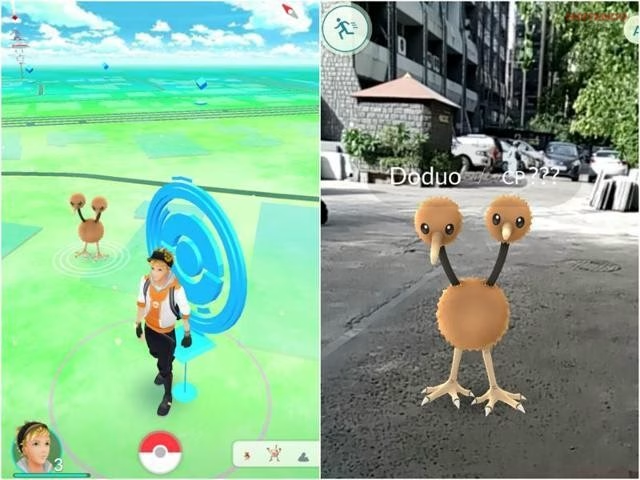
At launch, Pokémon GO focused more on accessibility than graphical fidelity. The game needed to run on a huge range of Android and iOS devices in 2016, many of which lacked powerful GPUs or modern processors. Because of this, the original Pokémon models used relatively low polygon counts and simple textures. Most Pokémon had static idle animations with limited movement during encounters.
The in-game map was also extremely basic. Roads, grass areas, and water bodies used flat colors with minimal texture variation. Lighting effects were nearly nonexistent, and there was little environmental depth. Catch screens featured plain grassy backgrounds with simple sky gradients that rarely changed outside of weather events.
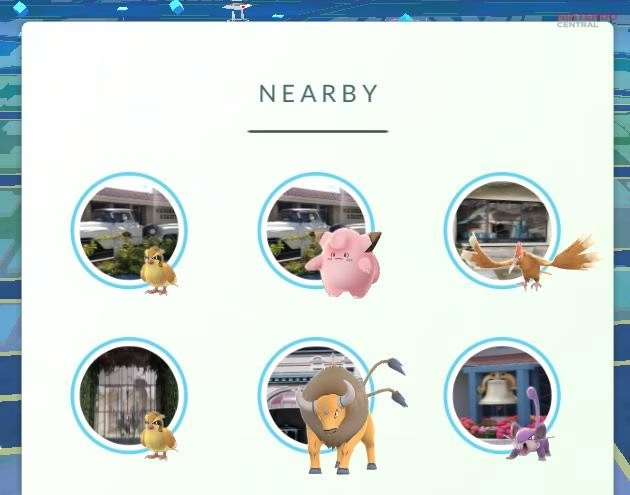
Despite those limitations, the art direction still captured the recognizable style of the Pokémon franchise. The clean visual design helped Pokémon stand out clearly on small mobile screens while maintaining stable performance for millions of concurrent users. According to Pokémon GO Official Website, the game was designed around real-world exploration first, with graphics serving gameplay accessibility.
Pokémon Models Became More Detailed and Expressive
One of the biggest graphical improvements in Pokémon GO involved the Pokémon models themselves. Early versions of the game reused many 3D assets originating from Nintendo 3DS-era Pokémon games. While these models were functional, they lacked the expressive detail and smoother animations seen in newer Pokémon titles.
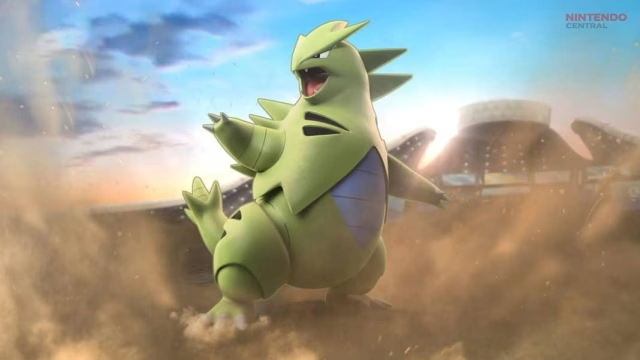
Over time, Niantic improved texture quality, lighting response, idle animations, and interaction effects. Pokémon began reacting more dynamically during encounters, with smoother attack movements, jumping animations, blinking, and improved shadow rendering. Certain Pokémon also received updated scaling and positioning to better fit encounter scenes.
Shadow effects became especially important in later updates. Earlier Pokémon models often looked disconnected from their environments because lighting interactions were minimal. Modern versions use more advanced shaders and environmental lighting, making Pokémon feel naturally integrated into encounter backgrounds.
Niantic also improved special visual effects tied to gameplay mechanics. Shadow Pokémon, Mega Evolutions, Primal forms, and Dynamax-inspired visual events introduced glowing auras, particle systems, and animation upgrades that were absent during the game’s early years. These additions helped battles and raids feel visually more dramatic without changing the core gameplay loop.
AR Technology Significantly Changed the Visual Experience
Augmented reality was always Pokémon GO’s signature feature, but early AR implementation was fairly primitive. In 2016, AR mode mainly placed Pokémon models over a live camera feed without meaningful environmental interaction. Pokémon often floated awkwardly, clipped through surfaces, or failed to align naturally with real-world spaces.
Niantic gradually invested heavily in AR improvements. The company expanded its AR technology through acquisitions and development of its Lightship platform, which focused on advanced spatial mapping and object recognition. These upgrades enabled more realistic Pokémon placement and better environmental awareness.
The introduction of GO Snapshot helped showcase these improvements. Players could place Pokémon in real-world environments for photos, and later updates improved depth perception, positioning, and occlusion handling. Eventually, Pokémon could hide behind objects or appear grounded naturally on surfaces instead of floating unnaturally.
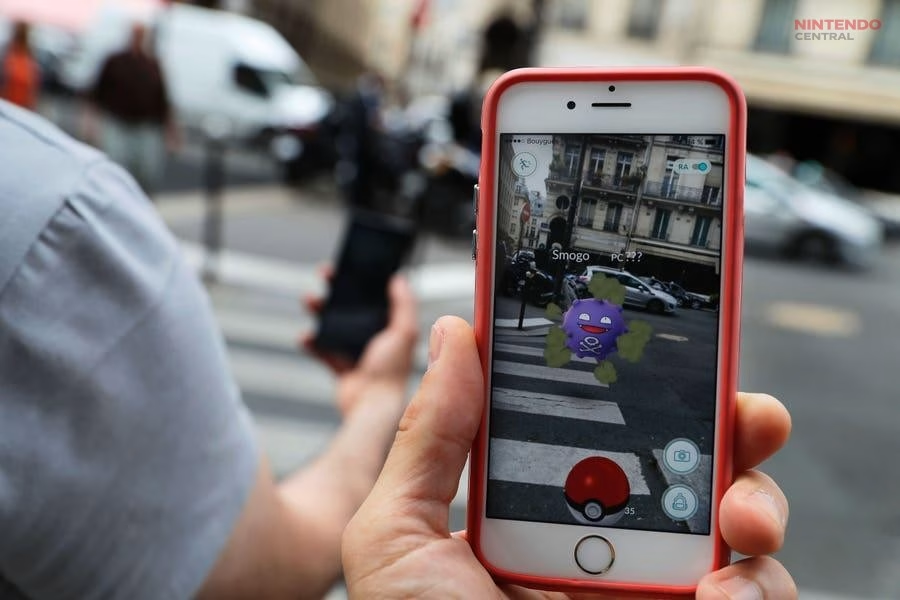
Niantic’s long-term AR ambitions also influenced Pokémon GO’s graphical direction. The company publicly discussed building real-world mapping systems using player-generated spatial data, aiming to create more immersive AR experiences.
These upgrades pushed Pokémon GO closer to the original fantasy many players imagined in 2016: Pokémon that genuinely appear integrated into the real world rather than layered awkwardly over a smartphone camera feed.
Weather Effects and Dynamic Environments Improved Immersion
The introduction of dynamic weather in 2017 marked one of the game’s most noticeable visual leaps. Before weather effects, encounter screens and maps looked nearly identical regardless of location or time. Weather systems changed that by adding fog, rain, snow, sunlight effects, and environmental particles.
Rainy weather introduced reflective lighting and water effects, while snowy conditions added falling snow particles and cooler color grading. Sunny environments became brighter and warmer, creating visual variety during exploration. These changes also affected Pokémon spawns, giving gameplay and graphics a stronger connection.
Niantic continued expanding environmental variety in later years. Seasonal visual themes changed map colors and foliage depending on the time of year. Event-specific visual updates added themed skies, atmospheric lighting, and temporary environmental decorations.
In 2024, Niantic officially confirmed broader visual testing updates for Pokémon GO, including upgraded map visuals and encounter screen changes in selected regions. The company stated these updates were part of efforts to improve immersion and create a more visually dynamic world.
These modern map updates introduced richer textures, improved terrain coloration, enhanced lighting, and more detailed environmental transitions. Water surfaces, grasslands, and urban zones became more visually distinct, helping exploration feel less repetitive.

Avatar Updates Showed Both Progress and Controversy
Character avatars also evolved considerably throughout Pokémon GO’s lifespan. The original avatar creator was limited, offering only basic hairstyles, skin tones, and clothing choices. As customization expanded, Niantic introduced more clothing items, accessories, poses, and body customization systems.
However, not all visual upgrades were universally praised. In 2024, updated avatar models sparked community criticism because some players felt the new designs looked less polished or expressive than earlier versions. Discussions across Pokémon GO communities highlighted concerns about facial proportions, body structure, and reduced visual consistency.
Even with the backlash, the update demonstrated how much Niantic was attempting to modernize the game visually after nearly eight years of operation. More advanced avatar systems allowed for greater personalization, which aligned with modern live-service game standards.
The controversy also revealed an important challenge for Pokémon GO’s graphical evolution: balancing modernization with the nostalgic visual identity players expect from the Pokémon franchise.
Pokémon GO’s Graphics Reflect the Future of AR Gaming
Pokémon GO’s graphical evolution mirrors the broader growth of mobile AR technology itself. In 2016, the game succeeded because its concept was revolutionary, even if the visuals were relatively basic. Modern Pokémon GO, however, reflects years of experimentation in spatial computing, environmental rendering, and mobile AR systems.
Niantic’s investment in Lightship technology and geospatial mapping suggests the company sees Pokémon GO as more than just a mobile game. The visual improvements introduced over the years appear connected to larger ambitions involving immersive AR worlds and real-time environmental interaction.
Although Pokémon GO still prioritizes accessibility over ultra-realistic graphics, the difference between the launch version and today’s game is substantial. Improved Pokémon models, enhanced animations, dynamic maps, upgraded weather systems, and advanced AR integration have transformed the experience into something far more visually engaging.
For longtime players, these changes show how Pokémon GO evolved from a simple location-based experiment into one of the most technologically ambitious AR games on mobile devices.