
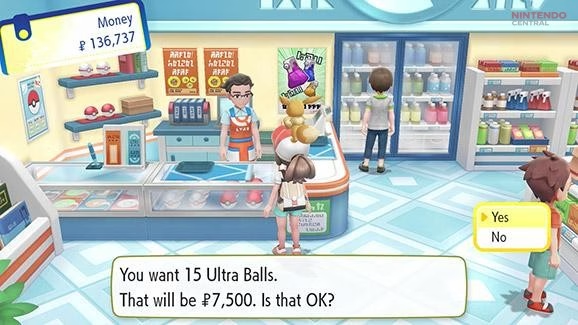
In every mainline Pokémon game, the journey is not just about catching creatures and battling Gym Leaders. It is also about smart resource management, and that is where the Poké Mart becomes one of the most important systems in the franchise. Introduced in Generation I, Poké Marts are the primary shops where players buy and sell essential items needed to survive and progress.
At first glance, these shops may seem simple. You walk in, buy a few Potions or Poké Balls, and continue your adventure. However, beneath that simplicity lies a strategic layer that many players overlook. What you buy, when you buy it, and how you prioritize items can directly impact your success in battles, exploration, and even late-game progression.
Understanding every type of Poké Mart, what they sell, and how their inventory evolves is key to mastering Pokémon. Let’s break down how these stores work and why your shopping strategy matters more than you think.
What is a Poké Mart, and how does it work
A Poké Mart is essentially the in-game shop system found across nearly every Pokémon region. These stores allow players to purchase items like healing supplies, Poké Balls, and battle utilities while also selling unwanted items for in-game currency.
In earlier generations, Poké Marts existed as separate buildings in most towns and cities. However, starting from Generation V, they were integrated into Pokémon Centers, making them more accessible and streamlined for players.
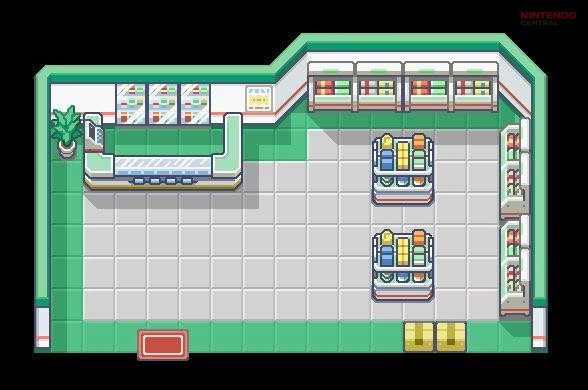
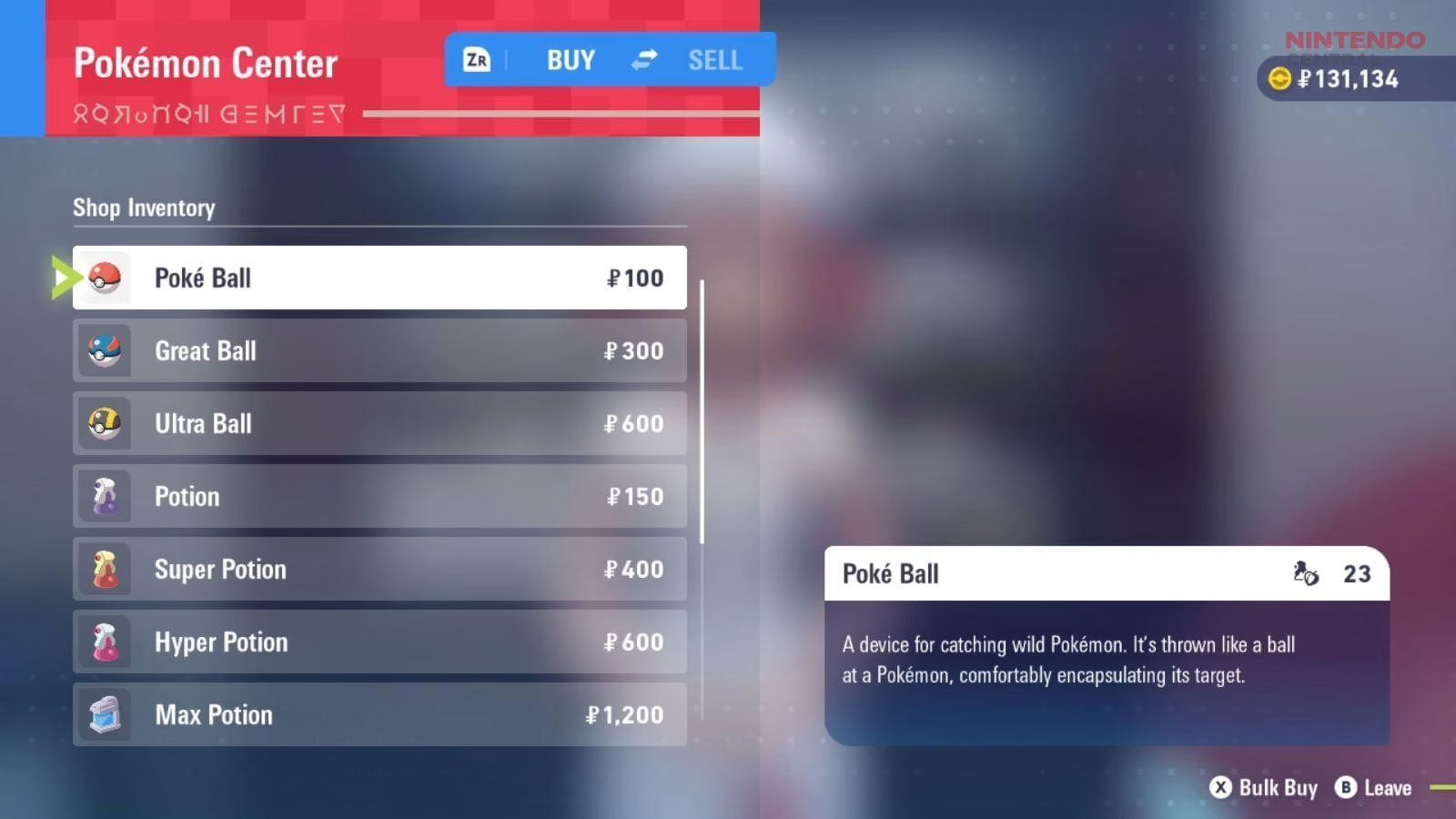
One of the most important mechanics is how inventory evolves. Early in the game, you only have access to basic items like Potions and Poké Balls. As you progress and earn Gym Badges, more advanced items such as Hyper Potions and Ultra Balls become available across all stores.
This progression system ensures that the game’s difficulty curve is supported by better resources, but it also means your purchasing decisions must adapt as new options unlock.
No matter the region or generation, every Poké Mart offers a core set of essential items. These are the backbone of your journey and should always be part of your inventory.
Healing items are the most common. Potions, Super Potions, and Hyper Potions restore HP, while items like Revives bring fainted Pokémon back into battle. Status-healing items such as Antidotes and Paralyze Heals are equally important, especially during longer routes or dungeons.
Poké Balls are another staple. Starting with basic Poké Balls, players eventually unlock Great Balls and Ultra Balls, which offer higher catch rates for stronger Pokémon.
Utility items like Repels and Escape Ropes also play a crucial role. Repels help avoid unnecessary encounters, while Escape Ropes provide quick exits from caves and complex areas.
These items may seem basic, but managing them effectively is what separates casual players from experienced trainers.
Specialty Items and Location-Based Shops
While standard items are available everywhere, certain Poké Marts offer exclusive or specialty items depending on the location. These are often sold by a second clerk or in larger department stores.
For example, some towns sell unique Poké Balls like Net Balls or Quick Balls, which are highly effective in specific situations. These specialized tools can significantly improve your capture strategy if used correctly.
Department stores take this concept further. Found in major cities, these multi-floor shops sell a wide variety of items, including Technical Machines (TMs), stat-boosting vitamins, and decorative items.
These locations act as late-game hubs for optimization. Instead of just surviving battles, players can start fine-tuning their teams with items that enhance stats, moves, and overall performance.
Ignoring these specialty shops is one of the biggest mistakes new players make. They often hold the key to unlocking advanced strategies.
How Inventory Progression Shapes Your Strategy
One of the most underrated mechanics in Pokémon is how Poké Mart inventory scales with your progress. Early-game limitations force players to think carefully about resource usage.
At the start, money is scarce, and item choices are limited. This creates a survival-focused gameplay loop where every Potion or Poké Ball matters. As you progress, both your income and available items increase, shifting the focus toward efficiency and optimization.
This progression encourages strategic thinking. For example, relying too heavily on Potions early on can drain your resources quickly, while saving money for better items later can give you a significant advantage.
Additionally, the fact that all Poké Marts eventually share the same standard inventory means that timing your purchases becomes more important than location.
Understanding this system allows players to plan ahead rather than react impulsively.

Why Your Shopping Strategy Matters
Many players treat Poké Marts as a simple convenience, but they are actually a core part of gameplay strategy.
First, efficient spending is crucial. Since items can only be sold back at about half their purchase price, poor buying decisions can lead to wasted resources.
Second, inventory management directly affects battle performance. Running out of healing items during a long route or dungeon can force unnecessary backtracking or even defeat.
Third, smart shopping improves capture efficiency. Investing in better Poké Balls early can save time and reduce frustration when trying to catch rare or high-level Pokémon.
Finally, advanced players use Poké Marts to prepare for specific challenges. Whether it is stocking up on status-healing items for a tough Gym or buying Repels for efficient exploration, preparation often determines success.
In short, the Poké Mart is not just a shop. It is a strategic tool that rewards planning and foresight.
Over time, Poké Marts have evolved alongside the Pokémon series. Early games featured standalone stores with fixed inventories, while later games introduced dynamic stock that updates based on player progress.
The integration of Poké Marts into Pokémon Centers streamlined gameplay, reducing unnecessary travel and making item management more convenient.
Additionally, newer games have expanded the variety of items available, including battle-enhancing items, ability-changing tools, and more.
Despite these changes, the core concept remains the same. Poké Marts are still the backbone of resource management in Pokémon, and their importance has only grown as the games have become more complex.
Poké Marts may seem like a simple feature, but they play a critical role in shaping the Pokémon experience. From basic healing items to advanced battle tools, these shops provide everything a trainer needs to succeed.
More importantly, they introduce a layer of strategy that goes beyond battles and team-building. Knowing what to buy, when to buy it, and how to use it effectively can make a significant difference in your journey.
Whether you are a new player or a long-time fan, mastering Poké Mart strategy is one of the easiest ways to improve your gameplay. Because in Pokémon, success is not just about catching them all. It is about being prepared for whatever comes next.