If you have been playing Pokémon games for years, chances are you have hundreds of creatures scattered across different titles. That is exactly where Pokémon HOME comes in. Designed as a centralized cloud-based storage system, it promises to bring all your Pokémon into one place while offering trading features and cross-game compatibility.
At first glance, Pokémon HOME feels like an essential tool for dedicated players. It connects titles like Pokémon Sword and Shield, Pokémon Legends: Arceus, and even Pokémon GO, allowing you to manage your collection across platforms. But once you start using it, the experience becomes more complicated.
Let’s break down whether Pokémon HOME truly delivers on its promise or ends up being more frustrating than helpful.
What Is Pokémon HOME and How Does It Work?
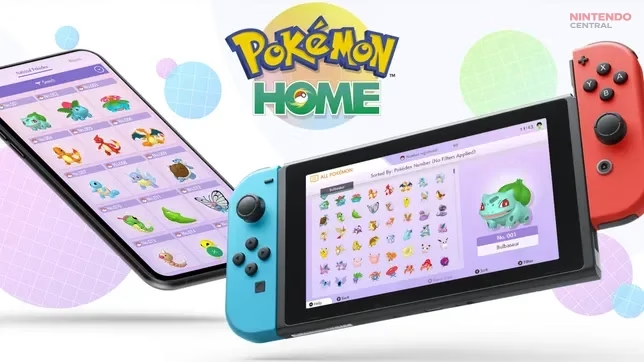
Pokémon HOME is essentially the modern successor to older storage services like Pokémon Bank. Its main function is simple. It lets you store Pokémon in the cloud and transfer them between compatible games.
The service works across both Nintendo Switch and mobile devices, but each platform handles different features. On the Switch, you can move Pokémon between supported games. On mobile, you can trade with other players, browse data, and access social features.
This split functionality is one of the first things users notice. It is not a unified experience. Instead, you need both versions to access everything, which can feel unnecessarily complicated.
Still, the core idea remains strong. Having a single hub for your Pokémon collection is incredibly convenient, especially if you play multiple games regularly.
Key Features That Make Pokémon HOME Stand Out
Pokémon HOME shines when it comes to storage and trading. The ability to gather Pokémon from different generations into one place is its biggest strength.
The Global Trading System, often referred to as GTS, allows players to request specific Pokémon in exchange for their own. This makes targeted trading much easier compared to random exchanges.
There is also Wonder Trade, which lets you send out Pokémon and receive random ones from players around the world. It is unpredictable but exciting, especially if you are trying to fill your Pokédex.
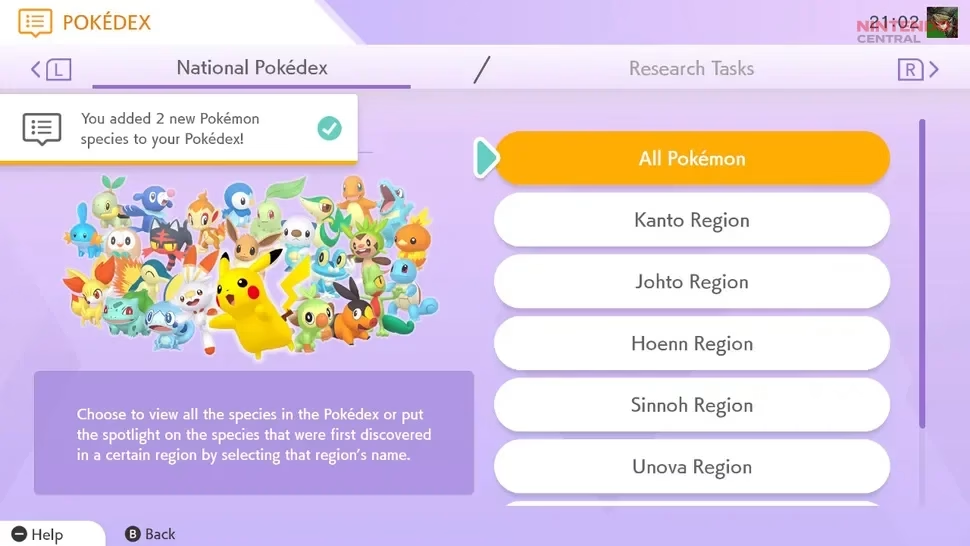
Trade Rooms add another layer by letting groups of players trade simultaneously. These features create a sense of global connectivity that older Pokémon games struggled to achieve.
Compatibility is another strong point. Pokémon HOME supports multiple Switch titles, including Pokémon Brilliant Diamond and Shining Pearl and classic entries via transfers from Pokémon Bank.
However, while the feature list is impressive, the execution is not always smooth.
One of the biggest talking points in any Pokémon HOME review is its pricing model. The service offers both a free plan and a premium subscription, but the difference between them is massive.
The free version limits you to just 30 Pokémon. For casual players, this might be enough, but for anyone with a long history in the franchise, it feels extremely restrictive.
The premium plan increases your storage capacity to 6,000 Pokémon. It also unlocks key features like expanded trading options, including hosting Trade Rooms and depositing more Pokémon in the GTS.
Without the premium plan, the service feels incomplete. Trading is limited, storage is tight, and overall usability takes a hit. In practice, most serious players will need to subscribe to get real value from Pokémon HOME.
The pricing itself is reasonable compared to other subscription services, especially if you opt for the yearly plan. But the reliance on a paywall is hard to ignore.
User Experience: Where Pokémon HOME Struggles
Despite its useful features, Pokémon HOME is not the most intuitive app. The interface can feel clunky, especially when managing large collections.
Organizing boxes, moving Pokémon, and steering menus often take more steps than necessary. The lack of streamlined controls makes even simple tasks feel slower than they should be.
Another issue is the transfer system. Once certain Pokémon are moved into HOME, they cannot always be transferred back into other games. This limitation makes the service feel restrictive, almost like a one-way storage system.
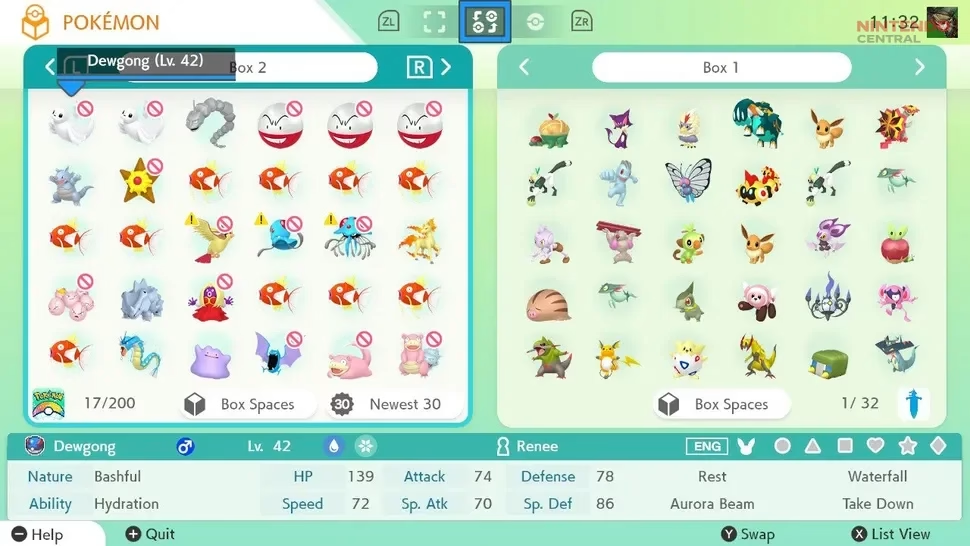
For players who like flexibility, this can be frustrating. It creates a sense that your Pokémon are stuck rather than freely usable across titles.
The split between Switch and mobile versions also adds to the confusion. Instead of a seamless experience, you end up juggling two apps for different functions.
Trading is one of Pokémon HOME’s biggest selling points, but it comes with its own set of pros and cons.
On the positive side, the GTS system is more refined than previous versions. You can specify exactly what Pokémon you want, which increases the chances of successful trades.
Wonder Trade remains a fun feature, especially for players who enjoy the surprise element. It is also a useful way to obtain rare or foreign Pokémon.
However, trading is limited to the mobile version, which feels like an odd design choice. Players who primarily use the Switch will need to switch devices just to access trading features.
Connectivity itself is generally stable, but the fragmented design prevents it from reaching its full potential.
Pokémon HOME already supports a wide range of games, and its compatibility continues to expand. Titles like Pokémon Scarlet and Violet have been integrated, making the service more relevant for modern players.
The ability to transfer Pokémon from older generations via Pokémon Bank also adds long-term value. It ensures that your collection is not lost as the franchise evolves.
Looking ahead, Pokémon HOME has strong potential if updates improve usability and remove some of its current limitations.
Better interface design, more flexible transfers, and unified functionality across platforms could significantly enhance the experience.
Should You Buy It: Is Pokémon HOME Worth It?
Pokémon HOME is a useful but flawed service. At its core, it solves a major problem by giving players a centralized space to store and manage their Pokémon collection.
For dedicated fans who play multiple games and actively trade, the premium subscription is almost essential. It unlocks the features that make the service worthwhile and removes many of the frustrating limitations of the free version.
However, the clunky interface, restricted transfers, and split functionality between devices prevent it from being truly great.
If you are a casual player, the free version may not offer enough value to justify using it regularly. But if you are serious about building and maintaining a large Pokémon collection, Pokémon HOME becomes hard to ignore.
In the end, it feels less like an optional tool and more like a necessary companion for modern Pokémon games. It may not be perfect, but for many trainers, it is the only way to keep their journey connected across generations.