


Pokémon GO nests in 2026 are designated real-world locations, usually found in parks, nature reserves, playgrounds, and other large green spaces, where a specific Pokémon species appears far more frequently than usual. These areas are marked by dark-green zones on the in-game map and serve as important farming spots for trainers looking to catch multiple copies of the same Pokémon. Nests typically rotate every two weeks, creating a constantly shifting system that encourages exploration and repeated visits.
The nest rotation cycle operates on a fixed schedule, changing every two weeks on Thursdays at 00:00 GMT. In 2026, one confirmed migration occurred on March 26, with the next expected on April 9. When a migration happens, the Pokémon species found in a nest changes, but the physical location remains the same. This means a park that previously hosted one Pokémon may suddenly become a hotspot for another after the reset.
Common nesting species in 2026 range from frequently seen Pokémon like Abra and Blitzle to more situational spawns such as Combee and Drilbur. However, these spawns are not guaranteed, especially during in-game events. One important factor affecting nests is that event spawns often override normal nest behavior. During active events, special Pokémon tied to the event may appear instead of the usual nesting species, temporarily hiding the nest’s regular identity.
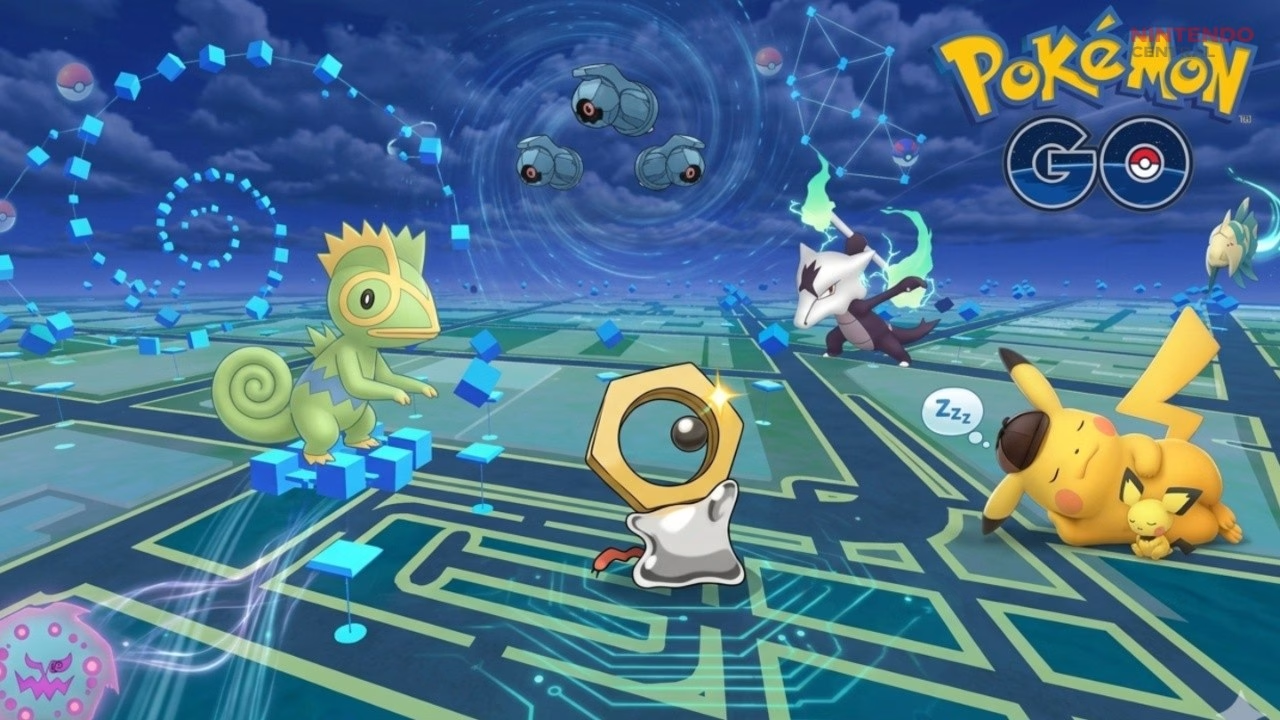
Pokémon GO Nest Locations, Coordinates, Tools, and Farming Guide Explained
Understanding how nests function is essential for efficient gameplay. A nest consistently spawns the same Pokémon at a higher rate than surrounding areas, making it ideal for collecting candy, evolving Pokémon, and hunting shiny variants. For example, if a nest is currently assigned to a Pokémon like Ditto (via disguises), players will repeatedly encounter its disguised forms in that area. Because nests change every two weeks, known as “nest migration,” players must constantly adapt their farming strategies.
Nest locations are usually found in public outdoor areas such as city parks, sports complexes, botanical gardens, and tourist landmarks. These locations often have multiple PokéStops and high spawn density, making them ideal for extended gameplay sessions. Larger parks can sometimes become “high-frequency spawn zones,” where multiple Pokémon types appear, increasing the chance of rare or shiny encounters.
Finding nest coordinates is one of the most effective ways to maximize gameplay efficiency. Nest coordinates refer to exact GPS locations, expressed as latitude and longitude, that pinpoint where a nest is located. Players can enter these coordinates into mapping tools or spoofing applications to travel directly to the nest location. This allows for quick access to Pokémon-rich areas without physically searching.
To find active nests, players rely on several tools and community resources. Platforms like pogonest.com provide biome-based maps that help identify Pokémon spawn patterns, such as beach or forest regions. PokéCoord and similar coordinate databases offer global lists of known nest locations. Community-driven platforms like Reddit groups and regional mapping projects also share real-time updates about nest migrations and active hotspots.
In addition to digital tools, many trainers manually discover nests by visiting large parks and observing spawn patterns. If a single Pokémon appears frequently in one area over a short period, it is likely a nest. Community tracking is especially important because Niantic does not officially publish nest locations or updates, making player collaboration essential.
Several well-known global nest locations continue to be popular in 2026 due to their high spawn density and frequent migrations. Central Park in New York, Hyde Park in London, and Ueno Park in Tokyo are among the most active nest hubs. Other notable locations include Ibirapuera Park in São Paulo, Tiergarten in Berlin, Golden Gate Park in San Francisco, and Marina Bay in Singapore. These locations consistently rotate nest species and offer strong opportunities for rare Pokémon farming.
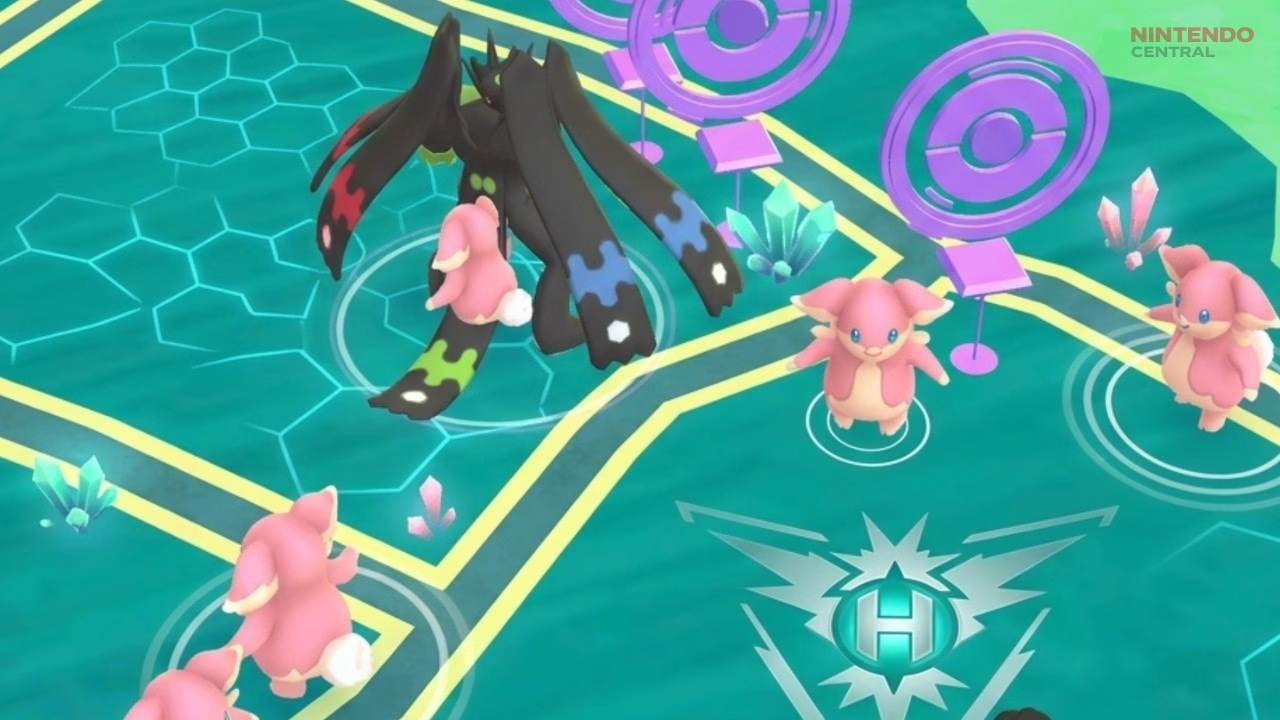
Pokémon GO Nest Rotation Patterns, Tools, Events, Farming Strategies Explained
Pokémon GO nests follow predictable behavioral rules despite their rotating nature. The same nest location will always exist geographically, but the Pokémon species within it changes after each migration cycle. These changes are random, meaning players cannot predict future nest species with certainty. However, understanding the rotation schedule helps players plan their farming routes efficiently.
Some tools also enhance nest hunting through GPS and mapping features. Applications like LocaChange allow players to simulate movement and teleport to coordinates instantly, making it easier to access distant nests. These tools display real-time spawn data, PokéStops, raids, and gym locations, helping players identify optimal farming routes. However, they often come with risks, including account penalties if used improperly.
Other services like ARSpoofing and The Silph Road provide coordinate tracking, crowd-sourced maps, and rare spawn reports. While useful, some platforms may require subscriptions or may not always reflect real-time accuracy. Because nests shift every two weeks, outdated data is a common challenge.
During events, nest behavior becomes more complex. Special event Pokémon can temporarily replace regular nest species, reducing predictability. Players often rely on nearby trackers and community mapping tools to locate active spawns during these periods. Event-driven gameplay adds variety but can temporarily disrupt standard nest farming.
From March to June 2026, seasonal gameplay under the “Memories in Motion” structure further influences nest activity. Seasonal spawns, community days, and raid events interact with nest rotations, creating overlapping spawn systems. This makes timing and location selection more important than ever for maximizing rewards.
April 2026 in particular has been highly active, featuring multiple event types such as Raid Days, Hatch Days, and Max Battle events. These limited-time activities often alter spawn tables, temporarily changing how nests function. Trainers who adapt quickly to these shifts gain an advantage in collecting rare Pokémon and shiny variants.
Looking at the broader system, Pokémon GO nests remain one of the most important mechanics for long-term farming and exploration. They encourage real-world movement, community engagement, and strategic planning. With consistent two-week rotations, global coordinate tracking, and event-based modifications, nests continue to play a central role in gameplay in 2026, offering both casual and competitive players valuable opportunities for progression.