
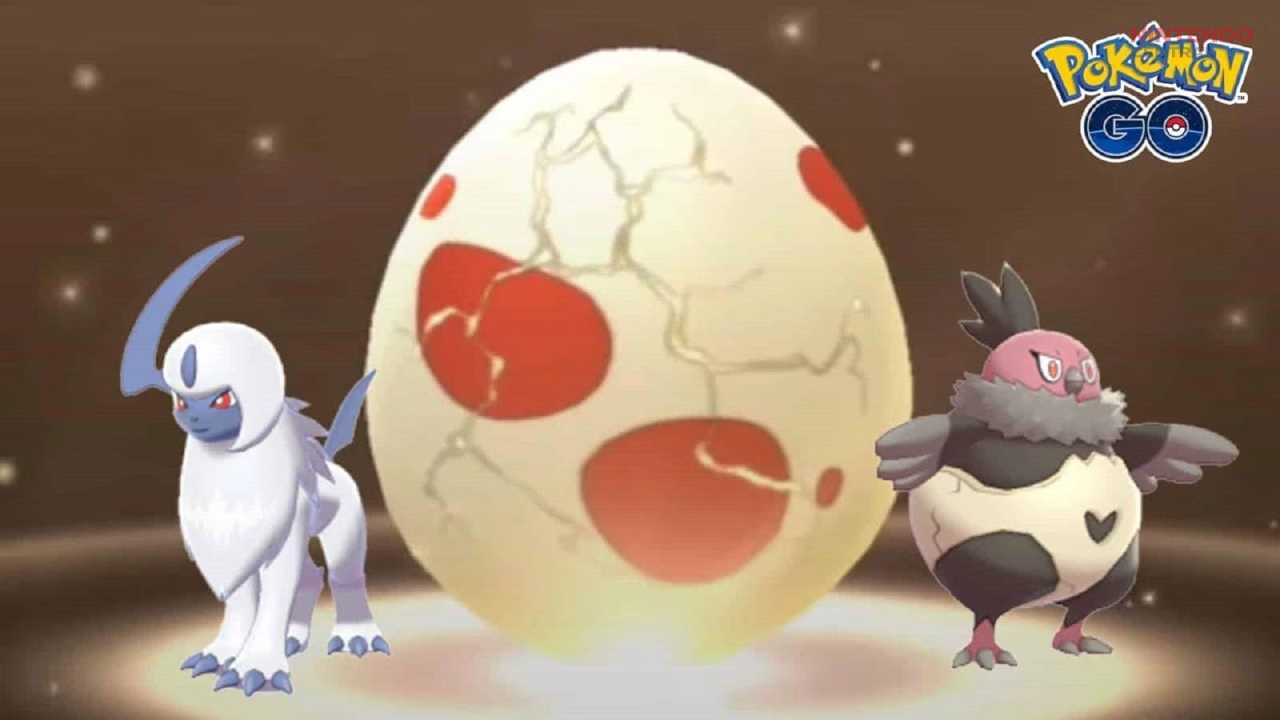
If you’ve spent any time in Pokémon GO, you’ve probably heard whispers about “golden eggs” that supposedly hatch rare or even legendary Pokémon. The idea is exciting, almost too good to be true. And that’s because, in most cases, it is.
Unlike traditional Pokémon games, Pokémon GO relies heavily on its egg system to distribute rare creatures. Players collect eggs from PokéStops, gifts, and special events, then hatch them by walking specific distances.
However, there is a lot of confusion around so-called “golden eggs.” Are they real? Do they guarantee rare Pokémon? And more importantly, are they worth your coins and effort?
Let’s break down the truth behind golden eggs, what actually hatches in Pokémon GO’s rarest eggs, and why your hatching strategy matters far more than chasing myths.
Are Golden Eggs Actually Real in Pokémon GO?
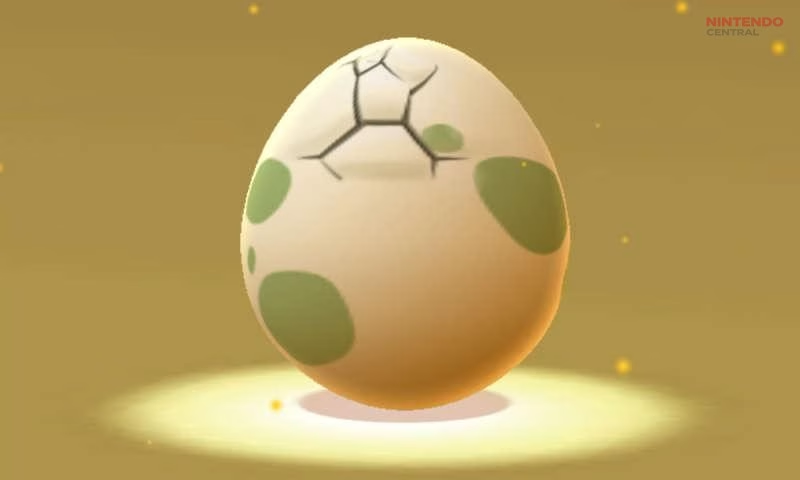
The short answer is no, at least not in the way most players think. Pokémon GO does not officially feature a distinct “golden egg” tier in its core gameplay system. The game currently includes several egg types based on walking distance, such as 2 km, 5 km, 7 km, 10 km, and 12 km eggs. So where did the “golden egg” idea come from?
Much of it stems from community speculation, visual confusion, and event-based features. Some players associate golden-colored elements, like Golden PokéStops or special event rewards, with rare eggs. Others misinterpret high-tier eggs, particularly 10 km or 12 km eggs, as “golden” due to their rarity and value.
There are also misleading videos and posts claiming golden eggs guarantee legendary Pokémon, but these claims are not supported by official game mechanics.
In reality, the closest thing to a “golden egg” is simply the highest-tier eggs in the game. And those are where the real value lies.
The Real “Golden Tier”: 10 km and 12 km Eggs
If you are chasing rare Pokémon, the real targets are 10 km and 12 km eggs. These eggs require the most effort to hatch but offer the best rewards.
10 km eggs are widely considered the premium tier. They often contain rare Pokémon like pseudo-legendaries, regionals, and high-value evolutions depending on the current season.
12 km eggs, also known as Strange Eggs, are even more exclusive. These are obtained by defeating Team GO Rocket Leaders and typically include rarer, darker-themed Pokémon such as Sandile, Pancham, and Salandit.
The reason these eggs feel like “golden eggs” is simple. They require more effort, have lower drop rates, and offer higher-value rewards. In a game built around grinding and progression, that combination makes them incredibly desirable.
What Actually Hatches From Rare Eggs
Understanding what hatches from each egg tier is key to optimizing your strategy.
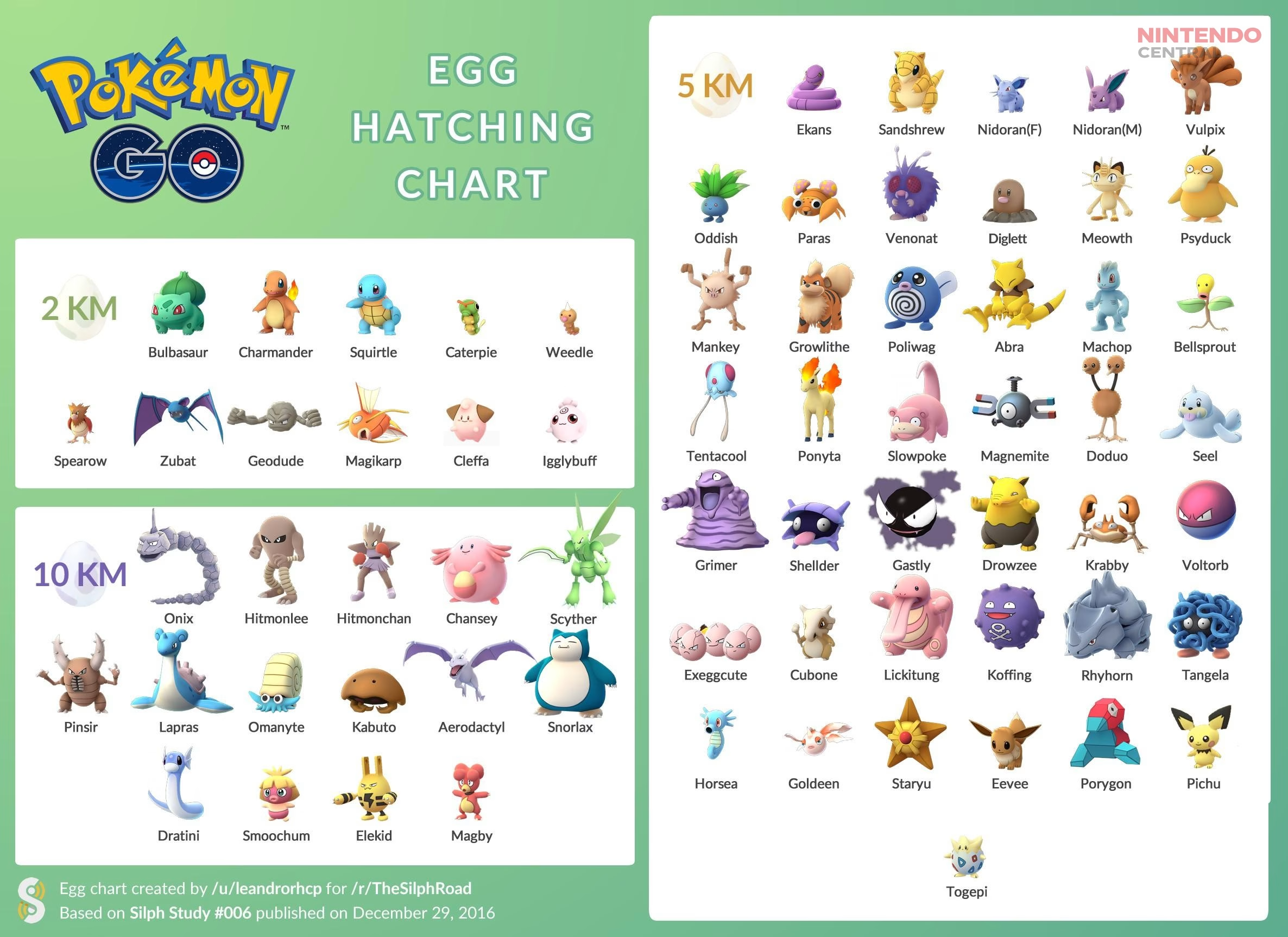
Lower-tier eggs like 2 km and 5 km eggs typically contain common or early-stage Pokémon. While useful for candy farming and Pokédex completion, they rarely offer high-value rewards.
Mid-tier eggs, such as 7 km eggs from gifts, often include regional variants and special event Pokémon. These are valuable for collectors but not always for competitive play. High-tier eggs are where things get interesting.
10 km eggs can hatch powerful Pokémon like Gible, Dreepy, and Toxel, which evolve into some of the strongest creatures in the game.
12 km eggs include rare species like Sandile and Vullaby, which are difficult to find elsewhere.
It is important to note that the Pokémon inside an egg is determined the moment you receive it, not when it hatches.
This means holding onto an egg will not improve your chances. Strategy matters more than timing.
Why Rare Eggs Feel “Expensive” and High-Stakes
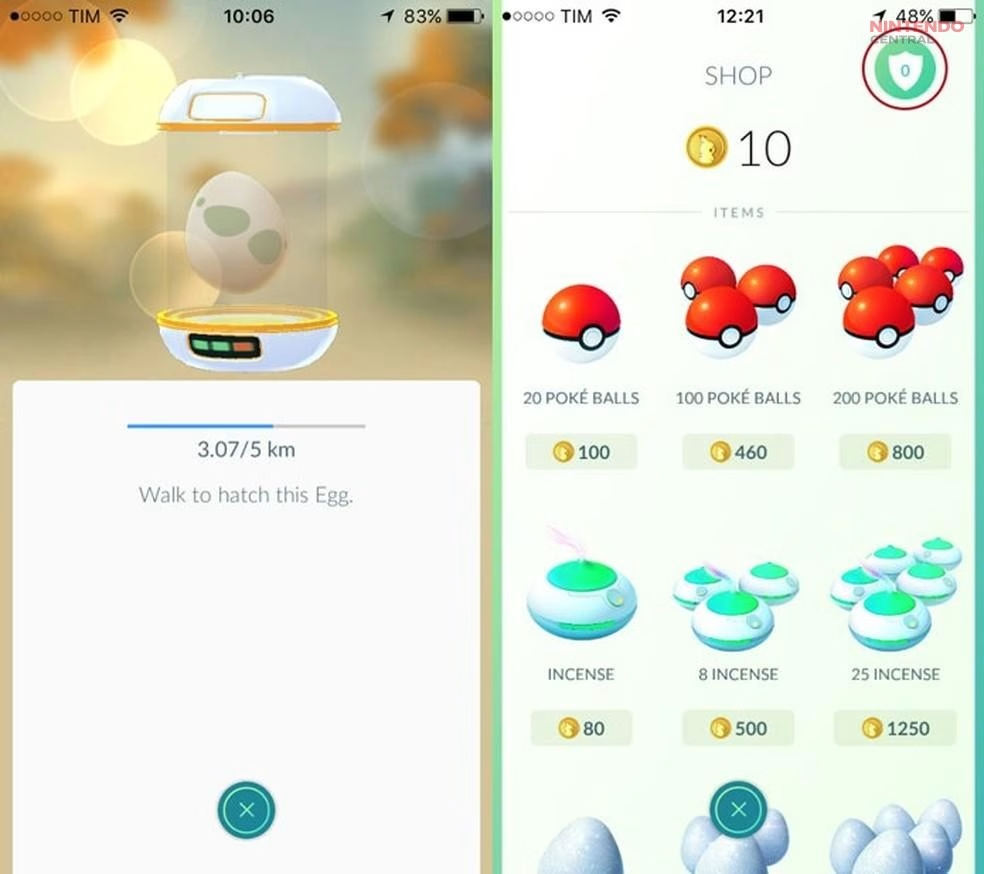
Even though eggs themselves are free, hatching them efficiently is not. To maximize egg hatching, players often invest in incubators, which can be purchased using PokéCoins. This creates a system where rare eggs feel “expensive,” especially if you are trying to hatch multiple high-distance eggs quickly.
The game is designed around movement. You must walk a set distance to hatch each egg, which reinforces the core gameplay loop of exploration.
However, when combined with limited incubators and time-sensitive events, this system encourages spending. Players who want faster results often buy additional incubators, making rare eggs feel like premium content.
This is why many players associate high-tier eggs with value. They require effort, time, and sometimes money, making the reward feel more significant.
The Strategy Behind Egg Hatching That Most Players Miss
Here’s where things get interesting. The real advantage in Pokémon GO is not chasing mythical “golden eggs.” It is understanding how to manage your egg inventory.
One of the most effective strategies is clearing out low-tier eggs quickly. Since you can only hold a limited number of eggs at a time, keeping 2 km eggs in your inventory reduces your chances of obtaining 10 km or 12 km eggs.
Another key strategy is timing your egg collection. Since the contents of an egg are locked when you receive it, picking up eggs during special events can significantly improve your rewards.
Players should also prioritize walking efficiency. Using Adventure Sync allows you to hatch eggs even when the app is not actively open, maximizing progress without constant gameplay.
Finally, focusing on high-value eggs ensures better long-term results. Instead of hatching everything equally, prioritizing 10 km and 12 km eggs leads to stronger Pokémon and better overall progression.
The idea of golden eggs persists because it taps into something fundamental about Pokémon GO’s design.
The game thrives on randomness and rarity. Players never know exactly what they will get, which creates excitement and anticipation.
This uncertainty leads to speculation. When players experience a particularly rare or valuable hatch, it is easy to attribute it to a special type of egg rather than pure probability.
Over time, these stories evolve into myths. Golden eggs become a symbol of luck and rarity, even if they do not officially exist.
In reality, the system is more straightforward. Rarity is tied to egg type, event bonuses, and probability, not hidden tiers.
Are “Golden Eggs” Worth It?
If you are asking whether golden eggs are worth chasing, the answer is simple. They are not real.
However, the concept behind them absolutely is. High-tier eggs like 10 km and 12 km eggs are worth every bit of effort if you are serious about progressing in Pokémon GO.
They offer better rewards, rarer Pokémon, and a more meaningful gameplay experience. But success does not come from luck alone. It comes from strategy.
Understanding how eggs work, managing your inventory, and prioritizing the right hatches will always outperform blindly chasing myths.
In the end, Pokémon GO rewards players who play smart, not just those who get lucky.