

Nintendo continues to strengthen its next-gen lineup with the reveal of Tomb Raider: Legacy of Atlantis, a major reimagining of Lara Croft’s original adventure built specifically for the Nintendo Switch 2. The game is scheduled to launch on February 12, 2027, and aims to bring one of gaming’s most iconic franchises into a modern era with updated mechanics, enhanced visuals, and new content.
Positioned as both a remake and a reinvention, the title revisits the foundation of the Tomb Raider series while adapting it for today’s expectations. Early details suggest a strong focus on cinematic storytelling, fluid gameplay, and large-scale exploration, making it one of the most ambitious Tomb Raider projects in recent years.
A Reimagining of Lara Croft’s Original Journey
Tomb Raider: Legacy of Atlantis is described as a modern reinterpretation of the 1996 game that introduced Lara Croft to the world. Rather than simply remastering the original, the project rebuilds the experience with contemporary design principles while preserving the core identity of the classic title.
Players will once again step into the role of Lara Croft, exploring a series of exotic and dangerous locations across the globe. From the jungles of Peru to ancient ruins in Greece and deserts in Egypt, the game promises a globe-trotting adventure that stays true to the franchise’s roots. The story revolves around the hunt for the Scion, a powerful artifact that drives the narrative forward.
The remake will include “new surprises that honor the spirit of the original,” suggesting that both returning fans and newcomers can expect fresh elements alongside familiar story beats.
Built With Modern Technology and Gameplay Systems
One of the biggest upgrades comes from the game’s technical foundation. Legacy of Atlantis is being powered by Unreal Engine 5, allowing for significantly improved visuals, lighting, and environmental detail. This marks a major leap from earlier versions of the franchise, bringing Lara Croft’s world to life with modern graphical fidelity.
The gameplay is also being reworked to match current standards. Traversal, puzzle-solving, and combat are expected to feel more fluid and responsive, aligning with modern action-adventure titles. The goal appears to be a seamless blend of exploration and cinematic storytelling, creating a more immersive experience.
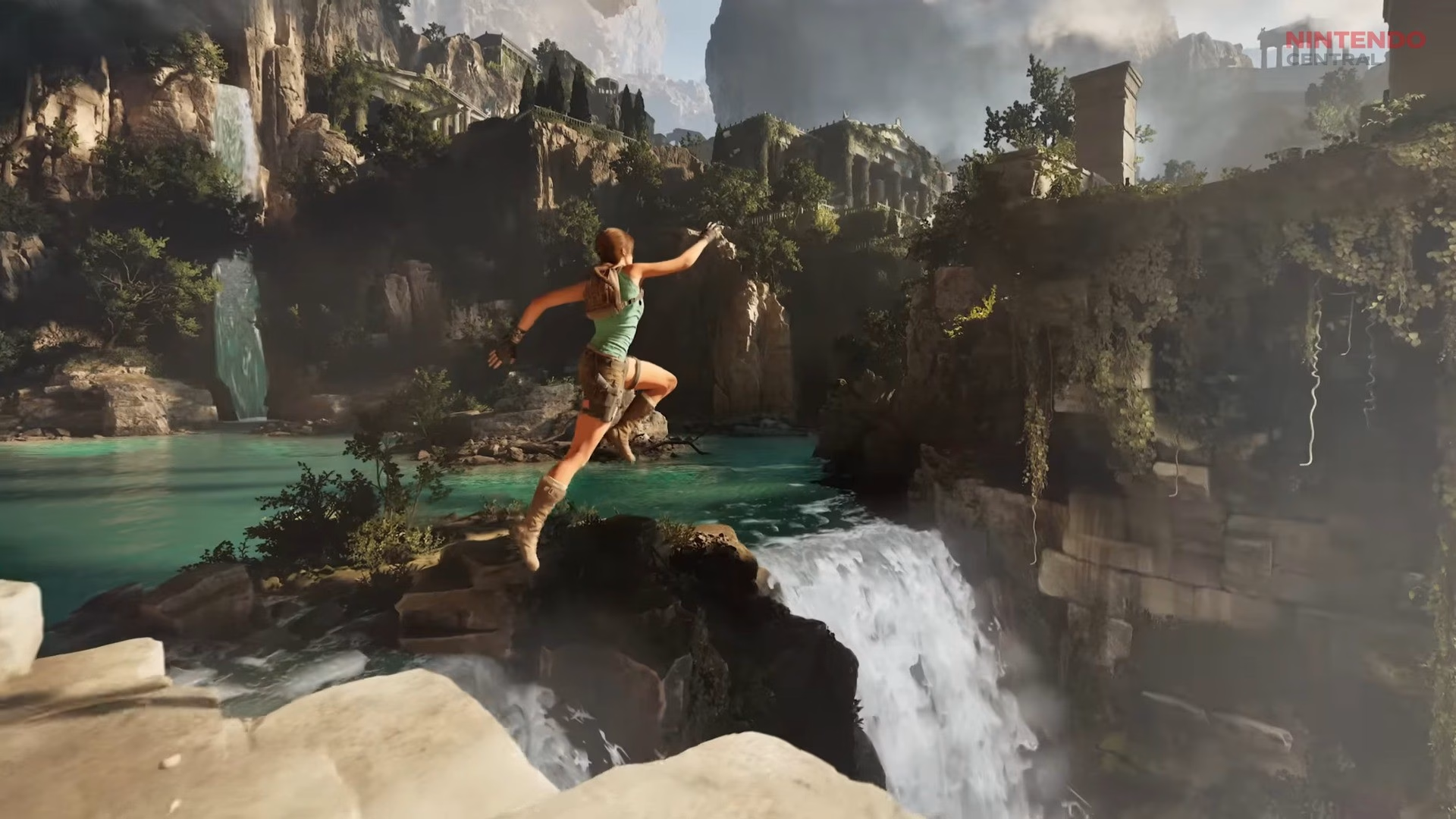
Developers have emphasized that the game will deliver “the same cinematic scale and fluid gameplay, fully optimized” for Nintendo’s hardware. This suggests that the Switch 2 version is being treated as a primary platform rather than a secondary port, an important shift for third-party releases on Nintendo systems.
Expanding the Tomb Raider Presence on Switch 2
The announcement of Legacy of Atlantis is part of a broader push to bring the Tomb Raider franchise to Nintendo’s next console. Over the past year, titles such as Tomb Raider I–III Remastered and Tomb Raider: Definitive Edition have already made their way to the platform, establishing a growing presence for the series.
This new release builds on that momentum by offering a fully reimagined experience rather than a port or remaster. It also reflects the continued popularity of Lara Croft as a character, whose legacy spans decades of gaming history. By revisiting her first adventure, the developers are tapping into nostalgia while introducing the story to a new generation.