
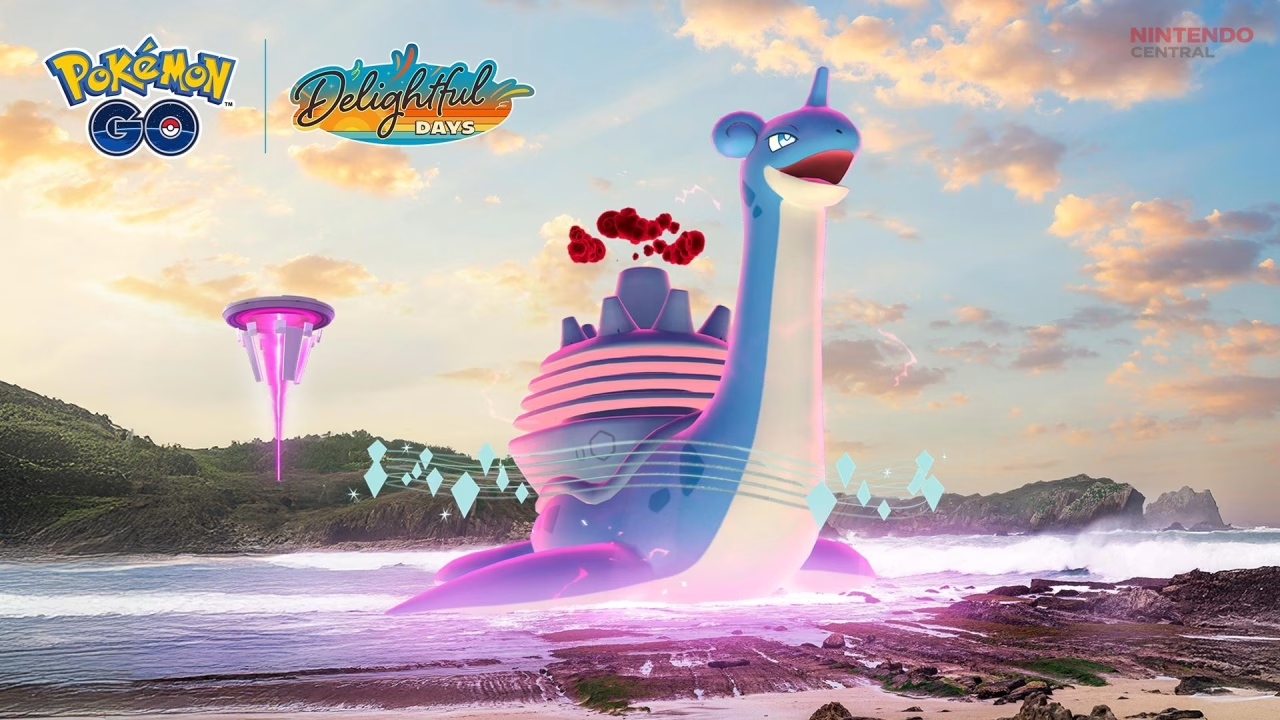
The Pokémon GO Lapras event in Japan remains one of the most unique and meaningful live events in the game’s history. Unlike standard in-game celebrations focused purely on gameplay rewards, this event was designed with a real-world purpose. In November 2016, Niantic increased Lapras spawns across parts of Japan’s Tohoku region, specifically in areas affected by the devastating 2011 earthquake and tsunami. The goal was to encourage tourism, support local businesses, and bring attention back to regions still recovering years after the disaster.
At the time, Lapras was one of the rarest Pokémon in Pokémon GO, making the event an enormous attraction for players across Japan. Thousands of trainers traveled to Miyagi, Iwate, and Fukushima prefectures to catch Lapras while exploring local communities. The event eventually generated major tourism revenue and became one of the earliest examples of augmented reality gaming creating measurable real-world economic impact.
Let’s break down why the Pokémon GO Lapras event happened, how it worked, and why it remains important years later.
Why the Pokémon GO Lapras Event Was Held in Japan
The Lapras event was held in Japan’s Tohoku region, which suffered catastrophic damage during the Great East Japan Earthquake and tsunami in March 2011. Several coastal cities in Miyagi, Iwate, and Fukushima prefectures experienced severe destruction, population displacement, and long-term tourism decline after the disaster.
By late 2016, Pokémon GO had become a worldwide phenomenon. Niantic and local governments recognized that the game’s location-based mechanics could encourage people to physically travel to less-visited regions. Instead of organizing a traditional advertising campaign, they used one of Pokémon GO’s rarest Pokémon to attract players.
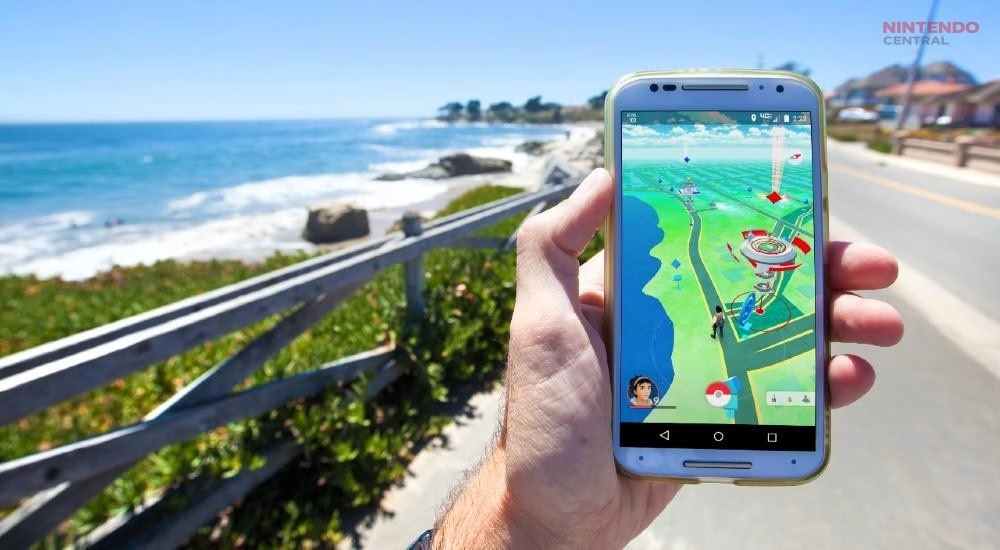
Lapras was chosen because it was already extremely popular within the Pokémon community. In early Pokémon GO, Lapras had very low spawn rates globally and was considered one of the hardest Pokémon to find. Reports of Lapras appearances often caused massive player gatherings even in major cities like Tokyo.
Niantic dramatically increased Lapras spawn rates along the coastlines of Miyagi, Iwate, and Fukushima prefectures between November 11 and November 23, 2016. The company encouraged players to “journey in Tohoku” and discover the region beyond the game itself.
The event effectively turned Pokémon GO into a tourism campaign powered by augmented reality.
How the Lapras Event Worked in Pokémon GO
During the event period, Lapras appeared at significantly higher rates in designated coastal areas throughout the Tohoku region. These spawns were far beyond normal encounter rates seen elsewhere in the game.
Players traveled to fishing towns, seaside parks, train stations, and waterfront districts specifically to hunt Lapras. Many areas already had PokéStops and Gyms integrated into local landmarks, which helped turn sightseeing into part of the gameplay experience.
Unlike modern Pokémon GO events that rely heavily on raids or ticketed research, the Lapras event focused primarily on wild spawns. This made participation accessible to almost anyone with a smartphone and a Pokémon GO account.
At the time, Pokémon GO was still in its early months and had fewer gameplay systems compared to modern versions. Rare Pokémon encounters were one of the main reasons players explored different real-world locations. Lapras quickly became the centerpiece of the Tohoku tourism initiative because its rarity motivated travel naturally.
The event also encouraged extended stays in local areas rather than short visits. Players often spent entire weekends traveling through the region to maximize Lapras encounters while visiting nearby attractions, restaurants, and hotels.
The Real-World Economic Impact of the Lapras Event
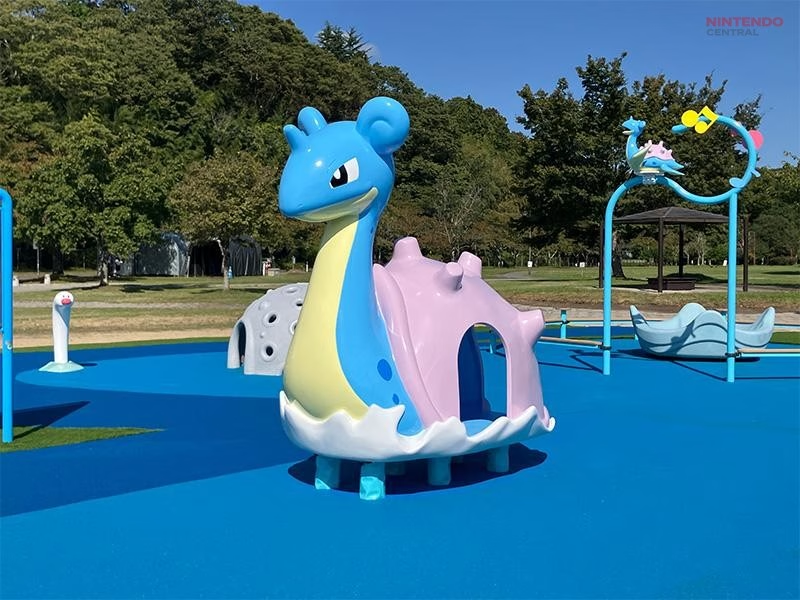
The Pokémon GO Lapras event produced surprisingly large economic results in a relatively short period. According to reports cited by Nintendo Life and Japanese tourism coverage, the event attracted roughly 100,000 visitors and generated approximately ¥2 billion, or around $17 million, in tourism revenue.
One of the most discussed examples came from Miyagi Prefecture, particularly Ishinomaki City. Local businesses reportedly saw increased customer traffic as Pokémon GO players visited restaurants, transportation hubs, hotels, and retail areas during the event period.
The tourism boost demonstrated how augmented reality games could influence real-world travel behavior on a massive scale. Instead of simply engaging with digital content at home, players physically traveled across Japan because the game rewarded location-based participation.
Academic studies examining Pokémon GO’s broader influence also found that the game increased walking activity and altered movement patterns within cities. Researchers studying mobility and physical activity connected Pokémon GO to measurable increases in outdoor activity and pedestrian traffic.
The Lapras event became one of the clearest examples of these effects translating directly into economic recovery efforts.
Why the Event Became Historically Important for Pokémon GO
The Lapras event helped establish the idea that Pokémon GO could function as more than just a mobile game. It showed governments, tourism boards, and businesses that augmented reality gaming could drive real-world engagement in meaningful ways.
Later Pokémon GO live events, including Safari Zones and GO Fest celebrations, expanded on many ideas first demonstrated during the Tohoku Lapras campaign. Niantic increasingly partnered with cities and tourism organizations to encourage travel through exclusive in-game content and limited-time Pokémon spawns.
The success of the event also influenced broader Pokémon tourism projects in Japan. In later years, initiatives like Poké Lids, officially branded Pokémon-themed manhole covers installed across Japan, were created partly to attract visitors to smaller or lesser-known regions.
Niantic itself continued supporting tourism-related collaborations in Tohoku after the Lapras event. According to Niantic’s official memorial statement regarding the 2011 earthquake, Pokémon GO projects in Miyagi and Fukushima continued for years afterward as part of regional recovery and tourism efforts.
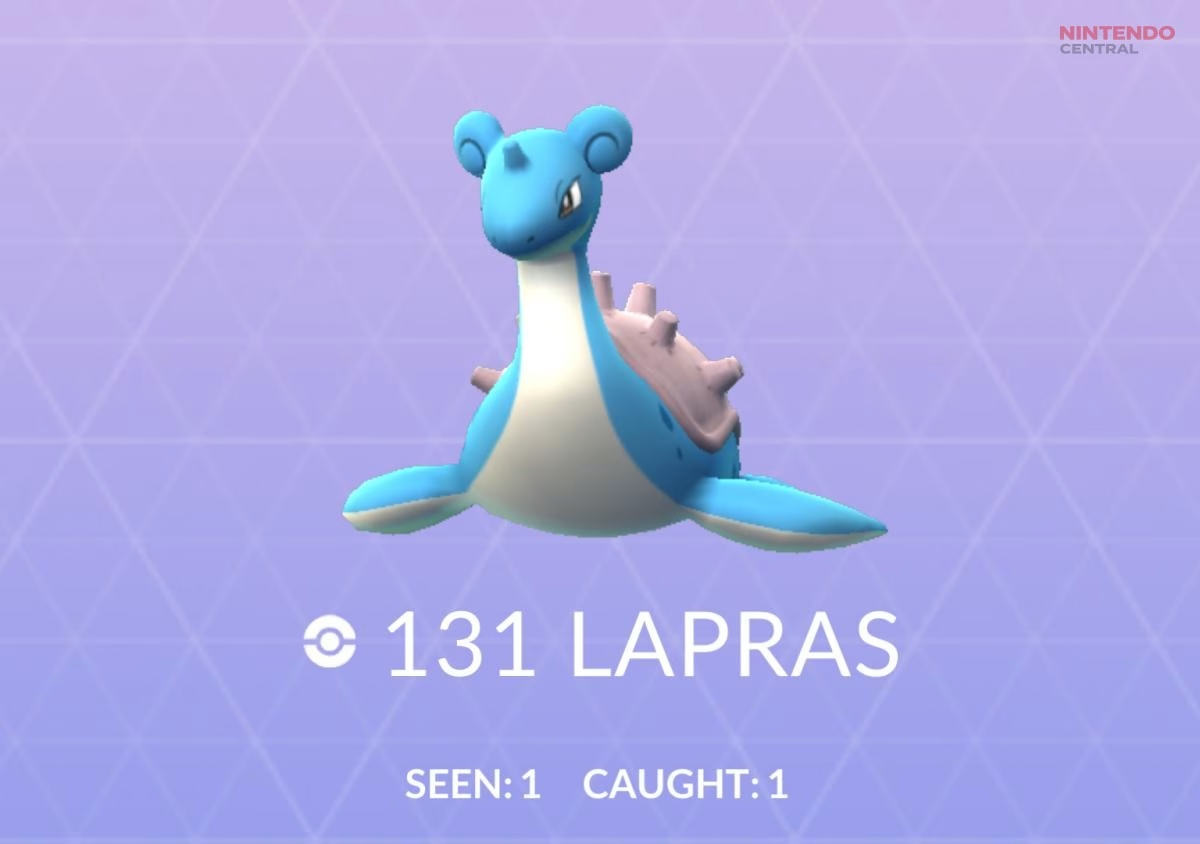
The event also became important historically because it occurred during Pokémon GO’s peak popularity period in 2016. At that time, even small in-game changes could attract enormous public attention. The Lapras event demonstrated the unprecedented cultural influence Pokémon GO had during its first year.
Community Response to the Lapras Event
The Pokémon GO community responded extremely positively to the event. Many players praised Niantic for using the game to support areas recovering from natural disasters rather than focusing solely on monetization.
Online discussions from the time frequently highlighted how unusual it was for a mobile game event to create measurable economic benefits for real communities. Some players traveled specifically to support local tourism while also participating in the Lapras hunt.
The event also strengthened Pokémon GO’s image as a socially interactive game. Unlike many mobile titles designed around isolated play, Pokémon GO encouraged exploration, travel, and real-world gatherings. The Lapras event amplified those strengths by combining gameplay with regional awareness and tourism support.
For many longtime players, the Tohoku Lapras event remains one of Pokémon GO’s most memorable moments because it connected digital gameplay with genuine social and economic impact.
Could Pokémon GO Hold Similar Events Again?
Pokémon GO still regularly hosts location-based events, but few have matched the symbolic importance of the original Lapras event in Japan. Modern events tend to focus more on monetized ticket systems, exclusive raids, and global participation rather than regional recovery initiatives.
However, the success of the Lapras campaign proved that augmented reality games can influence tourism and local economies in measurable ways. Niantic continued experimenting with this concept through city partnerships, sponsored PokéStops, Safari Zones, and tourism collaborations worldwide.
The event also helped inspire future discussions about how games can contribute to urban revitalization, public activity, and tourism promotion. Even years later, the Lapras event is frequently referenced as one of the strongest examples of gaming being used for real-world economic support.
For Pokémon GO players, the event represented far more than a rare Pokémon spawn increase. It showed how a mobile game could encourage travel, support struggling communities, and create lasting memories tied to real locations. That combination of gameplay and real-world impact is a major reason why the Pokémon GO Lapras event in Japan remains one of the most important events in the game’s history.