After more than a decade, Nintendo has brought back one of its most unconventional franchises with the release of Tomodachi Life: Living the Dream. Launched on April 16, 2026, the game revives the social simulation concept first introduced on the Nintendo 3DS, expanding it for modern hardware while maintaining its distinctive, unpredictable structure.
The original Tomodachi Life built a dedicated following by offering something few other games attempted. Instead of direct control or structured progression, players observed and influenced a community of Mii characters living together on an island. Relationships formed, conflicts emerged, and events unfolded with minimal scripting. The sequel retains that core design, but broadens the scope of customization and player input.
In Living the Dream, players once again act as overseers rather than protagonists. The focus is on guiding interactions, introducing new elements, and responding to the needs of island residents.
However, the game places far greater emphasis on user-generated content. Players can customize not only characters but also aspects of the environment, interactions, and social dynamics. This approach shifts the experience toward a more open-ended simulation, where outcomes feel less predetermined and more emergent.
The extended development cycle reflects this shift in design philosophy. Reports indicate that work on the project began as early as 2017, following Nintendo’s experimentation with social features in its mobile title Miitomo.
Rather than rushing a sequel, the development team appears to have focused on building systems that support long-term engagement through player creativity. The result is a game that functions less like a traditional simulator and more like a sandbox for social scenarios.
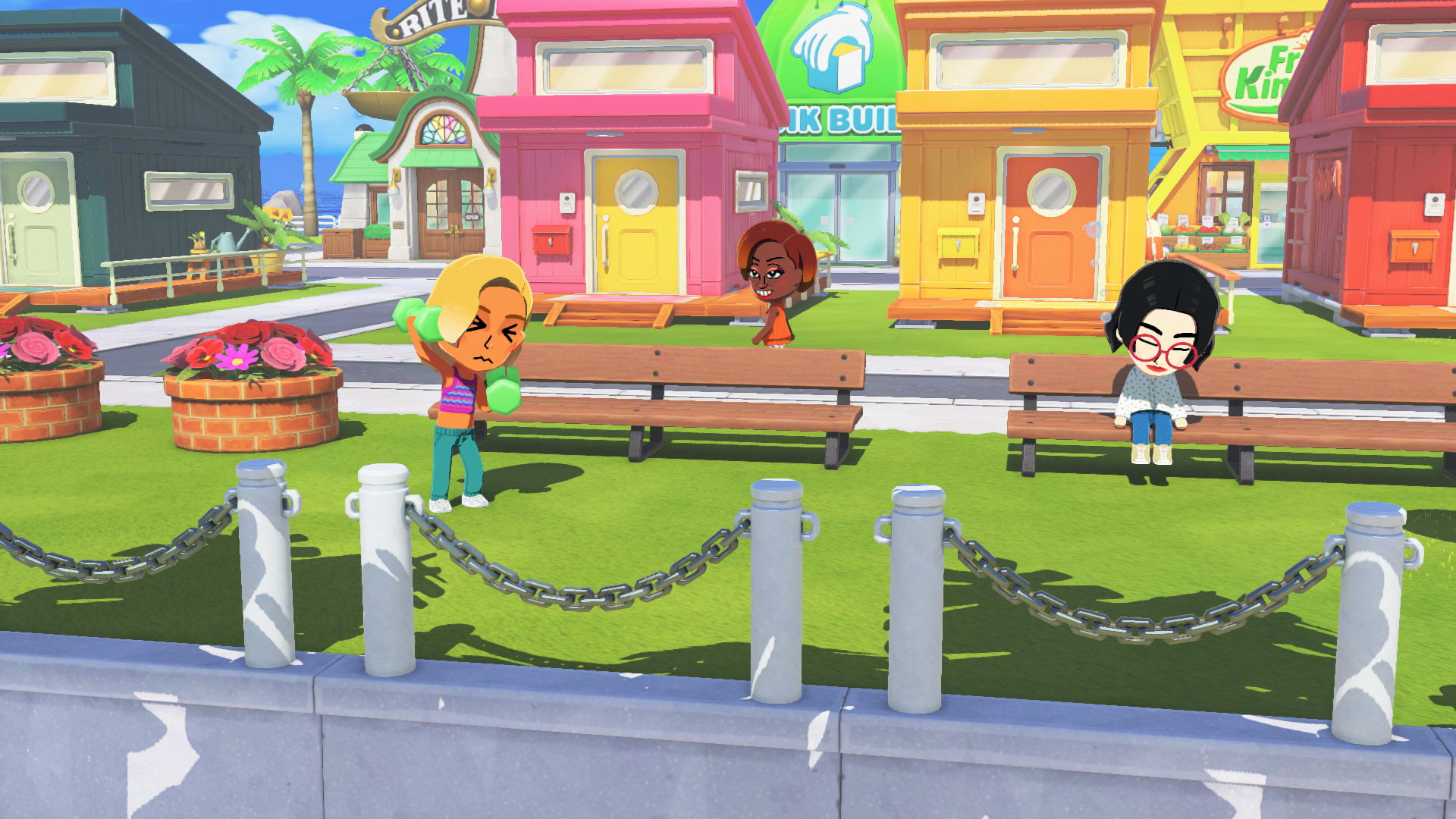
From a technical standpoint, Tomodachi Life: Living the Dream is designed for the Nintendo Switch but remains fully compatible with the Nintendo Switch 2. While it benefits from improved performance and smoother visuals on newer hardware, it is not positioned as a showcase title for the system. The emphasis remains on interaction systems rather than graphical advancement.
One of the most notable updates is the expansion of identity and relationship options. Players now have more flexibility in defining their Miis, including broader choices for pronouns and romantic relationships. This addresses long-standing criticism of the original game and reflects a shift toward more inclusive design. At the same time, the fundamental mechanics remain intentionally loose, allowing unexpected outcomes to drive the experience.
That unpredictability continues to define the appeal. The game often plays out like an unscripted reality show, with characters forming friendships, rivalries, and romantic connections in ways that can be both humorous and unpredictable. Unlike more structured life simulators, there is no clear optimal path or progression system. The value comes from observing how systems interact and evolve over time.
However, not all design decisions have been universally well-received. One point of criticism is the limited integration of built-in sharing features. Given the emphasis on player creativity, the inability to easily share in-game content directly has been seen as a missed opportunity. In an era where user-generated content often thrives on visibility, this limitation stands out.
Despite these concerns, early reception suggests that the sequel remains true to the identity of the original. It does not attempt to conform to genre expectations or compete directly with more complex simulation games. Instead, it refines its niche, offering a space where player input and system-driven behavior combine to create unique, often unpredictable experiences.
Ultimately, Tomodachi Life: Living the Dream represents a continuation rather than a reinvention. It expands customization, modernizes certain features, and adapts to current expectations, but its core remains unchanged. For players who appreciated the original’s unconventional approach, this return is likely to feel both familiar and more flexible.