
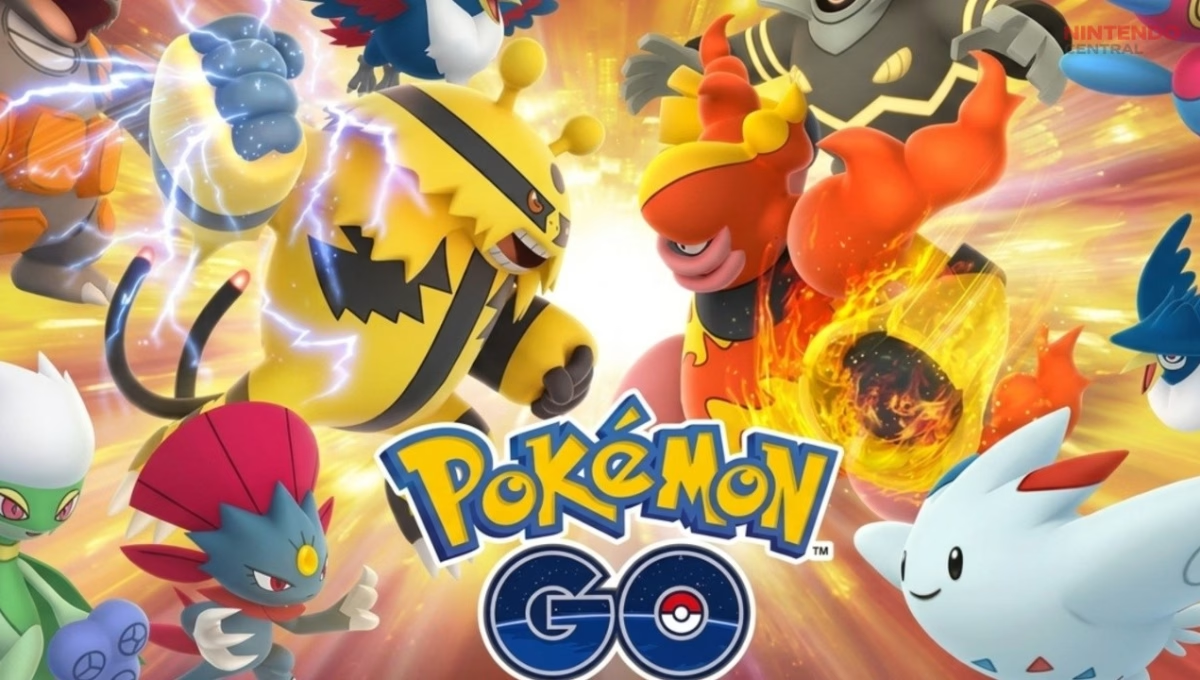
Pokémon GO’s competitive scene received a major update in 2026 with a full redesign of its Trainer Battles (PvP) system as part of the “Memories in Motion” season. This overhaul was developed in response to long-standing player concerns about lag, inconsistent inputs, and unfair advantages caused by network differences during Go Battle League matches. The new system aims to create a smoother and more reliable battle experience by rebuilding core mechanics and prioritizing skill-based outcomes.
One of the most important changes is the shift toward a structured turn-based resolution model. Instead of relying on real-time reaction timing, damage is now calculated at the end of each turn. This reduces the impact of connection quality on battle results. Fast attacks are also processed simultaneously for both players, ensuring neither side benefits from faster internet or reduced latency. In addition, Pokémon switching has been refined so that swaps resolve more consistently before damage is applied, making match outcomes more predictable and reducing randomness caused by lag.
To allow players to experience and test these changes, Niantic introduced the Preview Cup, an experimental mode within the Go Battle League. This limited-time format gives Trainers access to the updated PvP mechanics while also collecting feedback for future improvements. Although experimental, it still counts toward daily battle limits, making it part of the standard competitive rotation during its test period.
Pokémon GO 2026 Enhances Multiplayer Features, Trading Limits and Social Engagement Updates
Alongside PvP improvements, Pokémon GO 2026 introduced several updates designed to strengthen multiplayer and community engagement. During the “Replay: Go Bigger” event, the game expanded remote raid participation limits, allowing Trainers to join up to 20 remote raids per day. Special Trades were also increased to three per day, giving players more flexibility when exchanging rare Pokémon.
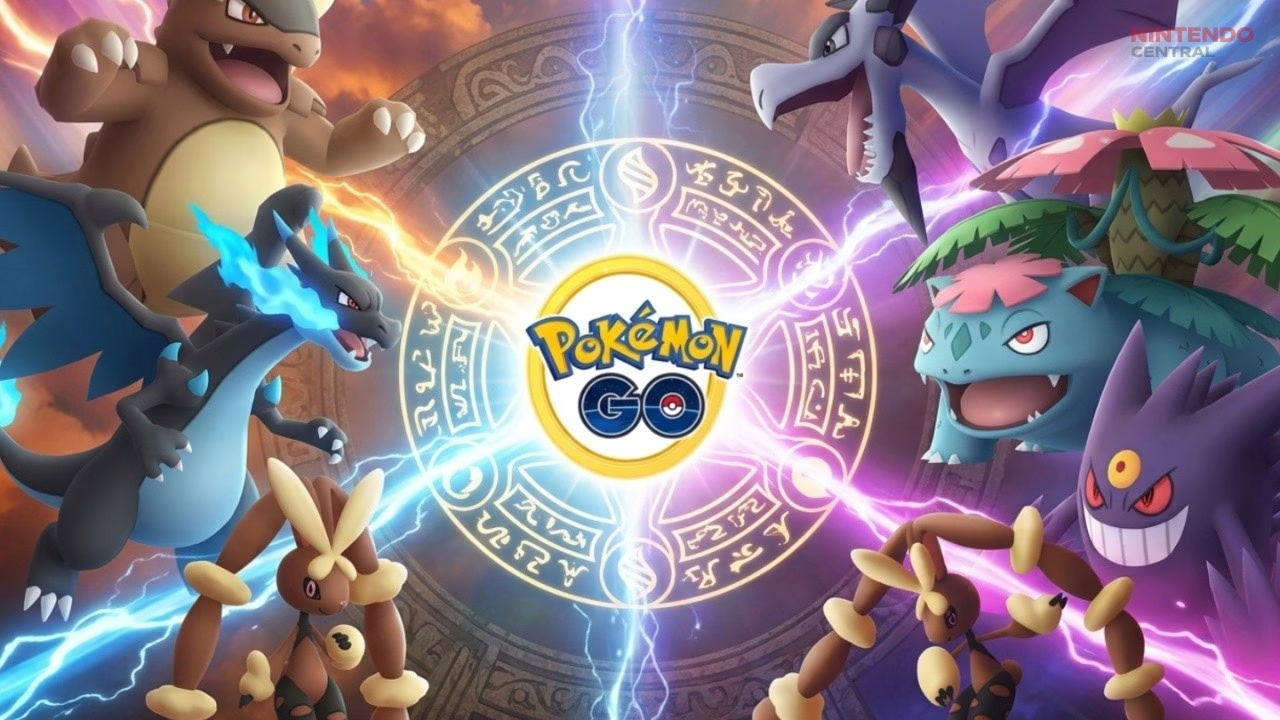
A new weekly feature called GO Battle Thursday further supports competitive engagement by doubling the normal battle allowance to 50 matches and awarding quadruple Stardust. This encourages higher participation while accelerating progression rewards for active players.
The update also introduced a social-focused feature called “What’s Your Favorite?”, which allows Trainers to take and share photos with their preferred Pokémon. This addition highlights the game’s 10-year celebration by encouraging creativity and community sharing.
Pokémon GO 2026 Expands PvP System With New Events, Competitive Features and Player Feedback Integration
Pokémon GO’s 2026 content roadmap includes several major events that tie into the evolving PvP system. The “Replay: Go Bigger” event reintroduced Gigantamax Pokémon such as Venusaur, Charizard, Blastoise, and Gengar, providing challenging raid battles for experienced players.
Community-focused events like Tinkatink Community Day boosted Stardust rewards and reduced trading costs, making resource management and trading more accessible. Meanwhile, the “Road to Kalos” event series introduced new Pokémon and set up future content expansions planned for later in the year.
A major development in 2026 is the integration of Championship Points through the Go Battle League Leaderboard Challenge. This system allows Trainers to earn official competitive points directly through ranked PvP matches, contributing toward qualification for the Pokémon GO World Championships in San Francisco. This strengthens the connection between in-game performance and real-world competitive esports, giving PvP more long-term significance.
Despite the ambitious goals of the overhaul, early reactions to the Preview Cup have been mixed. While the update is intended to reduce lag and improve battle consistency, many players report that performance issues still exist. Some testers describe freezing, instability, and minimal visible difference compared to the previous system.
There is also criticism regarding the decision to include experimental matches within daily Go Battle League limits, which some competitive players feel reduces their regular ranked opportunities. Others argue that the update does not fully address deeper concerns, such as repetitive battle metas and a lack of meaningful matchmaking improvements.
The 2026 PvP overhaul marks one of the most significant changes to Pokémon GO’s battle system since its launch. By redesigning core mechanics, improving multiplayer features, and connecting competitive play to global championships, Niantic is attempting to create a more balanced and skill-driven experience. However, early testing through the Preview Cup suggests that while the direction is promising, further refinement is needed before the system fully meets player expectations.