

Regional Pokémon remain one of the most unique mechanics in Pokémon GO because they encourage real-world travel and trading. Unlike standard Pokémon that can appear globally during events, regional exclusives are normally locked to specific countries, continents, hemispheres, or climate zones. Since Pokémon GO launched in 2016, Niantic has continuously expanded the regional system with new generations, alternate forms, Ultra Beasts, and event-exclusive variants. As a result, completing the Pokédex has become increasingly difficult without international travel or trading.
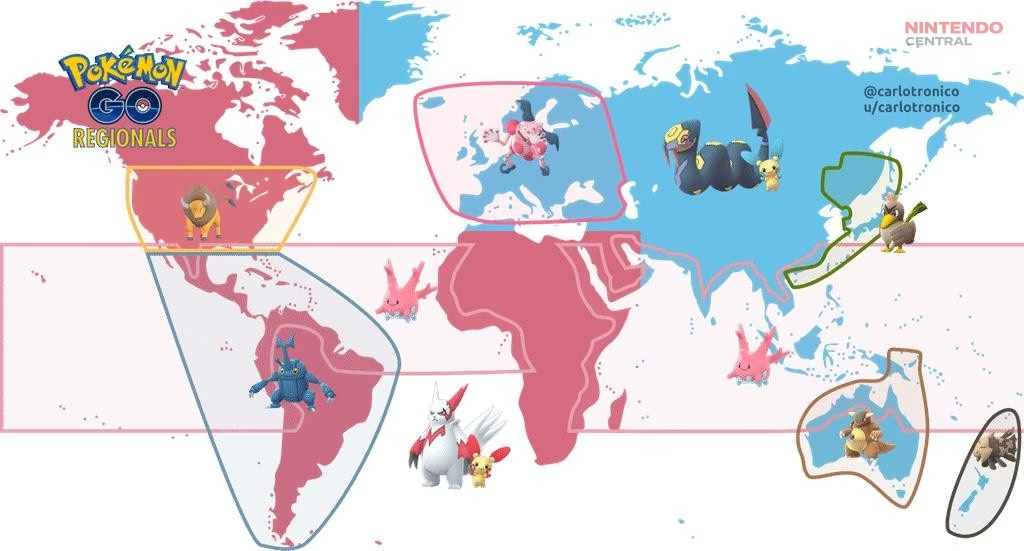
Originally, Pokémon GO launched with only four region-exclusive Pokémon: Farfetch’d, Kangaskhan, Mr. Mime, and Tauros. Since then, the number of regional Pokémon has grown dramatically across multiple generations. According to Pokémon GO regional databases and community tracking resources, there are now dozens of regional exclusives spread across the world in 2026.
Some Pokémon are locked to entire continents, while others only appear in very specific areas such as Egypt, Hawaii, southern Florida, or the Iberian Peninsula. Let’s break down where every major regional Pokémon can currently be found in Pokémon GO and how players can still obtain them without traveling.
Kanto Regional Pokémon Locations
The original Kanto region introduced Pokémon GO’s first regional exclusives. These Pokémon became some of the rarest species during the game’s launch era because players had no trading system at the time.
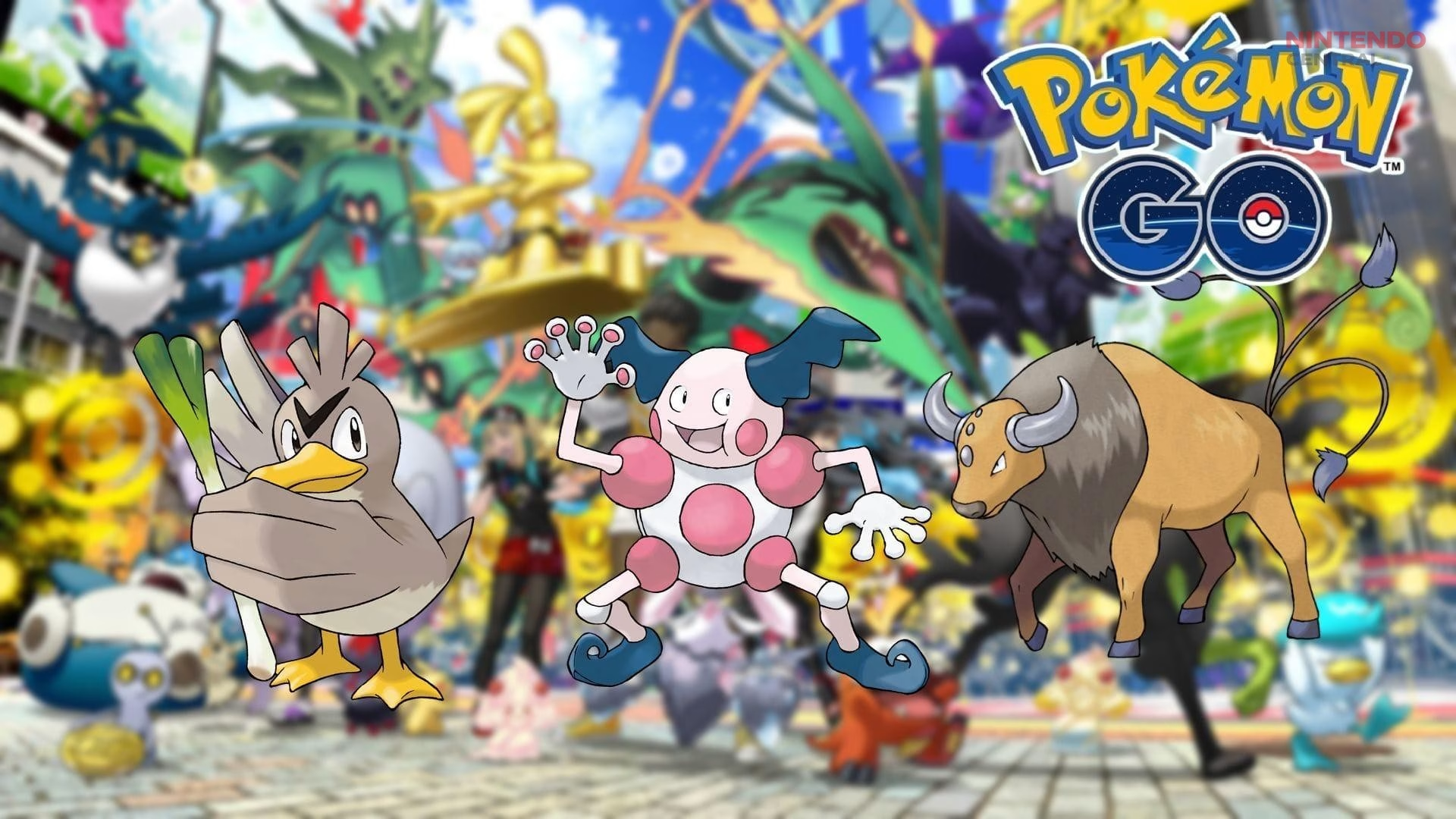
Farfetch’d remains associated with East Asia. Players can typically find it in countries like Japan, South Korea, and Taiwan. Galarian Farfetch’d, however, is globally available through separate mechanics and events.
Kangaskhan is primarily exclusive to Australia and nearby Oceania regions. It remains one of the most recognizable regional Pokémon because of its strong connection to Australian wildlife themes. During certain Mega Raid events, Kangaskhan temporarily becomes available globally.
Mr. Mime spawns throughout Europe and parts of nearby regions. Its Galarian form has occasionally appeared globally during ticketed events and seasonal celebrations.
Tauros traditionally appears across North America. However, Paldean Tauros introduced additional regional forms. Combat Breed Paldean Tauros is restricted to the Iberian Peninsula, Blaze Breed appears in the Eastern Hemisphere, and Aqua Breed appears in the Western Hemisphere.
These original Kanto regionals remain some of Pokémon GO’s most iconic exclusives because they helped establish the game’s travel-based identity.
Johto and Hoenn Regional Pokémon
Generation 2 expanded the regional system further with Pokémon tied to tropical climates and specific parts of the Americas.
Heracross appears mainly in Mexico, Central America, South America, southern Florida, and parts of Texas. It became highly valuable for raid players because Mega Heracross later gained strong battle relevance.
Corsola originally spawned in tropical regions between the Tropic of Cancer and Tropic of Capricorn. This included parts of Southeast Asia, northern Australia, Central America, and tropical coastlines worldwide. Galarian Corsola follows separate event availability rules.
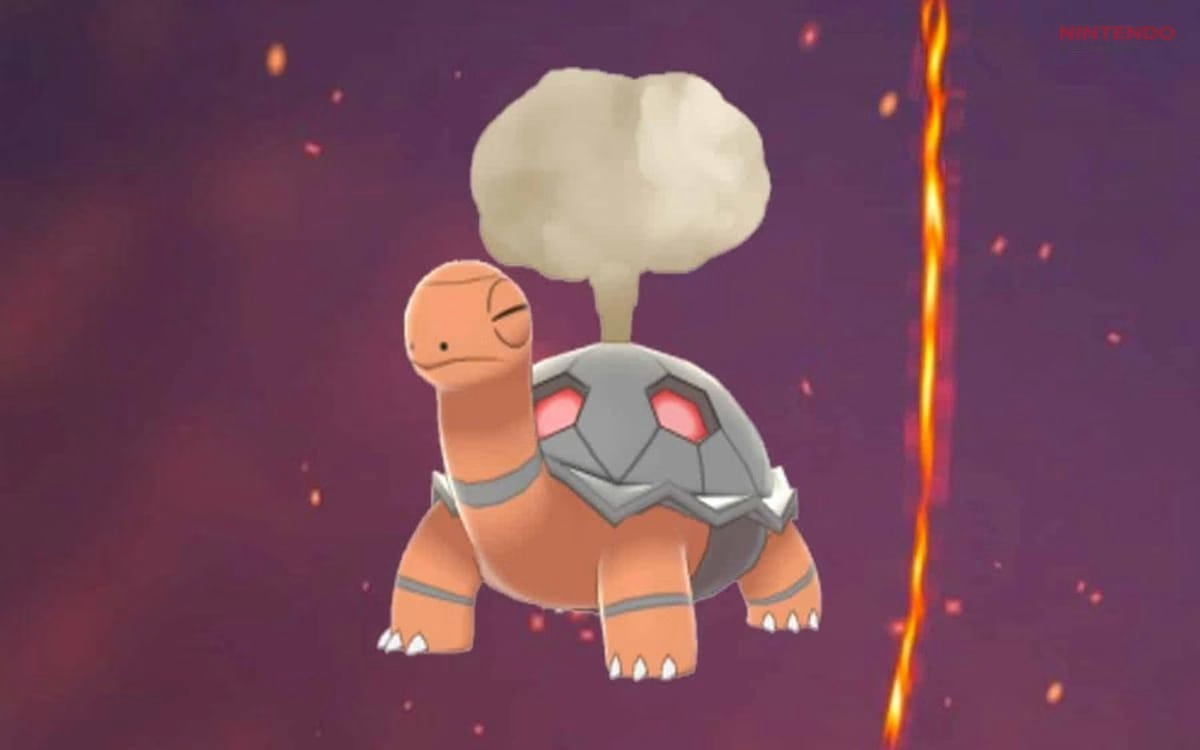
The Hoenn generation dramatically expanded regional Pokémon diversity. Torkoal became one of the most famous exclusives because it appears primarily across South Asia and Southeast Asia, including India. Players in Pune and other parts of India can naturally encounter Torkoal in the wild.
Tropius became another highly sought-after regional because of its usefulness in PvP. It spawns mainly across Africa, parts of the Middle East, and tropical regions near the equator.
Relicanth remains tied to New Zealand and nearby Pacific islands. Because of its extremely limited geographic range, it remains one of the hardest regionals for many players to obtain.
Volbeat and Illumise introduced hemisphere-based regional pairing. Volbeat appears in Europe, Asia, and Australia, while Illumise appears in the Americas and parts of Africa. Niantic occasionally swaps their locations during special events.
Sinnoh and Unova Regional Exclusives
Generation 4 introduced some of Pokémon GO’s most location-specific regionals.
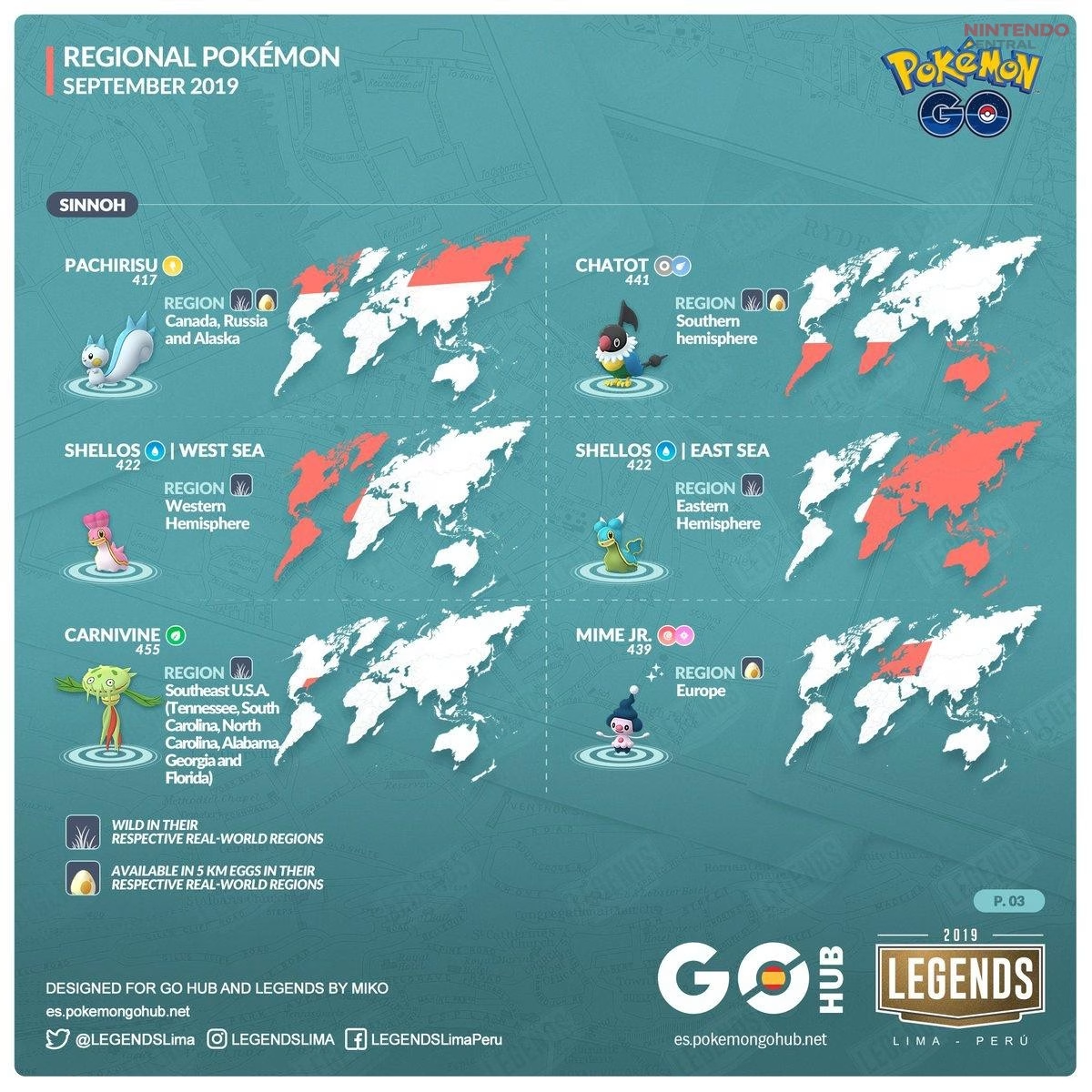
Pachirisu is exclusive to northern regions near the Arctic Circle, including Alaska, northern Canada, and parts of Russia. Because of its limited range, it became especially valuable in trading communities.
Carnivine appears mainly across the southeastern United States. Players traveling through Florida, Georgia, and nearby states frequently encounter it in grassy areas.
Chatot remains exclusive to the Southern Hemisphere, particularly South America and Oceania regions. Mime Jr., meanwhile, only appears in Europe through regional eggs and events.
The Unova generation added more hemisphere splits. Pansage appears across Asia-Pacific regions, Pansear appears in Europe, the Middle East, Africa, and India, while Panpour spawns throughout the Americas.
Sawk and Throh also follow a regional split. Sawk appears in Europe, Asia, and Australia, while Throh appears across the Americas and parts of Africa.
Sigilyph became one of Pokémon GO’s rarest hyper-local regionals because it appears mainly around Greece and Egypt. Bouffalant is similarly restricted around New York City and nearby areas.
Heatmor and Durant follow another hemisphere split. Heatmor spawns in the Western Hemisphere, while Durant appears in the Eastern Hemisphere.
Kalos, Alola, and Newer Regional Pokémon
Modern generations expanded the regional system even further with form-based exclusives and Ultra Beast distributions.
Oricorio introduced four region-based forms. Baile Style appears in Europe, Pom-Pom Style appears in the Americas, Pa’u Style appears on tropical islands, and Sensu Style appears across Asia-Pacific regions.
Flabébé also gained regional flower colors. Red Flower Flabébé appears in Europe, Blue Flower Flabébé appears in Asia-Pacific regions, and Yellow Flower Flabébé appears throughout the Americas.
Furfrou trims introduced another variation system tied to geographic locations. Some trims can only be unlocked in specific countries or continents.
Ultra Beasts later expanded the concept further. Xurkitree appears primarily in Asia-Pacific raid rotations, Celesteela appears in the Southern Hemisphere, and Kartana appears in the Northern Hemisphere. Stakataka and Blacephalon also follow East-West hemisphere splits.
The Paldea generation recently introduced Tatsugiri regional forms. Curly Form appears in Europe, Droopy Form appears in the Americas, and Stretchy Form appears across Asia-Pacific regions.
How to Catch Regional Pokémon Without Traveling
Although regional Pokémon are designed around travel, Niantic regularly creates alternative ways to obtain them.
Global events occasionally unlock regionals worldwide. Pokémon GO Fest, Safari Zones, Tour events, and anniversary celebrations frequently include temporary regional availability. Kangaskhan, Mr. Mime, and Farfetch’d have all appeared globally during past events.
Trading remains the most reliable method for completing regional Pokédex entries. Many players exchange regionals through international friendships, local communities, and Pokémon GO events.
Egg events have also temporarily allowed players to hatch regionals from 7km Eggs. Niantic often uses these events during major celebrations to help players complete older Pokédex entries.
Raid rotations occasionally feature regional Pokémon globally as well, especially Mega Evolutions like Mega Kangaskhan and Mega Heracross.
According to Pokémon GO regional guides and community tracking resources, regionals are increasingly rotated through special events compared to Pokémon GO’s early years, when travel was almost the only option.