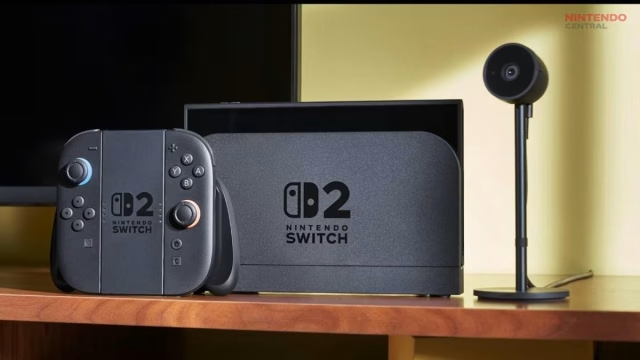

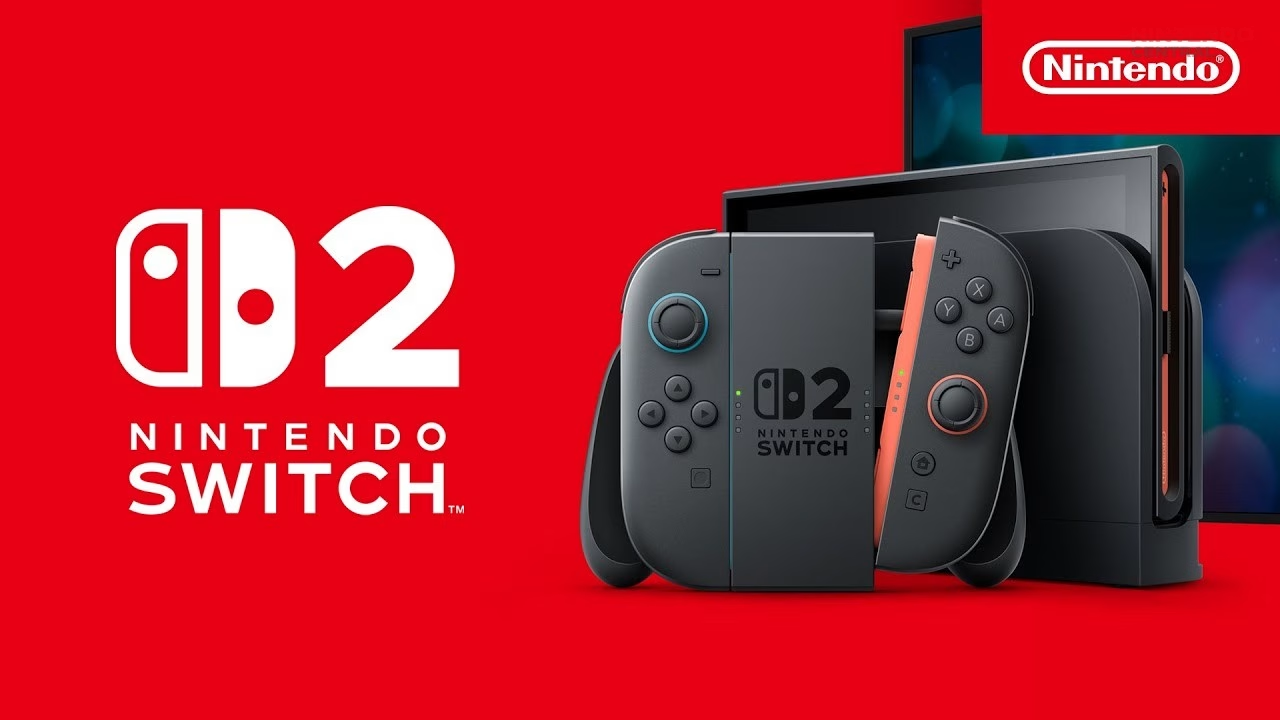
Nintendo Switch 2 has completed its first year on the market, and early verdicts suggest that Nintendo has delivered one of its most significant hardware upgrades yet. According to detailed technical analysis, the system represents a true generational leap over the original Switch, with major improvements in performance, resolution, and third-party support. However, the console is not without its limitations, particularly in display quality and certain design choices.
Over the past year, the Switch 2 has moved from speculation to real-world performance benchmarks, showcasing what its custom hardware can achieve. From smoother frame rates to advanced technologies like DLSS, the console has proven capable of handling demanding modern games. Let’s break down the key takeaways from its first year and what they mean for players and developers.
A Generational Leap in Performance
One of the most significant upgrades in the Switch 2 is its performance jump compared to the original model. Many games now run at higher resolutions, often quadrupling pixel counts while also doubling frame rates. Titles that previously struggled to maintain 30fps can now achieve stable 60fps performance, marking a major improvement in gameplay experience.
This leap brings the Switch 2 closer to the kind of generational jump seen between systems like PlayStation 4 and PlayStation 5. The console handles modern game engines far more effectively, allowing for smoother visuals and improved responsiveness. These upgrades make it clear that Nintendo has successfully delivered meaningful hardware progress.
At the same time, the system’s custom chip and increased memory bandwidth play a crucial role in achieving these results. By moving away from older hardware limitations, the Switch 2 is better equipped to meet modern gaming demands.
A major factor behind the Switch 2’s success is its use of DLSS technology, which enhances image quality through AI-based upscaling. This allows games to run at lower native resolutions while still appearing sharp and detailed on screen. In many cases, the visual output rivals or even surpasses higher-resolution versions on competing hardware.
This approach enables the console to balance performance and visual quality effectively. Instead of relying solely on raw power, Nintendo leverages smart technology to deliver strong results. This strategy has proven particularly effective for third-party ports, which often perform better than expected.
DLSS has also helped narrow the gap between the Switch 2 and more powerful consoles. While it does not fully match systems like PlayStation 5, it delivers a competitive experience that exceeds expectations for a hybrid console.
Strong Third-Party Support and Ports
Another standout aspect of the Switch 2’s first year is the quality of third-party support. Many demanding titles have been successfully ported to the platform, often with impressive results. Games that were once considered too complex for Nintendo hardware are now running smoothly on the new system.
Compared to the original Switch, the success rate of these ports has improved significantly. While some titles still face performance challenges, the trend is far more positive. This shift reflects both improved hardware capabilities and better optimization from developers.
The console’s ability to handle modern titles also strengthens its position in the gaming market. It allows Nintendo to compete more directly with other platforms while maintaining its unique hybrid design.
Hardware Strengths and Weaknesses
While the Switch 2 excels in performance, its hardware design is a mix of strengths and compromises. Features like improved Joy-Con controllers, seamless docking, and support for 120Hz output enhance the user experience. These upgrades make the system feel modern and versatile.
However, the display remains a notable weakness. The LCD screen struggles with motion handling and lacks advanced HDR capabilities, limiting visual quality in handheld mode. This is a surprising drawback given the console’s otherwise strong performance.
Despite these issues, the system’s design remains highly functional. Its hybrid nature continues to be a major selling point, allowing players to switch between handheld and docked modes.
Backward Compatibility and Future Potential
One of the biggest successes of the Switch 2 is its backward compatibility. Games from the original Switch not only run on the new system but often perform significantly better. Improved frame rates and higher resolutions enhance older titles, giving them new life.
This feature adds substantial value for existing Nintendo users. It ensures that players can continue enjoying their game libraries while benefiting from improved performance. This approach also helps the console maintain a strong ecosystem.
Looking ahead, the Switch 2 shows significant potential for future growth. As developers continue to optimize games and explore the hardware’s capabilities, performance is likely to improve further. The first year may only be the beginning of what the system can achieve.