Among the more unusual releases on Nintendo’s latest hardware, Mouse: P.I. For Hire stands out for its visual direction as much as its gameplay. Now available on the Nintendo Switch 2, the game blends traditional first-person shooter mechanics with a presentation inspired by early 20th-century animation, creating a tone that is immediately recognizable.
At a structural level, Mouse: P.I. For Hire is a narrative-driven shooter set in a stylized city filled with crime, corruption, and exaggerated characters. Players step into the role of Jack Pepper, a private investigator navigating a series of cases that gradually connect into a broader storyline.
While the premise follows familiar noir conventions, the execution is defined by its aesthetic. The game adopts a black-and-white “rubber hose” animation style reminiscent of 1930s cartoons, giving environments and characters a fluid, exaggerated quality that contrasts sharply with modern realism.
This visual approach is not just cosmetic. It shapes how the game communicates tone and pacing. Enemies move with elastic, cartoon-like motion, while environments emphasize bold shapes and high contrast rather than detail-heavy textures. The result is a shooter that feels visually distinct even when its mechanics remain grounded in established genre conventions.
Gameplay itself is a hybrid of action and light investigative elements. Combat sequences rely on a mix of weapons and movement, with encounters designed to maintain a steady rhythm rather than overwhelm the player with complexity.
Between these segments, players explore environments, gather clues, and interact with characters tied to ongoing cases. This structure allows the game to shift between faster-paced combat and slower, narrative-driven progression without fully committing to either extreme.
On the Nintendo Switch 2, the game benefits from improved performance compared to earlier-generation hardware. Visual clarity is strong, particularly in docked mode, where the art style translates cleanly to higher resolutions.
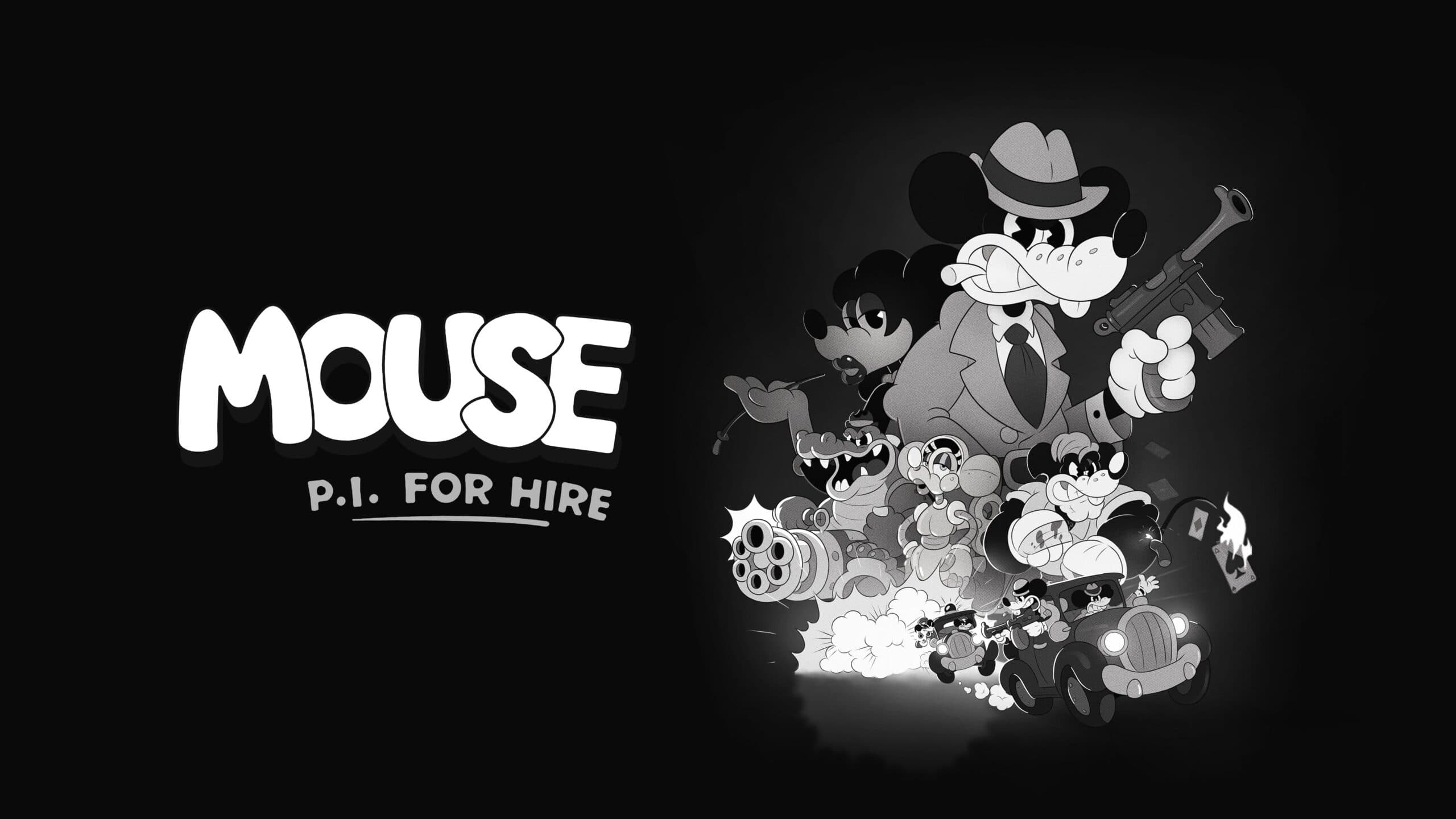
Frame rate performance is generally stable, although some variability has been noted depending on graphical settings. The system’s updated hardware allows the stylized presentation to remain consistent without the compromises often seen in visually ambitious indie titles on less capable platforms.
Control implementation is another area of interest. The Switch 2 introduces enhanced input options, including refined motion and pointer-based controls through the Joy-Con.
For a first-person shooter, this opens the possibility of more precise aiming methods beyond traditional analog input. While the effectiveness of these features varies depending on player preference, they represent an attempt to align the game’s control scheme with the hardware’s capabilities.
From a design perspective, Mouse: P.I. For Hire occupies a middle ground between indie experimentation and genre familiarity. Its mechanics are accessible and recognizable, avoiding the complexity of more systems-heavy shooters. At the same time, its presentation and tone push it into a more niche space. The noir narrative, combined with cartoon-inspired visuals, creates a contrast that defines the experience but may not appeal universally.
Reception has reflected that balance. The game has been praised for its art direction and atmosphere, which give it a strong identity in a crowded market. Criticism tends to focus on its relatively conventional gameplay structure and occasional performance inconsistencies. Neither issue fundamentally undermines the experience, but they highlight the trade-offs involved in prioritizing style over mechanical innovation.
Mouse: P.I. For Hire is notable less for what it does differently in gameplay and more for how it presents itself. On the Nintendo Switch 2, it demonstrates how a distinct artistic direction can redefine a familiar genre. For players interested in a shooter that prioritizes atmosphere and visual identity, it offers a clear alternative to more conventional releases.