Large gatherings at concerts, religious festivals, sporting events, political rallies, and public celebrations can quickly turn dangerous when crowd movement becomes uncontrolled. In many tragedies commonly described as “stampedes,” the real danger is not people running wildly but crowd crushes caused by extreme overcrowding and pressure. Experts in crowd science have repeatedly explained that most victims die from compressive asphyxia, where pressure on the chest prevents breathing, rather than from trampling alone.
Crowd disasters have occurred across the world during music festivals, pilgrimages, stadium events, and urban celebrations. Many of these incidents share similar causes, including poor crowd management, narrow exits, blocked pathways, overcapacity, and sudden surges of movement. According to the U.S. Centers for Disease Control and Prevention (CDC), overcrowding and inadequate crowd control are among the leading contributors to deadly crowd incidents.
Understanding how stampedes and crowd crushes happen can help people recognize danger signs early and improve their chances of staying safe in packed environments. This guide explains the science behind crowd crushes, the main causes of stampedes, and practical safety strategies for surviving dangerous crowd situations.
What Actually Causes Stampedes and Crowd Crushes?
The term “stampede” is often used broadly by news reports, but crowd safety experts say many incidents are technically crowd crushes or crowd surges. These situations happen when too many people are packed into a limited space, causing dangerous physical pressure to spread through the crowd.
Crowd crushes typically begin when movement becomes restricted. People at the back continue pushing forward while those at the front have nowhere to go. This creates pressure waves that move through the crowd like fluid motion. Once crowd density becomes extremely high, individuals lose the ability to move independently.
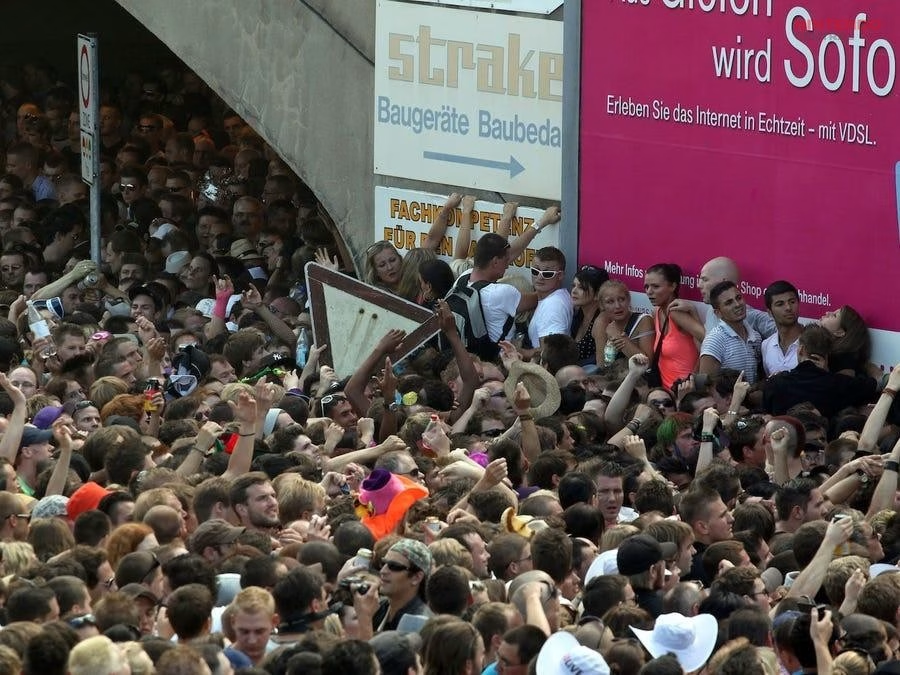
Research summarized in scientific crowd studies shows danger rises sharply when crowd density exceeds roughly five people per square meter. At even higher densities, breathing becomes difficult because chest compression limits lung expansion. Several factors commonly contribute to crowd disasters.
Overcapacity is one of the biggest causes. When venues allow more people than the space can safely handle, movement becomes restricted and pressure builds rapidly. Poor crowd control worsens the problem because security teams may fail to regulate flow or redirect people away from dangerous bottlenecks.
Narrow pathways, blocked exits, steep slopes, fences, and dead ends also increase risk. If a large crowd is funneled into a confined area, pressure intensifies quickly. Many deadly incidents have occurred in tunnels, alleyways, staircases, and entry gates where movement becomes trapped.
Sudden panic or confusion can further escalate the situation. People may surge forward after hearing rumors, reacting to loud noises, or trying to escape perceived danger. However, experts emphasize that panic itself is often not the primary cause. Instead, the physical conditions of overcrowding create the deadly environment.
Why Crowd Crushes Become So Deadly
One of the biggest misconceptions about stampedes is that most victims die because they are trampled. In reality, many fatalities occur while victims are still standing. According to crowd safety expert G. Keith Still, compressive asphyxia is responsible for most deaths in crowd crush incidents.
As pressure increases from all directions, the chest cannot expand properly. This prevents oxygen intake and can cause unconsciousness within minutes. Victims may also become pinned against barriers, walls, railings, or other people.
Another danger is crowd collapse. When one person falls in a tightly packed crowd, others nearby may lose balance and fall as well. This creates a domino effect where people pile on top of each other. Those trapped underneath face severe risks of suffocation and crushing injuries.
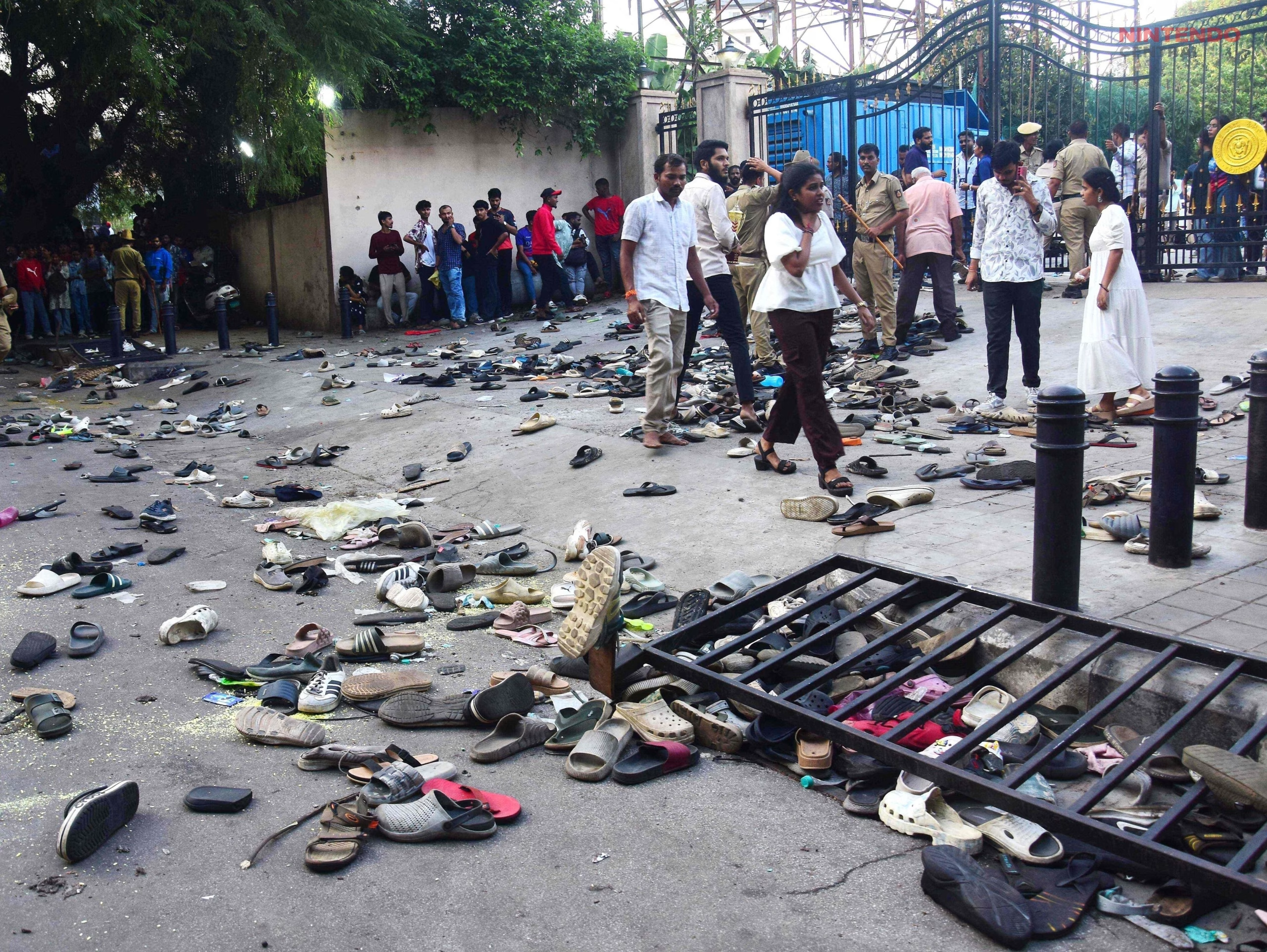
Crowd turbulence also contributes to fatalities. Scientists studying mass gatherings describe how dense crowds can behave almost like moving liquid. Small movements become amplified into uncontrollable shockwaves that push people unexpectedly in different directions.
Large events with alcohol consumption, poor lighting, insufficient policing, or inadequate emergency planning are especially vulnerable. Events held after long periods of restricted gatherings can also attract unexpectedly large crowds, increasing pressure on public safety systems.
Warning Signs That a Crowd Is Becoming Dangerous
Recognizing early warning signs is critical because crowd crushes develop rapidly. Many survivors describe feeling trapped before realizing the seriousness of the situation.
One major warning sign is losing the ability to move freely. If people around you are pressed tightly on all sides and movement becomes involuntary, crowd density may already be reaching dangerous levels. Experts note that being touched on all four sides is an important danger signal.
Another warning sign is sudden surging movement. If the crowd begins pushing in waves or swaying unpredictably, pressure is building somewhere nearby. These shockwaves can knock people off balance quickly.
Difficulty breathing is an especially serious indicator. If you cannot fully expand your chest or raise your arms comfortably, conditions may already be hazardous.
You should also watch for visible distress around you. People shouting for help, collapsing, stumbling, or trying desperately to escape are clear signals that crowd conditions are deteriorating.
Blocked exits and overcrowded entry points are additional red flags. If security personnel appear overwhelmed or crowd movement becomes chaotic, it may be safer to leave immediately before conditions worsen.
How to Protect Yourself During a Crowd Crush

Escaping a dense crowd is difficult, but survival experts and public health agencies recommend several strategies that can improve safety.
The most important rule is to stay on your feet. Falling dramatically increases the risk of suffocation or trampling. If you stumble, try to regain balance immediately by moving with the crowd rather than fighting against it.
Protect your chest by holding your arms in front of you like a boxer. This creates a small pocket of space around your lungs and helps maintain breathing room. The CDC and multiple crowd safety experts recommend this technique during crush situations.
Do not push aggressively against the crowd. Fighting the flow wastes energy and can increase instability. Instead, move diagonally or sideways whenever possible because lateral movement is often easier than trying to move directly forward or backward.
Avoid walls, fences, barriers, and solid structures because pressure tends to intensify near fixed objects. If the crowd surges, being pinned against a hard surface can become fatal.
If someone falls nearby, try to help them up immediately if it is safe to do so. Quick assistance can prevent pileups from forming.
If you fall yourself, curl into a protective position and try to cover your head while getting back up as quickly as possible. Remaining on the ground in a dense crowd is extremely dangerous.
Experts also recommend conserving energy. Screaming continuously or struggling violently may exhaust you faster. Calm, controlled movements improve your chances of maintaining balance.
How Event Organizers Can Prevent Stampedes
Most crowd disasters are preventable with proper planning and crowd management. Studies on mass gathering safety consistently show that organizational failures are often the primary cause behind major incidents.
Venue capacity limits must be enforced carefully. Allowing excessive crowd density significantly increases danger, especially in confined spaces.
Clear entry and exit routes are essential. Organizers should avoid bottlenecks, locked gates, narrow corridors, and confusing layouts that trap people during emergencies.
Real-time crowd monitoring is also important. Security teams should track density levels continuously and intervene before dangerous congestion develops.
Emergency communication systems can save lives during chaotic situations. Loudspeakers, visible signage, trained staff, and rapid response protocols help guide crowds safely.
According to the World Health Organization, mass gatherings require extensive preparedness because they can place enormous strain on public safety systems and emergency resources.
Modern crowd management increasingly uses technology such as surveillance systems, density mapping, drone monitoring, and predictive crowd analysis to identify dangerous movement patterns before disasters occur.