The conversation around artificial intelligence in game development continues to divide the industry, and Eric Barone has now made his position firmly clear. In a recent interview with Game Informer, the creator of Stardew Valley spoke directly about his opposition to AI in creative work, emphasizing that he has no plans to use it in his games.
Barone, who has spent more than a decade developing and expanding Stardew Valley, explained that his work is rooted in personal expression. As AI tools become more common across the gaming industry, his comments stand out as a strong defense of human-driven creativity in game design.
Barone’s Core Argument Against AI in Creative Work
During the interview, Barone made his stance clear with a direct statement about how he views AI in creative processes. He said,
“You’re offloading creativity to an algorithm, which I think is always gonna undermine the pure and authentic human element of what you’re doing.”
This quote reflects his broader concern that AI tools remove the human touch that defines artistic work. While some developers see AI as a way to improve efficiency, Barone believes that relying on algorithms for creative output changes the nature of the work itself.
He reinforced this perspective with another clear statement, saying, “My goal is to express myself in a creative way. Why would I let an AI do that for me?” For Barone, game development is not just about building systems or content, but about expressing ideas and emotions through design.
A Firm Commitment for Future Games
Barone’s comments also confirm that AI will not be used in any future updates to Stardew Valley or in his upcoming project, Haunted Chocolatier. This is particularly important as expectations for Haunted Chocolatier continue to grow within the gaming community.
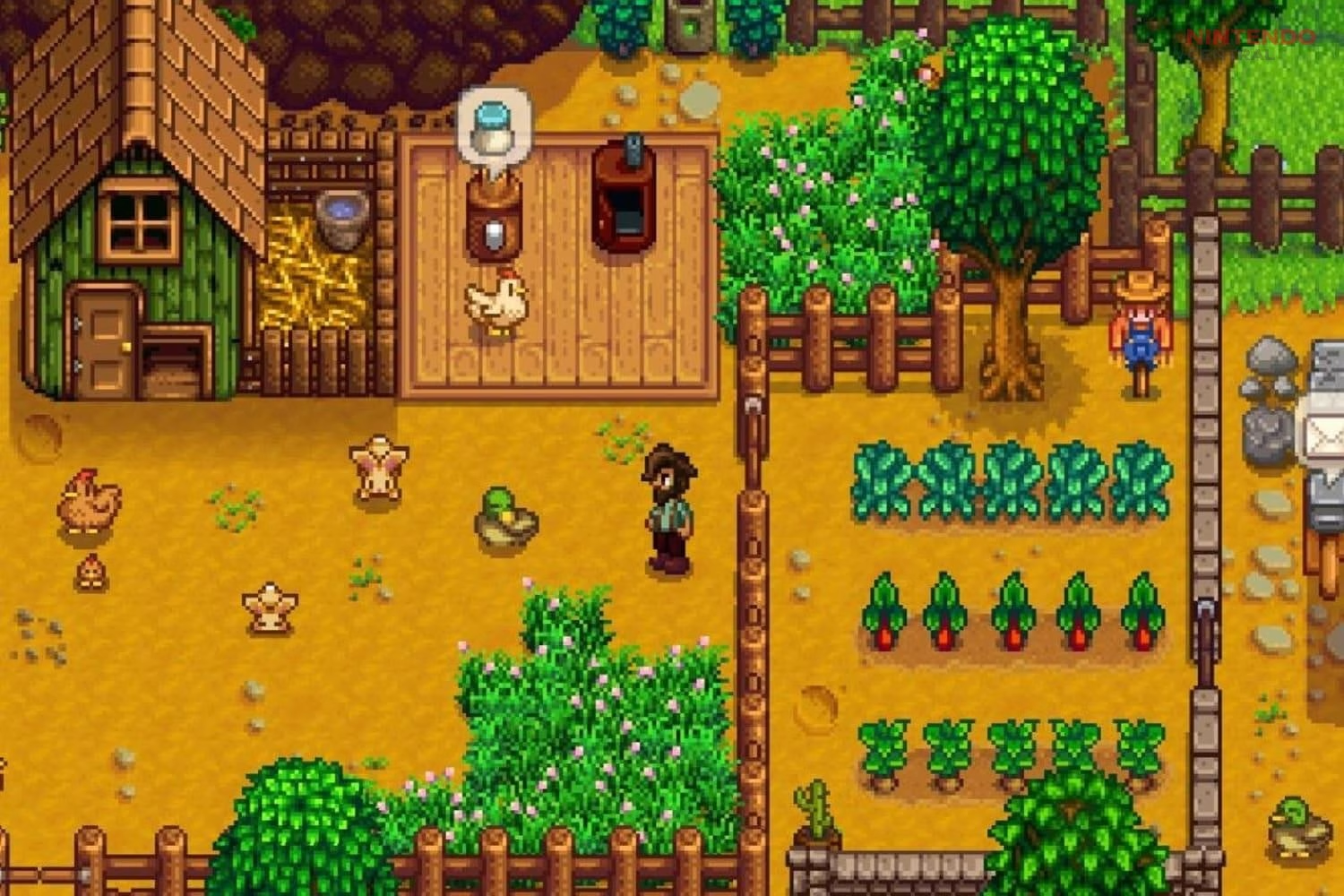
In the same interview, Barone suggested that his next game could be even larger in scope than Stardew Valley. Despite this increased scale, he remains committed to maintaining a fully human-driven development process.
He also acknowledged that AI might have limited appeal in specific situations, but his stance remains clear. He stated,
“At the very least, let another human being express themselves if you need help,”
highlighting his belief that collaboration between people is always preferable to relying on automated systems.
The Wider Industry Is Split on AI
Barone’s position reflects a growing divide within the gaming industry. While some developers and publishers are exploring AI tools for content creation, others are pushing back against the idea of replacing human creativity.
Major companies like Square Enix have discussed using AI in development pipelines, and figures such as Yuji Horii have expressed interest in generative AI for certain aspects of game design. At the same time, Sony has explored AI-driven tools to improve production efficiency.
In contrast, independent developers often take a more cautious approach. Barone’s comments highlight a perspective that prioritizes originality and personal expression over automation, which remains a key part of indie game development culture.
Why Stardew Valley’s Identity Matters
Part of Stardew Valley’s success comes from its handcrafted feel. The game’s characters, environments, and systems all reflect Barone’s individual creative vision. This level of detail is difficult to replicate through automated systems, which is why many players value the game’s personal touch.
By rejecting AI in creative processes, Barone is reinforcing the qualities that made Stardew Valley successful. Players often connect more strongly with games that feel intentionally designed rather than generated, and this connection has helped Stardew Valley maintain long-term popularity.
This approach also aligns with a broader trend among players who are becoming more aware of how games are developed. As discussions about AI ethics and creative ownership continue, developers who emphasize human input may stand out more in the market.
A Broader Statement About Creativity
Barone’s comments extend beyond just game development and reflect a wider conversation about creativity in the age of AI. His final remark in the interview captures his perspective. He said,
“I feel like [human creativity] should take priority over a soulless machine.”
This statement summarizes his belief that creative work should remain rooted in human experience rather than automated systems. While technology will continue to play a role in development, Barone’s stance suggests that it should support creativity rather than replace it.