Ubisoft has revealed key technical details about Rayman Legends Retold, confirming that the remake is being built with performance and feature completeness in mind for the Nintendo Switch 2.
The upcoming title is not just a visual upgrade but a reworked version of the beloved 2013 platformer, now enhanced with new content and modernized systems. One of the biggest takeaways is Ubisoft’s focus on delivering a smooth 60 frames per second experience, alongside full content parity with other platforms.
These updates directly address long-standing concerns about how third-party games perform on Nintendo hardware, making Rayman Legends Retold one of the most important early tests of the Switch 2’s capabilities.
Ubisoft Targets Smooth Gameplay on Switch 2
One of the most important updates is Ubisoft’s focus on performance. The studio is targeting 60 frames per second for Rayman Legends Retold on Switch 2, a benchmark that significantly improves responsiveness and gameplay fluidity in platformers.
This detail comes from comments by Ubisoft Milan production director Alessandro Arndt Mucchi. Maintaining a stable 60 FPS is especially crucial for a game like Rayman Legends, where precise timing and fast movement define the core experience.
Although Ubisoft has not yet confirmed resolution or graphical modes, prioritizing frame rate suggests the studio is aiming for a polished gameplay experience first. That decision aligns with how modern platformers are expected to perform across all systems.
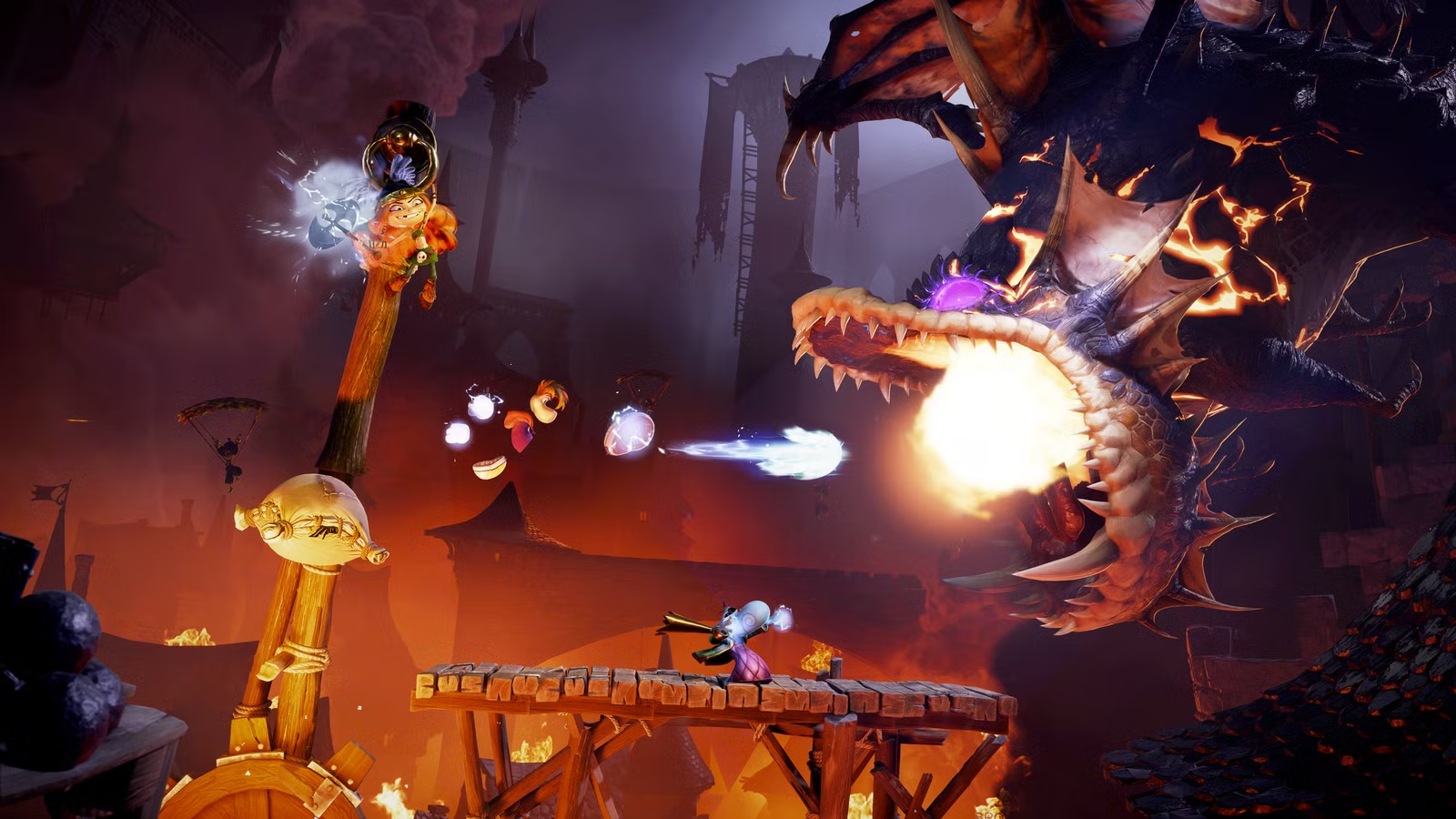
Full Content Parity With Other Platforms
In addition to performance, Ubisoft has also addressed a major concern for Nintendo players: missing features. The company confirmed that the Switch 2 version is being developed with full content parity in mind.
Ubisoft’s goal is
“to have content parity with the other platforms.”
This statement is significant, as Nintendo versions of third-party games have historically faced compromises in content or features.
By committing to parity, Ubisoft is positioning the Switch 2 version as a complete experience rather than a scaled-down port. This reflects growing confidence in Nintendo’s hardware and a shift toward treating it as a primary platform.
A Modern Take on a Platforming Classic
Originally released in 2013, Rayman Legends remains one of the most celebrated platformers of its era. The new Retold version is designed as a remake, blending the original’s 2.5D gameplay with enhanced 3D elements and additional content.
The original game earned praise for its fluid animation, creative level design, and standout musical stages. With the remake, Ubisoft is aiming to preserve those strengths while updating the experience for modern players. The inclusion of new content also suggests that this is more than just a visual upgrade.
By revisiting a critically acclaimed title, Ubisoft is tapping into both nostalgia and a proven gameplay formula. This approach has become increasingly common in the industry, especially as studios look to reintroduce classic games to newer audiences.
Missing Details Leave Room for Future Reveals
While Ubisoft has confirmed key aspects like frame rate and content parity, several details remain unclear. The company has not yet shared information about resolution targets, graphical enhancements, or additional features such as new control schemes.
These unanswered questions suggest that more announcements are likely in the coming months. Ubisoft may reveal further technical details closer to launch, potentially including gameplay showcases or developer deep dives.
Even so, the current information already paints a promising picture. By focusing on performance and feature completeness, Ubisoft is addressing the two areas that matter most to players.