When Pokémon GO launched in 2016, it quickly became a global phenomenon, redefining mobile gaming with its augmented reality (AR) mechanics. Players could explore the real world, catch Pokémon, and interact with others in ways that felt entirely new at the time. Years later, the hype has settled, but the game continues to evolve with new features, events, and improvements.
The key question today is whether Pokémon GO still holds up in 2026. With increasing competition in mobile gaming and changing player expectations, maintaining long-term engagement is no easy task. However, Niantic has continued to update the game, introducing new generations of Pokémon, raid systems, and social features.
So, is Pokémon GO still worth playing, or has it lost its charm? Let’s break down the gameplay, features, and overall experience.
Gameplay and Core Mechanics: Simple but Addictive
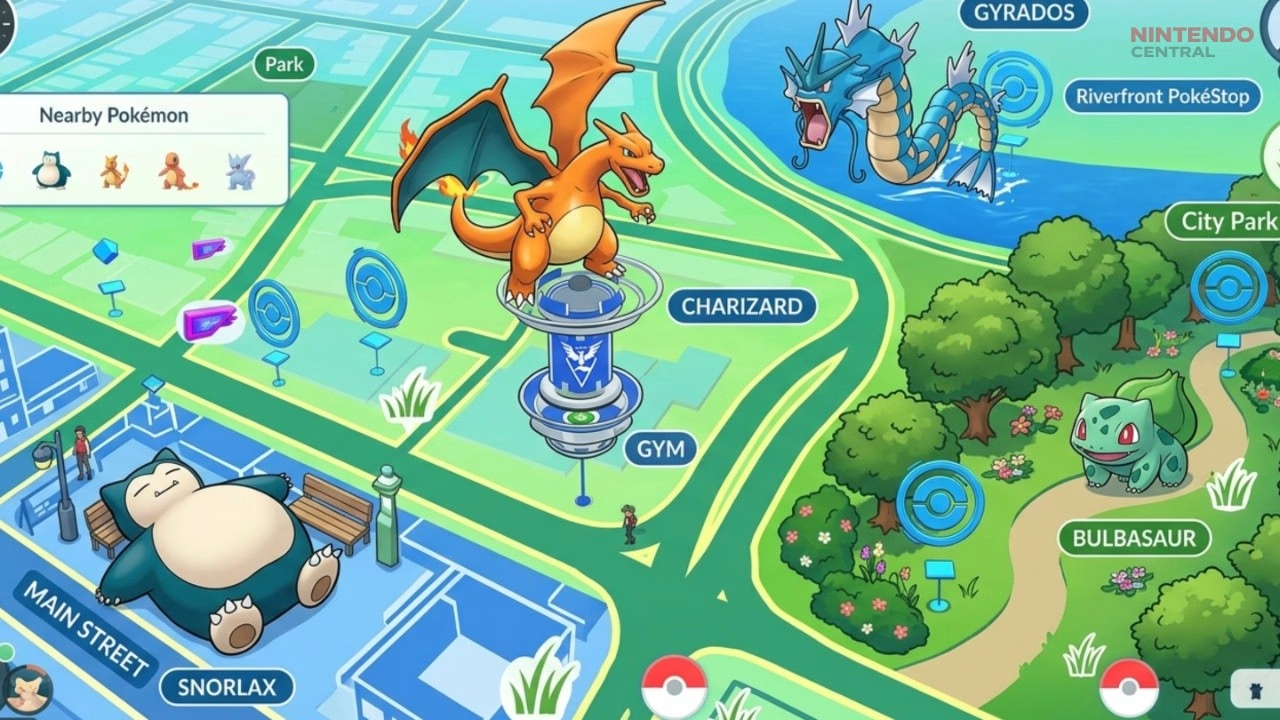
The core gameplay of Pokémon GO remains simple yet engaging. Players explore real-world locations to find and catch Pokémon using GPS-based mechanics.
The catching system is easy to learn but still satisfying. Throwing Poké Balls, using berries, and encountering rare Pokémon keep the experience rewarding. Over time, additional features like raids and PvP battles have added more depth.
Raids, in particular, are a major highlight. They encourage players to team up and take down powerful Pokémon, creating a strong sense of community. The introduction of remote raid passes has also made it easier to participate from anywhere.
While the gameplay loop can feel repetitive after long sessions, regular events and updates help keep things fresh.
Features and Updates: Constant Evolution Keeps It Relevant
One of the biggest strengths of Pokémon GO is its continuous updates. The game regularly introduces new Pokémon, seasonal events, and limited-time challenges that encourage players to return.
Community Days are especially popular. These events boost the spawn rate of specific Pokémon and often include exclusive moves, making them highly rewarding for active players.
The addition of PvP battles has also improved the competitive aspect of the game. Players can now test their teams against others, adding a strategic layer that was missing at launch.
Despite these improvements, some features can feel grind-heavy. Progression often requires consistent play, which may not appeal to casual users.
Community and Social Experience: A Unique Strength
The social aspect is where Pokémon GO truly stands out. Unlike most mobile games, it encourages real-world interaction and exploration.
Players often gather in parks, public spaces, and events to participate in raids or Community Days. This creates a sense of community that few other games can replicate.
The friend system, trading, and gifting features further enhance this experience. They allow players to connect with others globally while still encouraging local interaction.
However, the reliance on location-based gameplay can be a limitation. Players in rural areas may not have the same access to events and resources as those in cities.
Is Pokémon GO Still Worth Playing?
Pokémon GO remains one of the most unique mobile gaming experiences available. Its blend of AR gameplay, real-world exploration, and social interaction continues to set it apart.
While it may not have the same explosive popularity as its launch period, it has matured into a stable and engaging game with a dedicated player base. Regular updates and events ensure that there is always something new to do.
That said, the repetitive gameplay loop and grind-heavy progression may not appeal to everyone. It is best enjoyed casually rather than as a daily commitment.
Overall, Pokémon GO is still worth playing, especially if you enjoy exploration, community-driven gameplay, and the Pokémon universe.