How one classroom experiment turned a mobile game into a powerful learning experience. When Pokémon GO launched globally, it quickly became more than just a gaming trend. In countries like Brazil, it turned into a cultural phenomenon, especially among students who returned to school buzzing with stories of virtual creatures appearing in real-world locations.
For one Brazilian art teacher, this excitement sparked something unexpected. What started as confusion about a trending mobile game soon transformed into an innovative teaching method that blurred the line between play and education. Inspired by how students interacted with their surroundings through Pokémon GO, she reimagined her classroom in a way that encouraged creativity, exploration, and collaboration.
“Students came back talking ceaselessly about Pokémon GO, PokéStops, and all the unexpected places they had discovered Pokémon.”
This moment became the catalyst for a unique experiment that would redefine how art could be experienced inside a school.
Turning Pokémon GO Into a Classroom Innovation
At first, the teacher found herself completely disconnected from the trend. Like many educators unfamiliar with gaming culture, she struggled to understand terms like PokéStops or how the game actually worked. However, one detail stood out. A student had discovered a Pokémon near a statue of Albert Einstein. That simple observation changed everything.
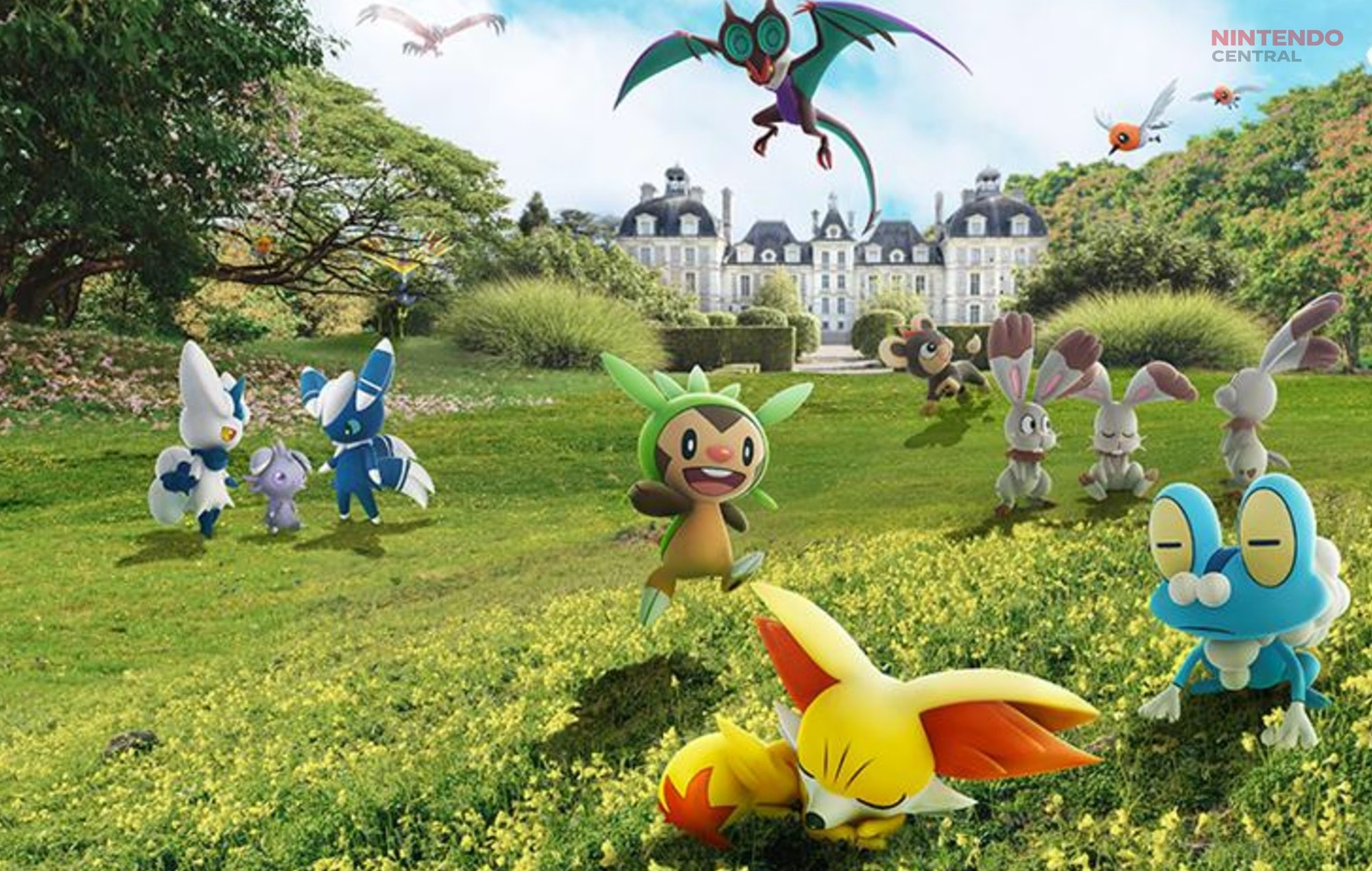
It showed that Pokémon GO was not just about catching creatures but about engaging with real-world spaces in new ways. The game encouraged players to explore landmarks, notice details, and interact with their environment. For an art teacher, this opened up a world of possibilities.
Instead of dismissing the trend, she embraced it. With guidance from her students, she learned the basics of the game and began thinking about how its mechanics could translate into an educational setting.
The result was a student-led project that would soon take over the entire school.
Inspired by Pokémon GO, students decided to create their own version of the game. Instead of digital creatures, they designed hand-drawn “mutants” on adhesive paper and hid them across the school campus.
What followed was nothing short of transformative.
“A Gallery Without Walls.”
That is how the teacher described the evolving environment. Classrooms, hallways, and outdoor spaces became part of a living art installation. Students were no longer confined to desks or traditional displays. Instead, art existed everywhere, waiting to be discovered.
The project connected deeply with artistic concepts such as appropriation, the occupation of physical space, and ephemeral art. By placing their drawings in unexpected locations, students challenged the idea that art belongs only in galleries or museums.
Even more importantly, the school itself became interactive. Students crawled under benches, explored corners they had never noticed before, and engaged with their surroundings in ways that traditional lessons rarely inspire.
“I wish museums were more like Mutant Go and we had to seek art. It would definitely be more fun.”
This statement from a student highlights how the project reshaped their perception of art, making it active rather than passive.
When Play Meets Conflict and Meaning
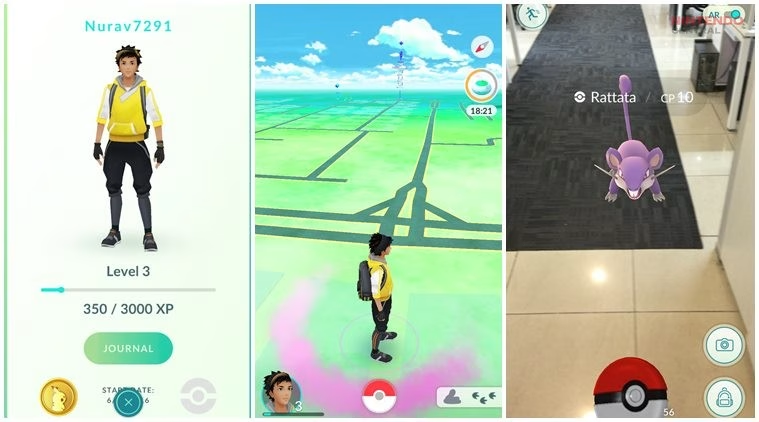
As with any collaborative project, challenges emerged. At one point, a group of students reported that some mutants had been removed and thrown away by others.
What could have been a setback became a powerful teaching moment.
Instead of simply addressing the issue as misconduct, the teacher used it to spark a deeper discussion. Questions about the value of art, authorship, and ownership came to the forefront. Students began to reflect on what makes art meaningful and whether its value changes depending on where it is displayed.
The conversation revealed something significant. Students had developed a strong emotional connection to their creations. Once they placed their drawings in the school environment, those pieces became more than just assignments. They became part of a shared experience.
This shift demonstrated how immersive learning can foster empathy and critical thinking. Students were not just creating art. They were engaging with it on a personal and philosophical level.
As the project gained popularity, a new challenge emerged. Students became highly competitive, tracking how many mutants they could find. While this added excitement, it also reduced their attention to detail. The teacher responded with a clever solution.
She created “Wanted” posters featuring specific mutants and challenged students to locate them based on partial images or contextual clues. This approach required careful observation rather than quick discovery.
Groups of students gathered around the posters, analyzing textures, shapes, and surroundings. They began discussing possibilities, forming hypotheses, and testing their ideas in real time.
“I know where this one is. It’s close to the bamboo trees. I didn’t know there were bamboo trees here at school.”
These exchanges highlight how the activity encouraged exploration beyond the obvious. Students discovered parts of their school they had never noticed before, turning familiar spaces into sites of curiosity and learning.
The project evolved further when younger students were asked to write descriptions of their mutants’ locations. This added a new layer of complexity.
Instead of relying on visual cues, students had to interpret written instructions. They discussed possibilities, eliminated incorrect assumptions, and refined their understanding through collaboration.
Interestingly, many descriptions included physical actions such as kneeling, crouching, or lying down. This emphasized how the experience was not just intellectual but also physical.
Students were fully immersed, using their bodies, language, and reasoning skills to engage with the activity.
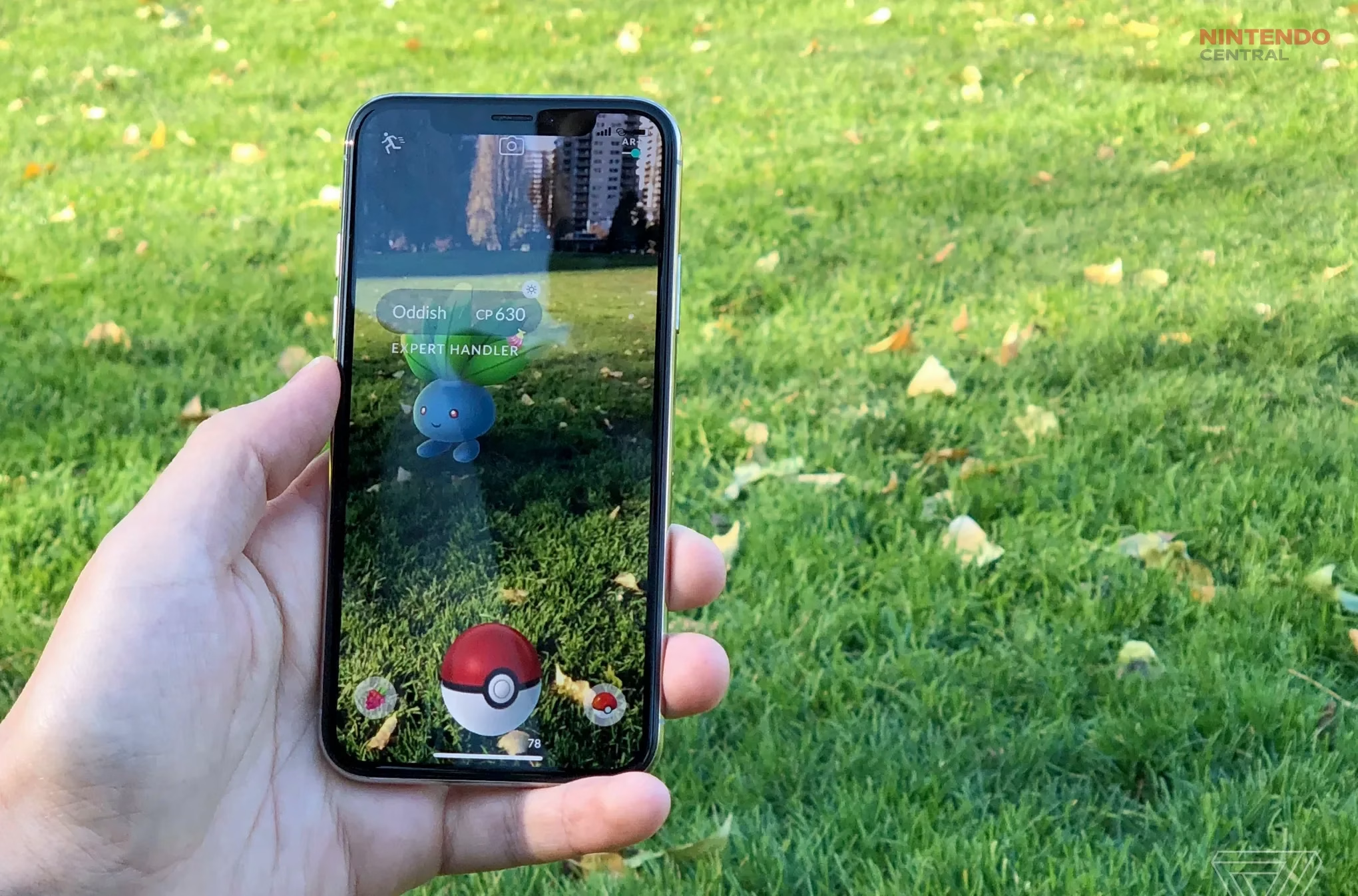
This stage of the project highlighted how Pokémon GO-inspired learning can integrate multiple skill sets, from observation and analysis to communication and teamwork.
A Lasting Impact Beyond the Classroom
What began as a simple attempt to understand a popular game turned into a powerful educational model. The Mutant Go project demonstrated that learning does not have to be confined to traditional methods.
“Mutant Go transformed our school.”
This statement captures the essence of the experience. The project broke down boundaries between subjects, spaces, and roles. Students became creators, explorers, and collaborators all at once.
Even weeks after the activity, its impact remained. Students continued to talk about their discoveries, their creations, and the connections they had formed.
The choice of “mutants” as a theme proved symbolic. Just as mutants represent transformation, the project transformed the school environment and the learning process itself.
The success of this initiative highlights why Pokémon GO has inspired educators worldwide. Its core mechanics encourage exploration, curiosity, and interaction with real-world environments.
Unlike traditional learning methods, it creates a sense of discovery that feels organic rather than forced. Students are motivated not by grades but by the excitement of finding something new.
For teachers, this presents an opportunity to rethink how lessons are designed. By incorporating elements of play and exploration, education can become more engaging and meaningful.
The Brazilian teacher’s experiment shows that even a simple idea can have a profound impact when it aligns with students’ interests.