When Pokémon GO launched in 2016, the game initially focused only on the original Kanto Pokémon from Generation 1. However, the release of Gen 2 Pokémon from the Johto region became one of the biggest turning points in the game’s history. The update introduced more than 80 new Pokémon, new evolution mechanics, additional berries, evolution items, baby Pokémon, and major gameplay improvements that reshaped the Pokémon GO experience.
The Johto update brought fan-favorite Pokémon like Umbreon, Espeon, Tyranitar, and Scizor into the game while also introducing mechanics that later became core parts of Pokémon GO’s identity. Features like special evolution items and new berry systems changed how trainers approached catching, evolving, and building teams.
Let’s break down the full Gen 2 Pokémon roster, the biggest Johto additions, and why this generation had such a lasting impact on Pokémon GO.
Full Pokémon GO Gen 2 Johto Pokémon List
The Johto Pokédex added 100 Pokémon to the franchise, though Pokémon GO initially launched over 80 of them during the first major rollout.
The starter Pokémon introduced in Gen 2 were:
Chikorita, Bayleef, Meganium, Cyndaquil, Quilava, Typhlosion, Totodile, Croconaw, and Feraligatr.
Early-route Pokémon included Sentret, Furret, Hoothoot, Noctowl, Ledyba, Ledian, Spinarak, and Ariados. These creatures became common wild spawns during Johto events and helped diversify the Pokémon pool beyond the original Kanto species.
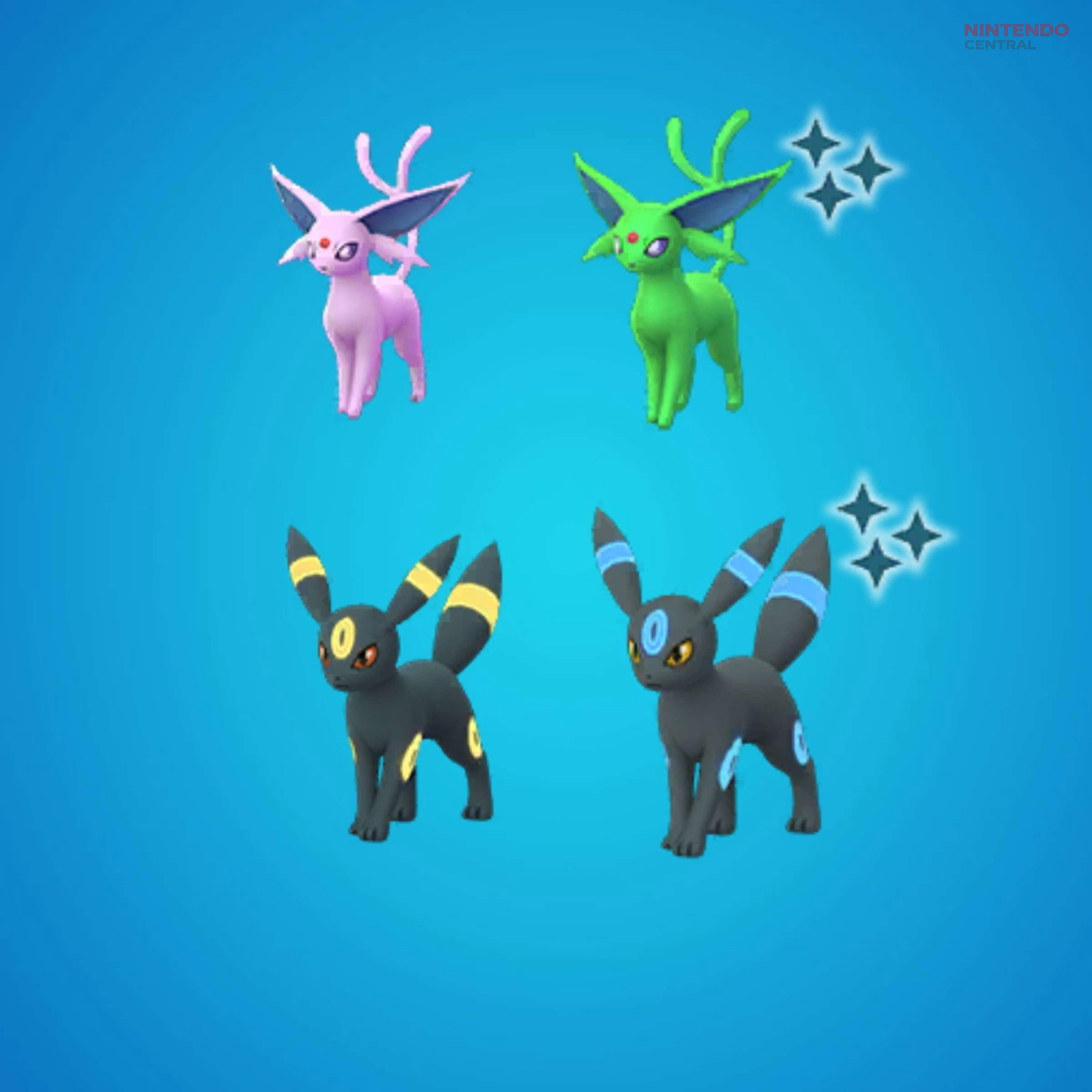
Some of the most popular Gen 2 additions were dark and steel-type Pokémon. Umbreon and Houndoom helped establish Dark-types in Pokémon GO, while Steelix, Scizor, and Skarmory introduced durable Steel-type gameplay into the evolving battle meta.
Legendary Pokémon from Johto also became major raid attractions later in the game’s lifecycle. Lugia, Ho-Oh, Raikou, Entei, and Suicune became some of the most sought-after raid bosses in Pokémon GO history.
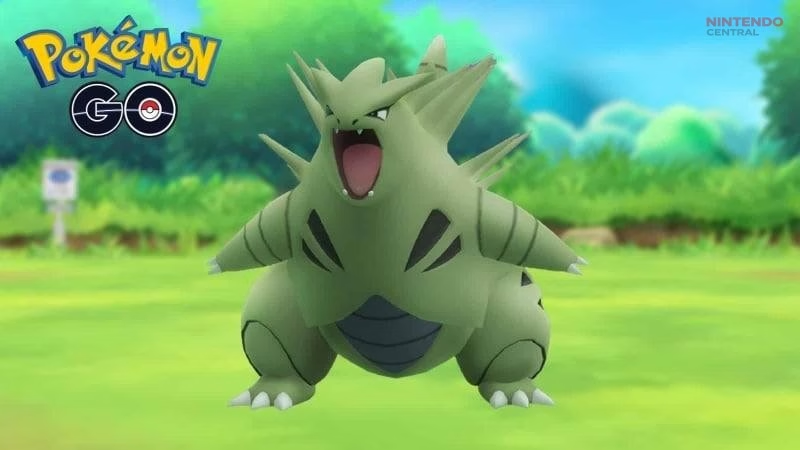
The generation also introduced Pokémon that would remain relevant for years in both raids and PvP. Tyranitar became one of the strongest Dark and Rock-type attackers in the game, while Blissey dominated gym defense for years because of its massive HP stat.
Other notable Gen 2 Pokémon included:
Mareep, Ampharos, Crobat, Bellossom, Politoed, Slowking, Kingdra, Porygon2, Donphan, Heracross, Miltank, Smeargle, Unown, Togetic, and Celebi.
How Gen 2 Changed Pokémon GO Gameplay
The Johto update was not simply about adding new Pokémon. It fundamentally changed several gameplay systems and introduced mechanics that became permanent features in Pokémon GO.
One of the biggest additions was evolution items. Pokémon GO originally relied almost entirely on Candy for evolutions, but Gen 2 added special items like Metal Coat, King’s Rock, Dragon Scale, Sun Stone, and Upgrade. These items were required to evolve specific Pokémon into Johto forms such as Scizor, Steelix, Kingdra, Bellossom, and Porygon2.
This change added more depth to progression systems. Trainers now needed both Candy and rare items obtained from PokéStops. It encouraged daily gameplay and gave players long-term goals beyond simple catching.
Gen 2 also introduced new berry mechanics. Nanab Berries slowed Pokémon movement during encounters, while Pinap Berries doubled Candy rewards after successful captures.
Pinap Berries eventually became one of the most important items in the game because they dramatically reduced evolution grinding. Players farming rare Pokémon or preparing powerful raid attackers quickly relied on Pinaps as part of their standard strategy.
Another major improvement involved encounter animations and catching mechanics. Wild Pokémon became more dynamic during encounters, making catches feel more interactive compared to the simpler Gen 1 system.
Baby Pokémon and New Evolution Systems
Gen 2 also introduced Baby Pokémon, which added egg-focused gameplay for the first time in Pokémon GO. Pokémon like Pichu, Togepi, Elekid, and Magby could primarily be obtained through eggs instead of wild encounters.
This addition made egg hatching significantly more important. Before Gen 2, eggs mainly served as bonus rewards. After the Johto update, they became essential for Pokédex completion and rare Pokémon hunting.
The generation also expanded branching evolution systems. Eevee gained two new evolutions in Pokémon GO through Espeon and Umbreon, which introduced time-based evolution mechanics inspired by the original Johto games.
Several Kanto Pokémon also gained new Johto evolutions. Golbat evolved into Crobat, Chansey evolved into Blissey, and Onix evolved into Steelix. These additions helped older Pokémon remain relevant instead of becoming obsolete as the game expanded.
The Johto update also laid the groundwork for future evolution systems involving buddy requirements, friendship mechanics, and special conditions. Many of those ideas later evolved into advanced evolution requirements seen in modern Pokémon GO.
The Most Important Gen 2 Pokémon in Pokémon GO History
While the Johto Pokédex introduced dozens of memorable Pokémon, only a few truly changed the competitive terrain of Pokémon GO.
Tyranitar became one of the strongest attackers in the game after release. Its Dark and Rock typing gave it enormous value against Psychic-type raid bosses and flying enemies. For several years, Tyranitar remained a must-have Pokémon for high-level players.
Blissey completely transformed gym defense. Its huge HP pool made gyms harder to clear, especially before major battle reworks reduced defensive dominance. Blissey quickly became one of the most recognizable defenders in Pokémon GO.
Skarmory later became a PvP staple after the introduction of the GO Battle League. Its defensive typing and strong moveset made it one of the best Great League Pokémon for years.
Umbreon also became a major PvP favorite because of its incredible bulk and reliable Dark-type coverage. Even years after release, Umbreon remains relevant in multiple PvP formats.
Meanwhile, Lugia became one of Pokémon GO’s most iconic legendary raid bosses because of its defensive power and popularity within the franchise.
Why the Gen 2 Update Was a Turning Point for Pokémon GO
The Johto update arrived during a critical period for Pokémon GO. Player interest had declined after the game’s explosive 2016 launch, and many trainers wanted deeper gameplay systems and more Pokémon variety.
Gen 2 successfully addressed many of those concerns. The update expanded the Pokédex significantly while introducing new mechanics that made the game feel more strategic and rewarding.
Evolution items, berries, baby Pokémon, and new battle-relevant species created long-term progression goals that helped retain players. The update also proved that Pokémon GO could continuously evolve instead of remaining a simple collecting game.
Many systems introduced during the Johto era eventually became foundations for future mechanics like raids, PvP leagues, buddy systems, and advanced evolutions. In many ways, Gen 2 marked the point where Pokémon GO began transforming into the much larger live-service experience that exists today.
For many longtime trainers, the Johto expansion remains one of the most important and nostalgic updates in Pokémon GO history because it changed the game from a viral mobile phenomenon into a long-term evolving platform for Pokémon fans worldwide.