The release of Gen 2 Pokémon in Pokémon GO marked more than just the arrival of the Johto region. It also represented one of the game’s earliest major visual upgrades. When Niantic introduced Johto Pokémon in early 2017, players immediately noticed changes in Pokémon models, animations, proportions, and visual quality. Compared to the simpler Gen 1 creatures available at launch, many Gen 2 Pokémon featured more detailed designs, smoother movement animations, and stronger personality expression.
At the time, Pokémon GO was still evolving rapidly after its explosive 2016 launch. The original release focused primarily on basic gameplay systems and simple 3D creature models that worked across a wide range of smartphones. The Gen 2 update gave Niantic an opportunity to improve how Pokémon looked and behaved in the game world while introducing species with more advanced and expressive designs. Official Pokémon GO updates from Niantic described the Johto expansion as one of the game’s biggest content upgrades, adding new Pokémon, animations, berries, and evolution systems.
Let’s break down how Pokémon GO’s Gen 2 models changed the visual identity of the game and why the Johto update became an important turning point for Pokémon design quality.
Why Gen 2 Pokémon Looked Different From Gen 1
One of the biggest reasons Gen 2 Pokémon models stood out was the difference in original creature design philosophy between Kanto and Johto Pokémon.
Gen 1 Pokémon were originally designed during the 1990s for the Game Boy’s limited hardware. Many early Pokémon relied on simpler silhouettes and straightforward anatomy because of pixel-art limitations. Pokémon like Voltorb, Muk, and Magnemite had relatively basic structures that translated easily into Pokémon GO’s early 3D style.
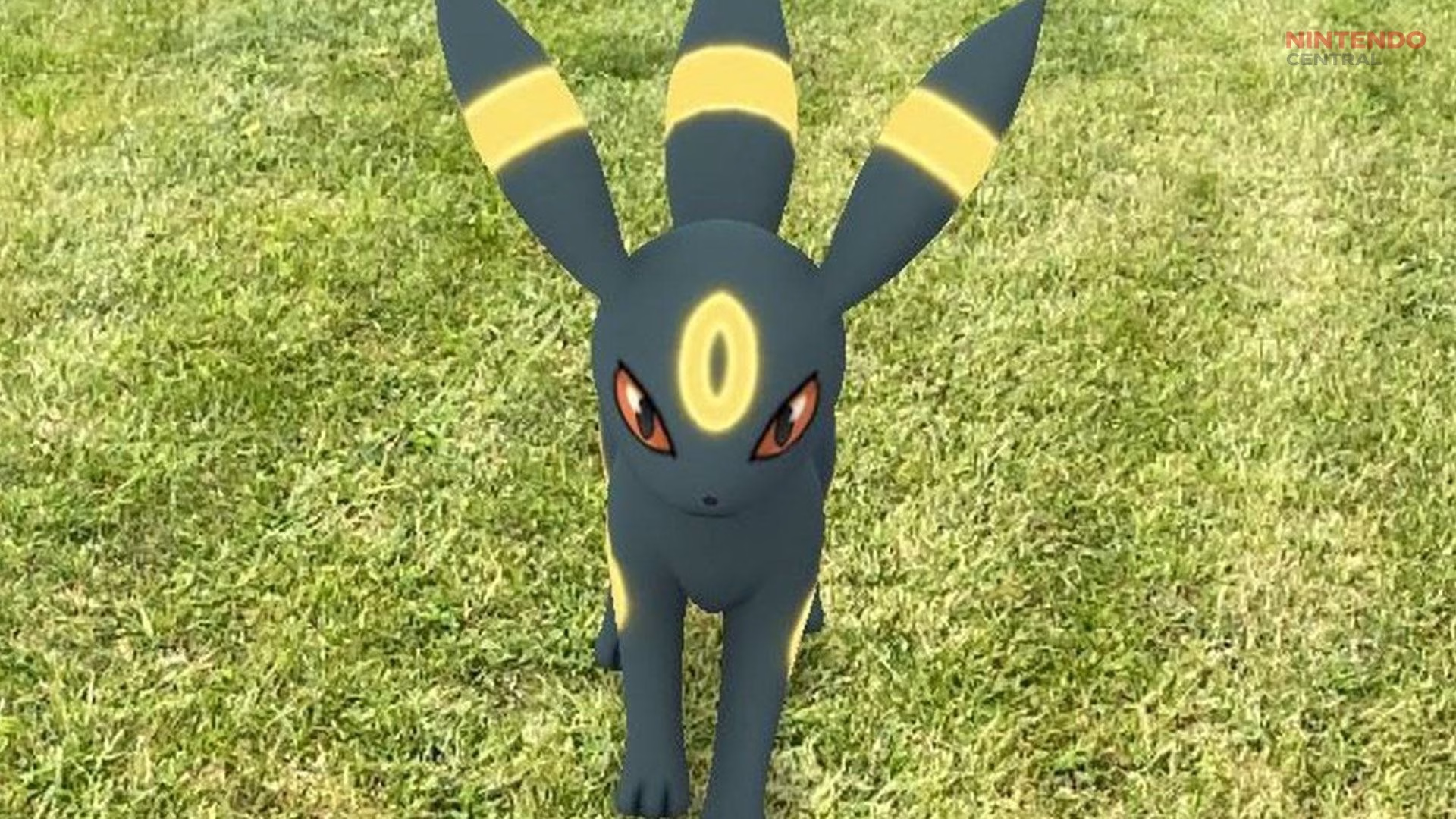
By comparison, Gen 2 Pokémon from the Johto region were created years later with more advanced design ideas and more expressive character traits. Pokémon such as Umbreon, Scizor, Heracross, and Tyranitar featured sharper proportions, more detailed body structures, and stronger visual identities.
When these Johto Pokémon arrived in Pokémon GO, they naturally appeared more complex and dynamic compared to many original Gen 1 models. Creatures like Houndoom and Skarmory had angular shapes and layered textures that made them visually distinct in AR encounters.
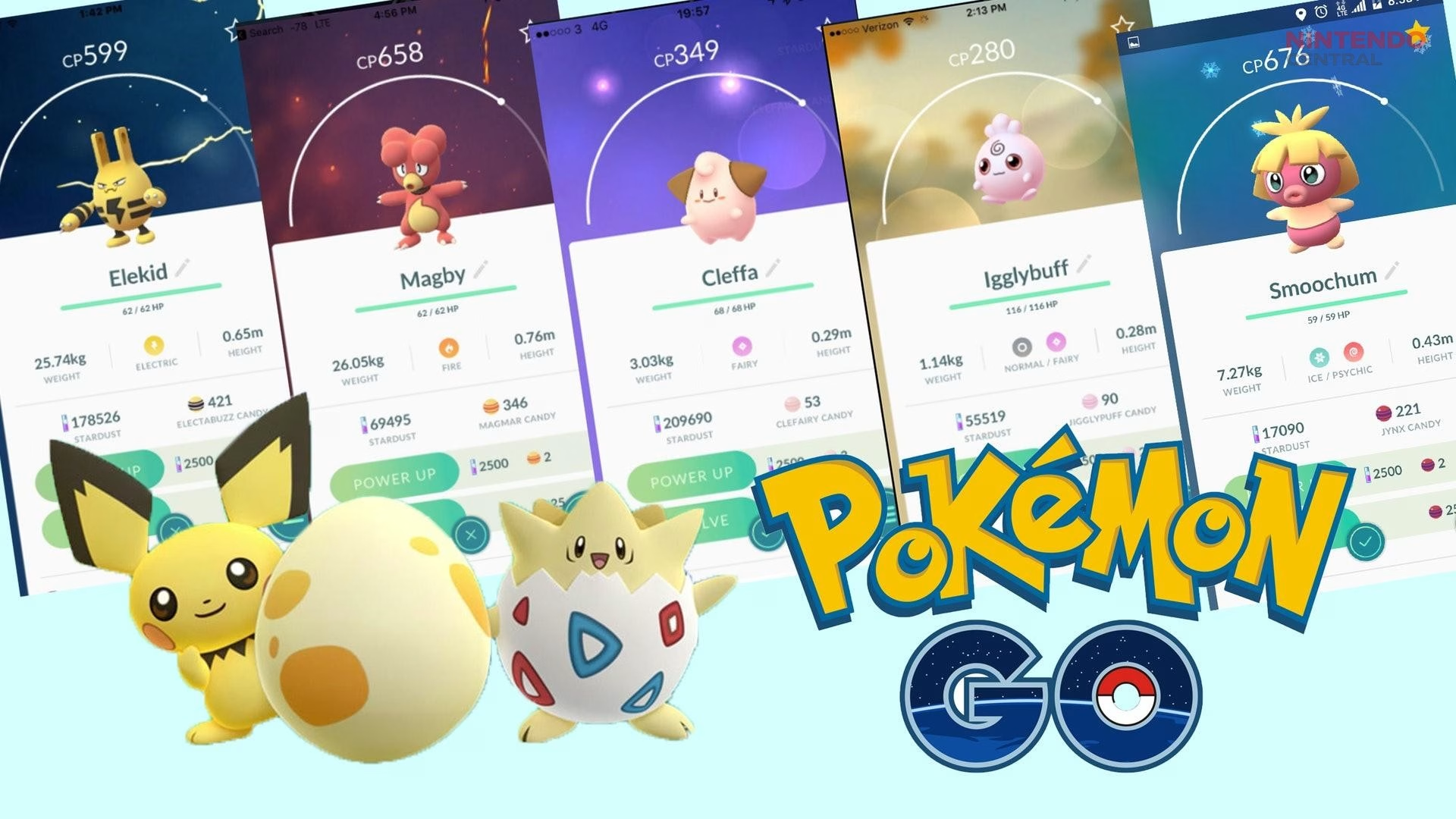
The Johto Pokédex also introduced more baby Pokémon and friendship-based evolutions, leading to softer and more animated designs. Togepi, Pichu, Cleffa, and Igglybuff brought a noticeably different aesthetic compared to the original Pokémon lineup.
This contrast helped Pokémon GO feel visually fresher after months of relying solely on Kanto creatures.
Animation Improvements Introduced During the Gen 2 Era
The Gen 2 update also improved Pokémon animations across the game. Early Pokémon GO models were often criticized for appearing stiff or lifeless during encounters. Many launch-era Pokémon used repetitive idle motions and limited reaction animations.
After the Johto update, Niantic expanded animation quality significantly. Pokémon movements became more fluid during encounters, attack sequences looked more expressive, and certain creatures displayed more personality-specific behavior.
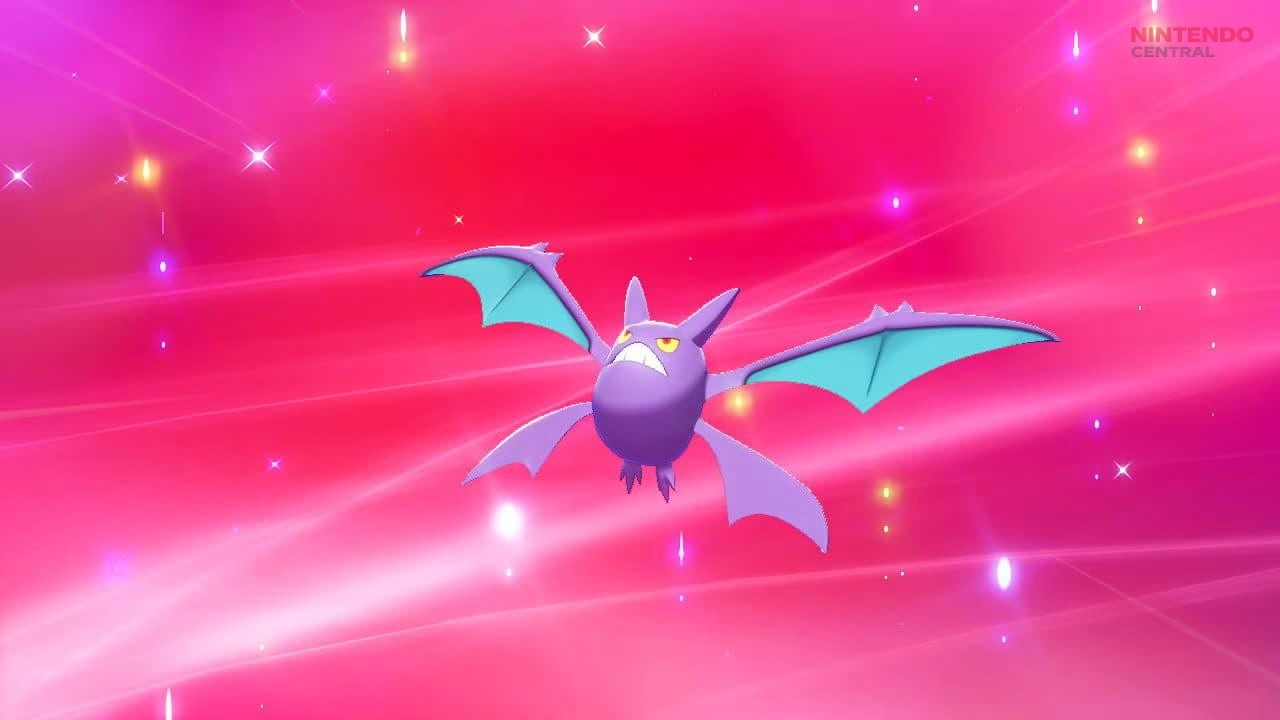
Flying Pokémon, in particular, benefited from these improvements. Noctowl, Crobat, and Skarmory featured smoother airborne movement compared to many Gen 1 flying species. Pokémon with tails, wings, or segmented limbs also displayed more natural movement physics.
The update additionally refined capture encounter behavior. Wild Pokémon began moving around more actively during catch attempts, making encounters feel less static than the original 2016 version of the game.
According to Pokémon GO’s official game description on Google Play, Niantic continued emphasizing immersion and augmented reality interaction as core elements of the experience. These animation improvements supported that direction by making Pokémon appear more alive within AR environments.
Many players viewed the Gen 2 era as the point where Pokémon GO started evolving beyond a basic location-based collector game into a more polished live-service title.
How Johto Pokémon Changed Pokémon GO’s Visual Style
The Johto generation introduced a broader range of artistic styles compared to Gen 1. This diversity affected how Pokémon GO visually presented encounters, gyms, and Pokédex collections.
Several Gen 2 Pokémon leaned heavily into mythology and folklore-inspired aesthetics. Pokémon like Xatu, Umbreon, and Unown had mysterious designs that contrasted sharply with the simpler animal-inspired creatures dominating early Pokémon GO.
Steel-type Pokémon also changed the game’s visual tone. Scizor, Steelix, and Skarmory brought metallic textures and sharper industrial designs into the Pokémon GO ecosystem for the first time. Their models looked dramatically different from softer or rounder Gen 1 Pokémon.
Dark-type Pokémon added another stylistic shift. Umbreon, Murkrow, and Houndoom introduced darker color palettes and more aggressive silhouettes, helping battles and encounters feel visually more varied.
Meanwhile, Pokémon like Bellossom, Ampharos, and Meganium embraced softer pastel-inspired color schemes and rounded features. This wider range of design styles made Pokémon GO’s world feel more diverse after the Johto expansion.
The updated Pokédex itself also appeared more visually interesting because of the increased design variety introduced through Gen 2.
The Role of 3D Modeling in Pokémon GO’s Evolution
Pokémon GO launched during a period when the franchise had already transitioned heavily into 3D creature modeling in the mainline games. By the time Pokémon GO released in 2016, modern Pokémon games were already using full 3D models instead of sprite-based artwork.
This gave Niantic access to a large library of existing Pokémon model references developed by The Pokémon Company and Game Freak. However, Pokémon GO still needed to optimize those designs for mobile AR gameplay and battery performance.
The Gen 2 rollout demonstrated improvements in how Niantic adapted these creatures for smartphone hardware. Johto Pokémon generally featured cleaner model shading, improved proportions, and more expressive rigging compared to some early Gen 1 assets.
The differences became especially noticeable on larger Pokémon. Tyranitar, Lugia, and Ho-Oh looked far more detailed and imposing than many early legendary or evolved Pokémon available before the Johto update.
As Pokémon GO continued expanding into later generations, these visual improvements became even more important. The Gen 2 era effectively established the baseline for future Pokémon model quality in the game.
Which Gen 2 Pokémon Had the Biggest Visual Impact?
Several Johto Pokémon became especially memorable because of how impressive their models looked in Pokémon GO.
Umbreon quickly became one of the game’s most visually iconic Pokémon thanks to its glowing ring patterns and sleek black design. Its nighttime-themed appearance stood out strongly during AR encounters.
Scizor impressed players with its metallic red body and aggressive stance. Compared to the simpler bug Pokémon from Gen 1, Scizor looked significantly more advanced and battle-oriented.
Lugia became one of Pokémon GO’s most visually striking raid bosses because of its enormous wingspan and smooth swimming-style movement animation. Ho-Oh also became popular because of its vibrant colors and detailed feather design.
Tyranitar represented another major leap in visual presence. Its size, armor-like body structure, and monster-inspired appearance made it feel far more intimidating than many earlier Pokémon.
Even smaller Johto Pokémon left strong impressions. Togepi became instantly recognizable because of its anime popularity and expressive animations, while Unown stood out because of its unusual floating symbol-like appearance.
These Pokémon helped establish stronger emotional connections between players and the game’s expanding Pokédex.