Since its launch in 2016, Pokémon GO has evolved far beyond a simple monster-catching mobile game. What started as a location-based AR experience now includes trading systems, buddy progression mechanics, raid battles, PvP leagues, Incense upgrades, party play, routes, and seasonal live-service events. Many of these features fundamentally changed how players interact with the game and with each other.
For newer players, the number of mechanics in Pokémon GO can feel overwhelming. Even longtime trainers sometimes ignore systems that offer major gameplay advantages simply because they do not fully understand how they work. Features like the Buddy System, Daily Adventure Incense, and Trading directly affect Candy farming, rare Pokémon hunting, and long-term progression. Meanwhile, systems like friendship bonuses and Lucky Trades have become central to the social side of the game.
Official Pokémon GO support pages and community guides consistently show that understanding these mechanics can dramatically improve efficiency and progression.
Here is a complete breakdown of Pokémon GO’s most important features and why they still matter in 2026.
The Buddy System Helps Players Earn Candy and Powerful Bonuses
The Buddy System remains one of Pokémon GO’s most important long-term progression mechanics. Introduced in 2016 and later expanded through Buddy Adventure updates, the system allows players to choose one Pokémon to travel alongside their avatar.
At its simplest level, the feature rewards Candy for walking specific distances. Different Pokémon families require different walking distances, ranging from 1 km to 20 km per Candy. This system is especially useful for evolving rare Pokémon or powering up Legendaries without relying entirely on raids or wild catches.
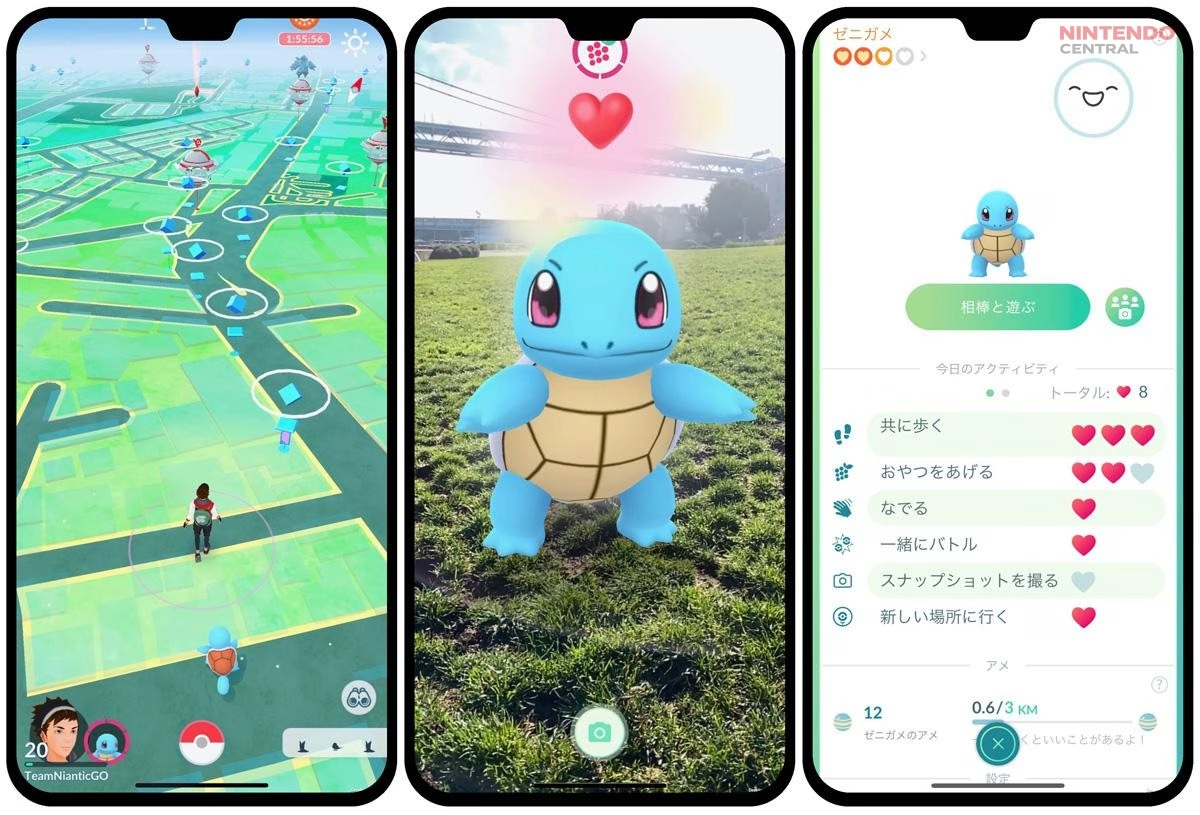
However, the modern Buddy Adventure system adds much deeper mechanics. Players can increase Buddy Levels by earning Affection Hearts through activities such as walking, feeding berries, battling, taking snapshots, and visiting new locations. Higher Buddy Levels unlock increasingly valuable perks.
Good Buddy allows the Pokémon to appear on the map. Great Buddy unlocks Catch Assist, where the buddy can bounce back missed Poké Balls during encounters. Ultra Buddy enables souvenir collection and location discovery, while Best Buddy grants a CP boost in combat.
The system also includes mood mechanics. Excited Buddies reduce Candy walking distance requirements and allow players to earn more Affection Hearts per day. Community discussions on Reddit frequently mention that maintaining Excited status is especially useful for Legendary Pokémon because it halves the normally massive walking requirements.
For competitive players, the Best Buddy CP boost can also matter in PvP leagues and raids.
Trading Is One of Pokémon GO’s Most Social Features
Trading transformed Pokémon GO from a mostly solo experience into a much more community-driven game. Official trading mechanics allow players to exchange Pokémon with nearby friends in exchange for Stardust costs.
To trade, both trainers must be at least Level 10 and physically close to each other. Friendship Levels heavily affect Stardust requirements, encouraging long-term interaction between players. Higher friendship levels reduce trade costs significantly and unlock additional gameplay bonuses.
Trading is important for several reasons beyond Pokédex completion. Pokémon obtained through trades can reroll IV stats, potentially becoming stronger than their original versions. Trades also give players the chance to receive Lucky Pokémon, which require less Stardust to power up.
Lucky Trades are among the most valuable mechanics in the game because they guarantee minimum IV thresholds while reducing upgrade costs. Veteran players often save rare Legendary or shiny Pokémon specifically for Lucky Friend trades.

Special Trades add another layer of rarity. Shiny Pokémon, Legendary Pokémon, and Pokémon not already registered in a player’s Pokédex count as Special Trades and can usually only be performed once per day.
Trading also supports regional Pokémon collection. Since some Pokémon remain region-exclusive, international trades became one of the few ways to complete certain Pokédex entries without traveling globally.
The feature continues to be heavily tied to live events and community gatherings, which remain central to Pokémon GO’s identity.
Incense Became Much More Valuable After Daily Adventure Incense
Incense has existed in Pokémon GO for years, but the introduction of Daily Adventure Incense changed how players use the feature entirely.
Traditional Incense increases nearby Pokémon spawns temporarily. While useful during events, standard Incense became less impactful for many players over time because of spawn adjustments and changing gameplay pacing.
Daily Adventure Incense introduced a much stronger exploration-focused mechanic. Instead of simply generating common encounters, this version specifically rewards movement and includes rare Pokémon in its encounter pool.
The feature lasts 15 minutes and works best while walking consistently. Official Pokémon GO updates confirmed that Daily Adventure Incense was designed to encourage outdoor exploration while providing access to uncommon Pokémon encounters.
The biggest attraction is the possibility of encountering Galarian Articuno, Galarian Zapdos, and Galarian Moltres. These legendary birds became some of the rarest wild encounters in Pokémon GO and are strongly associated with Daily Adventure Incense sessions.
Players quickly discovered that walking in straight lines at a steady pace generates significantly more encounters than remaining stationary. Community research and Reddit discussions continue to document rare Pokémon appearances specifically tied to Daily Adventure Incense use.
Incense also becomes more powerful during themed events. Water Festivals, Community Days, GO Fest celebrations, and seasonal events often increase spawn rates or add exclusive Pokémon to Incense pools.
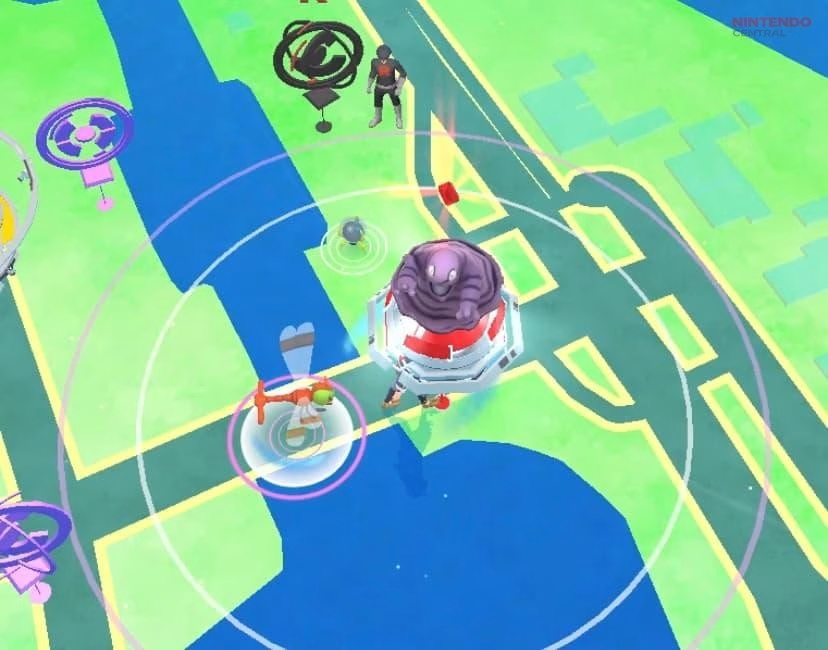
For rural players especially, Incense remains one of the most valuable tools for improving encounter variety.
Raids and Remote Raids Changed Endgame Progression
Raids became the foundation of Pokémon GO’s cooperative endgame content. Introduced in 2017, raids allow groups of trainers to battle powerful boss Pokémon at Gyms for rewards and catch opportunities.
Raid tiers vary from easy solo encounters to difficult Legendary and Mega Pokémon battles requiring coordinated teams. The system helped turn Pokémon GO into a much more social experience because many high-level raids are difficult to complete alone.
Legendary Pokémon availability also became heavily tied to raid rotations. Many of the game’s strongest attackers and rarest shinies are primarily accessible through raids.
Remote Raid Passes dramatically expanded accessibility by allowing players to join raids without physically visiting Gyms. This feature became especially important during the global pandemic period and permanently changed how many players approached the game.
However, Remote Raid Pass pricing and usage limits later became controversial within the community. Many trainers argued that changes reduced accessibility for rural players and casual users.
Despite those debates, raids remain one of Pokémon GO’s most important progression systems because they provide rare Pokémon, Rare Candy, XL Candy, and high-level rewards.
Mega Raids also introduced Mega Evolution mechanics into the game. Players now collect Mega Energy through raids and related activities to temporarily evolve Pokémon into stronger forms.
PvP and GO Battle League Added Competitive Depth
Before PvP existed, Pokémon GO focused mostly on collection and cooperative gameplay. The introduction of Trainer Battles and GO Battle League created a competitive layer that changed how players value Pokémon entirely.
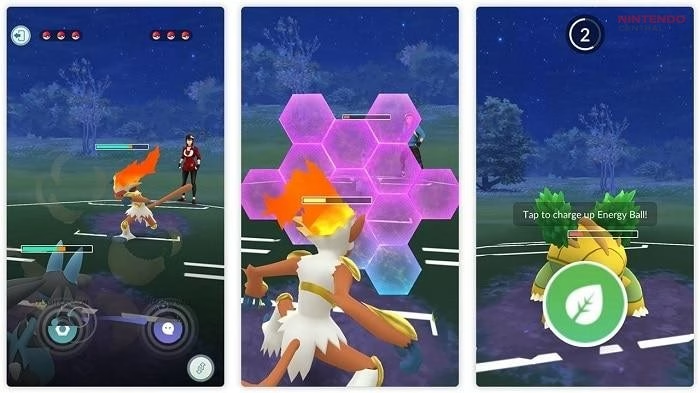
Combat in Pokémon GO PvP revolves around Fast Moves, Charged Moves, shields, energy management, and typing matchups. Different leagues enforce CP limits, which creates unique metas and encourages players to build specialized Pokémon.
The Great League especially became one of the most popular formats because it allows broader Pokémon diversity compared to unrestricted Master League play.
GO Battle League seasons now rotate rulesets, reward encounters, and ranking systems regularly. Competitive players grind battles for exclusive cosmetics, Stardust rewards, and rare Pokémon encounters.
PvP also increased the importance of IV optimization. Unlike raids, where maximum stats are usually preferred, PvP often rewards lower Attack IVs combined with high Defense and HP stats.
This competitive layer dramatically increased the depth of Pokémon evaluation and long-term team building.
Routes and Party Play Expanded Exploration Features
Niantic has continued adding social exploration systems designed to reinforce outdoor gameplay. Routes and Party Play are two of the biggest modern examples.
Routes allow players to create and follow walking paths connected to PokéStops and Gyms. Following Routes can generate rewards, encounters, and Zygarde Cells used for Zygarde Forme progression.
Party Play allows groups of nearby players to form temporary teams and complete shared objectives together. This system encourages coordinated gameplay during Community Days, raids, and major events.
These mechanics reinforce Pokémon GO’s original philosophy of encouraging exploration and real-world interaction rather than purely stationary mobile gameplay.
Although not every feature becomes universally popular, Niantic continues experimenting with ways to keep exploration central to the game experience.
Events and Seasonal Content Keep Pokémon GO Active
Seasonal events are arguably the reason Pokémon GO remains active nearly a decade after launch. The game constantly rotates featured Pokémon, shinies, bonuses, raid bosses, and themed activities.
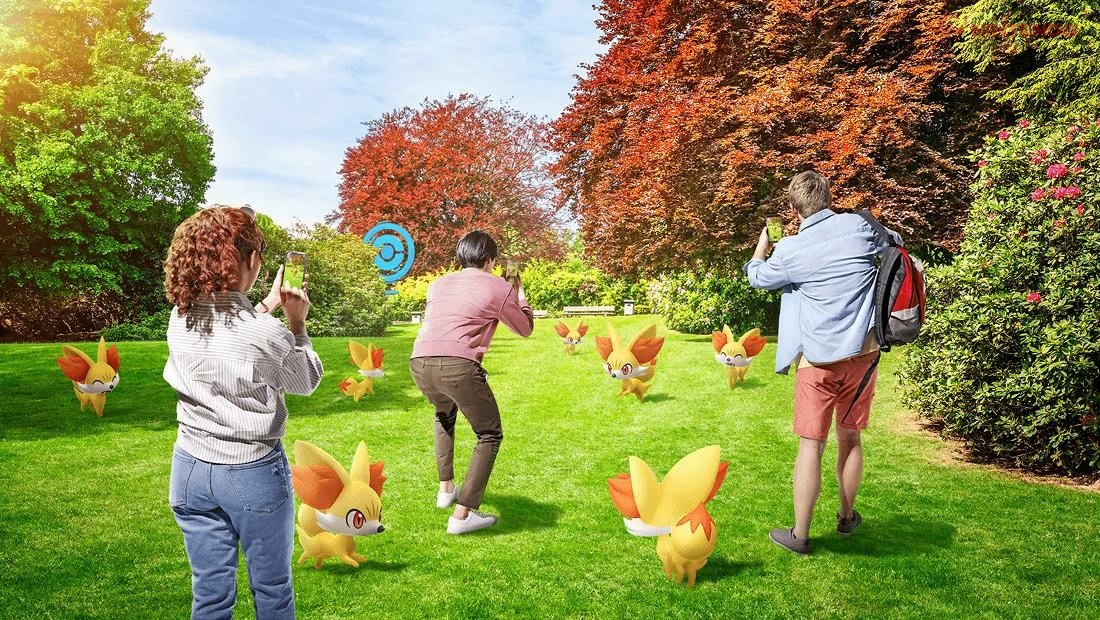
Community Days remain some of the biggest recurring events. These monthly celebrations dramatically increase the spawn rate of featured Pokémon and usually include exclusive evolution moves.
GO Fest, Safari Zone events, Halloween celebrations, and anniversary events similarly drive engagement through limited-time content.
Seasonal rotations also affect spawn pools, research tasks, eggs, and PvP metas. This constant cycle of changing content helps prevent the game from becoming repetitive for long-term players.
Many gameplay systems now connect directly to seasonal progression structures. Timed Research, Collection Challenges, and ticketed events all encourage regular participation throughout the year.
Pokémon GO’s Features Work Best Together
What makes Pokémon GO successful is not any single mechanic alone. The game works because its systems connect together in meaningful ways.
Buddy Pokémon help earn Candy for raid attackers. Raids provide Legendaries for trading. Trading creates Lucky Pokémon for PvP and raids. Incense improves shiny hunting during events. Friendship bonuses increase raid efficiency. Community Days support both PvP and collection goals.
Each major feature feeds into another progression loop, creating a surprisingly interconnected ecosystem underneath Pokémon GO’s simple surface.
Official support pages, community research, and years of player experimentation continue proving that understanding these systems gives players a major advantage.
Even in 2026, Pokémon GO remains one of the most feature-rich live-service mobile games because it constantly expands how players interact with exploration, collection, competition, and social gameplay.