The PlayStation 5 has now been on the market for several years, but it continues to dominate conversations around console gaming. Since launching in 2020, Sony’s ninth-generation console has become one of the company’s fastest-selling systems ever, driven by major exclusives, powerful hardware, and next-generation features like ultra-fast SSD loading and the DualSense controller.
However, the gaming terrain in 2026 looks very different compared to the PS5’s launch period. The PlayStation 5 Pro is now available, gaming PCs continue getting stronger, and rumors around future hardware generations have already started appearing online. At the same time, PS5 hardware prices, subscription services, and game costs have all increased in several regions.
That raises an important question for buyers in 2026: is the PlayStation 5 still worth buying today? Let’s break down the PS5’s hardware specs, major features, exclusive games, performance, and whether Sony’s console still delivers strong value several years into its lifecycle.
The PlayStation 5 Still Has Strong Hardware in 2026
Even years after release, the PS5 remains a technically impressive gaming console. Sony designed the system around a custom AMD Zen 2 CPU and RDNA 2 GPU architecture capable of handling modern AAA games at high resolutions and frame rates.
According to PlayStation Official Site, the PS5 supports 4K gaming, ray tracing, HDR visuals, 3D audio, and gameplay up to 120fps in supported titles.
The standard PS5 hardware includes:
Custom AMD Zen 2 8-core CPU
AMD RDNA 2 GPU with 10.28 TFLOPS
16GB GDDR6 RAM
Ultra-fast custom NVMe SSD
HDMI 2.1 support
Wi-Fi 6 connectivity
Ray tracing support
Tempest 3D AudioTech
Sony’s custom SSD remains one of the console’s biggest strengths. The SSD dramatically reduces loading times and allows developers to stream large environments far more efficiently than older consoles.
Sony officially lists the SSD with raw read speeds of 5.5GB/s, which helped establish the PS5 as one of the fastest-loading consoles ever released.
Even in 2026, the PS5’s hardware remains capable of handling demanding games like Marvel’s Spider-Man 2, Final Fantasy VII Rebirth, and upcoming titles such as Grand Theft Auto VI.
The DualSense Controller Is Still One of PS5’s Best Features
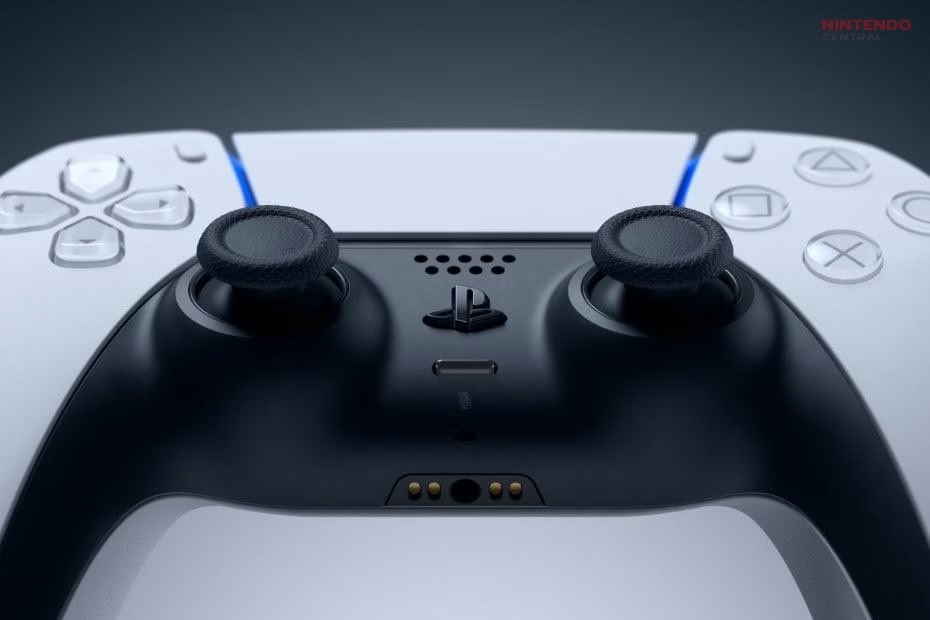
One reason many players still prefer the PS5 over competing platforms is the DualSense controller.
Sony significantly upgraded controller technology compared to the PlayStation 4 generation. Adaptive triggers and advanced haptic feedback allow games to simulate resistance, textures, weather effects, weapon recoil, and environmental immersion in ways older controllers could not.
Many first-party PlayStation games heavily utilize these features. Titles like Astro’s Playroom became showcase examples for the DualSense’s capabilities.
Sony also expanded the controller lineup with the DualSense Edge, targeting competitive players with customizable inputs and advanced controls.
The controller remains one of the clearest areas where the PS5 still feels genuinely “next-gen” compared to older consoles. Even many PC players use DualSense controllers because of their advanced features and ergonomic design.
Battery life is still a common criticism, but overall the DualSense remains one of Sony’s biggest hardware successes this generation.
PS5 Exclusives Continue To Be a Major Selling Point
Exclusive games remain one of the biggest reasons to buy a PS5 in 2026. Sony’s first-party lineup continues to be one of the strongest in the industry.
Games like God of War Ragnarök, Demon’s Souls, Ratchet & Clank: Rift Apart, and Marvel’s Spider-Man 2 helped define the PS5 generation.
Sony’s focus on cinematic single-player experiences continues to separate PlayStation from competitors.
The PS5 also remains the primary console platform for many Japanese RPGs and major third-party titles. Games from companies like Square Enix and Capcom often perform strongly on PlayStation hardware.
In addition, upcoming releases like Death Stranding 2: On the Beach and Wolverine continue giving players reasons to stay within Sony’s ecosystem.
The exclusives argument matters because hardware power alone is rarely enough to sell consoles long-term. Sony’s first-party studios remain one of the PS5’s biggest advantages in 2026.
The PS5 Slim Improved the Hardware Design
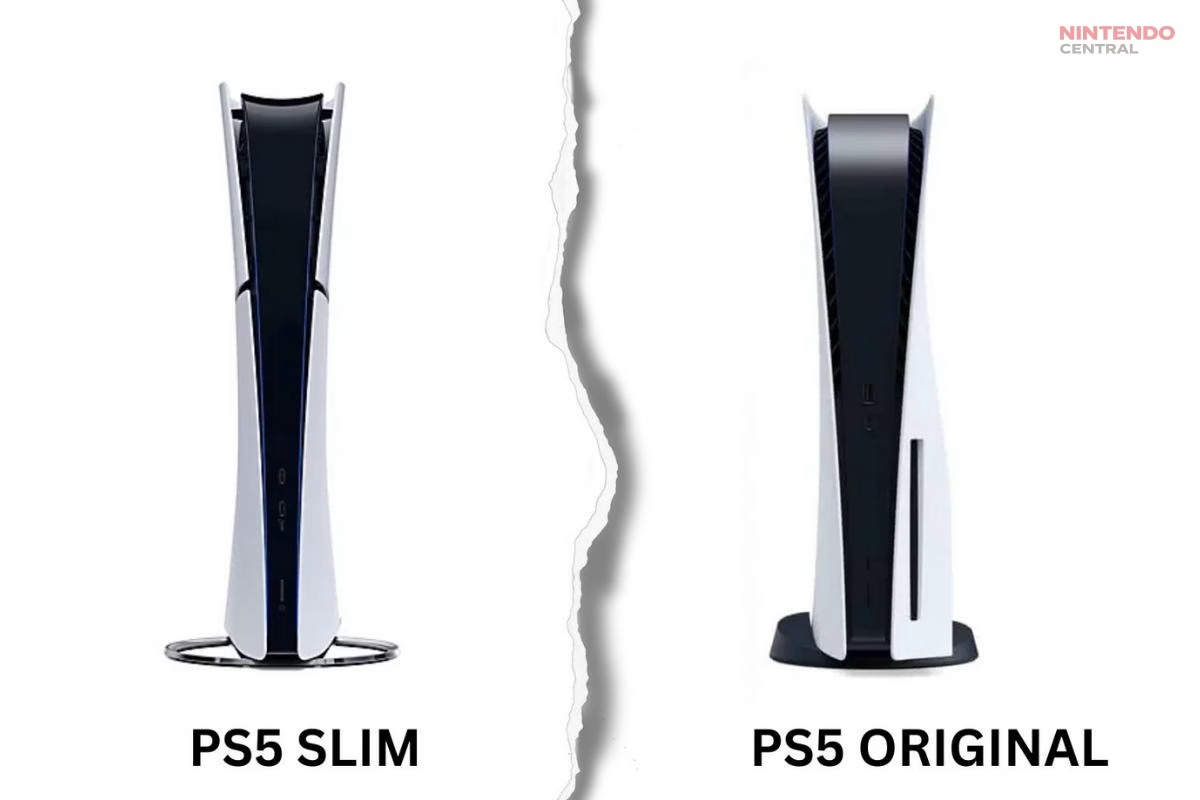
Sony refreshed the hardware with the PlayStation 5 Slim in late 2023.
According to Sony’s official PlayStation Blog announcement, the revised console reduced physical size while increasing internal storage to 1TB.
The PS5 Slim also introduced modular disc drive functionality for Digital Edition users. This gave buyers more flexibility because they could add a disc drive later instead of being permanently locked into digital purchases.
The slimmer design also improved practicality. The original PS5 became famous for its massive size, while the Slim revision fits more comfortably into entertainment setups.
Importantly, the PS5 Slim maintained essentially identical gaming performance compared to the original hardware. The redesign focused more on efficiency, storage, and size rather than graphical improvements.
For most buyers in 2026, the Slim version is now the standard recommendation unless they specifically want the PS5 Pro.
The PS5 Pro Changed the Market in 2025
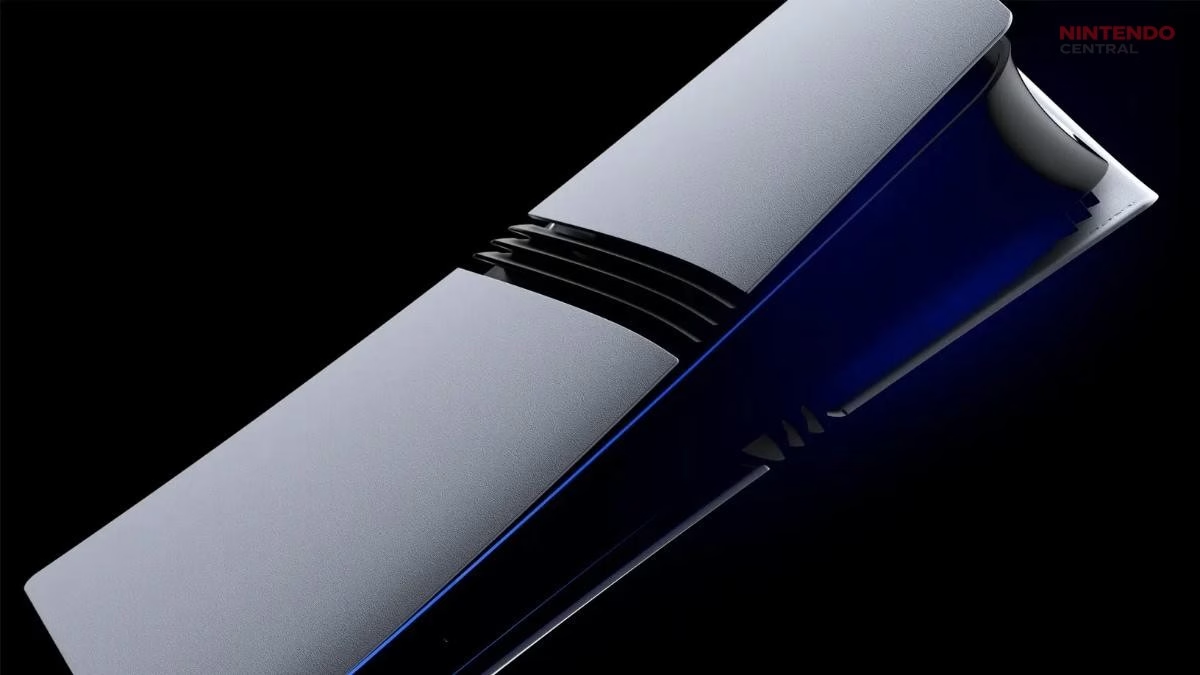
Sony released the PS5 Pro in late 2024, significantly improving graphical performance.
According to PlayStation PS5 Pro Official Page, the PS5 Pro supports enhanced ray tracing, AI-assisted upscaling through PSSR technology, and improved performance for 4K gaming.
The Pro model includes:
Faster GPU performance
Improved ray tracing
PSSR AI upscaling
2TB SSD storage
Wi-Fi 7 support
Enhanced 4K performance
Potential 8K output support
This changed the buying conversation significantly in 2026.
The standard PS5 remains powerful, but the PS5 Pro now exists as Sony’s premium option for enthusiasts who prioritize graphical quality and higher frame rates.
However, the Pro is substantially more expensive. Many players still find the standard PS5 or PS5 Slim more practical because the gameplay experience remains excellent without paying premium prices.
The existence of the PS5 Pro does not make the standard PS5 obsolete, but it does create a clearer performance hierarchy within Sony’s ecosystem.
Backward Compatibility Adds Huge Value
One of the PS5’s best long-term features is backward compatibility.
Sony confirmed that the PS5 supports the vast majority of PS4 games, allowing players to carry large libraries forward into the newer console generation.
This remains extremely valuable in 2026 because the PS4 library is enormous. Players immediately gain access to hundreds of high-quality games including:
Ghost of Tsushima
Bloodborne
The Last of Us Part II
Persona 5 Royal
Many PS4 titles also run better on PS5 through performance patches, faster loading, and improved frame rates.
This backward compatibility significantly improves the console’s value because buyers are not limited only to new-generation releases.
Storage Expansion and Features Keep the PS5 Competitive
Storage limitations were an early concern for the PS5 because modern AAA games became extremely large.
Sony addressed this through expandable M.2 SSD support, allowing users to add additional high-speed storage. Sony later expanded maximum supported SSD capacity through firmware updates.
The PS5 also continues receiving software updates improving usability and system features. Sony added enhancements like Dolby Atmos support, personalized 3D audio profiles, improved social systems, and expanded accessibility features through major firmware updates.
These ongoing updates matter because they help the console feel modern even years after launch.
Sony’s ecosystem features such as PlayStation Plus, cloud saves, Remote Play, and PS VR2 compatibility also continue strengthening the platform in 2026.
Is the PlayStation 5 Still Worth Buying in 2026?
For most players, the answer is yes. The PS5 still delivers excellent performance, fast load times, strong exclusives, and modern features that remain highly competitive even in 2026. The hardware may no longer feel brand new, but it still handles current AAA games extremely well.
The biggest deciding factor now is choosing between the standard PS5, PS5 Slim, and PS5 Pro.
The standard PS5 and Slim remain the best value options for most players because they provide nearly the full PlayStation experience at lower prices. Meanwhile, the PS5 Pro targets enthusiasts who prioritize maximum visual fidelity and performance.
Players already invested in PlayStation exclusives will likely continue finding strong value in Sony’s ecosystem. Meanwhile, players primarily focused on third-party games may also consider gaming PCs or competing consoles before deciding.
Still, Sony’s combination of exclusives, hardware quality, DualSense features, backward compatibility, and ecosystem support keeps the PS5 highly relevant several years after launch.
The PlayStation 5 has successfully maintained relevance long after its initial release because Sony built the console around features that still matter years later.
The ultra-fast SSD, DualSense controller, strong exclusives, backward compatibility, and consistent software updates helped the PS5 age far better than many earlier console generations.
Sony’s introduction of the PS5 Slim and PS5 Pro also allowed the platform to evolve instead of stagnating. Buyers now have multiple hardware options depending on budget and performance priorities.
According to Sony’s official PlayStation pages, the company continues positioning the PS5 ecosystem as the center of its gaming strategy moving forward.
For players considering a purchase in 2026, the PS5 still represents one of the strongest and most complete gaming platforms available today.
Another factor that strengthens the PlayStation 5’s value in 2026 is its growing ecosystem integration. Sony has continued expanding features like PlayStation Plus tiers, cloud streaming, and cross-platform connectivity, making the PS5 more than just a standalone console.
Players can now access a large catalog of games through subscription services, sync progress across devices, and even stream certain titles without downloading them fully. This ecosystem approach makes the PS5 feel more future-ready compared to earlier generations. As gaming shifts toward services and digital access, Sony’s ongoing updates ensure that the PS5 remains relevant, connected, and adaptable for modern players.