A new narrative-driven horror experience is heading to the Nintendo Switch, and it’s taking a different approach to the genre. Sombras: Negative Frames, announced by Entalto Publishing and Maboroshi Artworks, is set for release in Q4 2026, combining light horror elements with a photography-based gameplay system.
Rather than focusing on traditional jump scares, Sombras: Negative Frames leans into psychological storytelling, placing players in a surreal world shaped by memory, identity, and emotional conflict. The game’s premise and mechanics suggest a more introspective horror experience that prioritizes atmosphere over action.
A Story Rooted in Identity and Personal Struggle
At the center of the game is Shiomi Alterio, a Japanese-Spanish photography student, steering a major life transition. Following her parents’ divorce, she moved to a quiet town in Japan, leaving behind her life in Europe. This sense of displacement becomes a key theme as the story unfolds.
One night, Shiomi is pulled into a distorted version of her town, a shadowy dimension where familiar streets are twisted into something unsettling. In this space, she encounters mysterious figures who resemble different versions of herself, forcing her to confront fragmented aspects of her own identity.
This narrative framework allows the game to explore themes such as youth, mixed cultural identity, and family dynamics, giving the horror elements a deeper emotional context.
Photography as the Core Gameplay Mechanic
What sets Sombras: Negative Frames apart from other horror titles is its focus on photography. Instead of relying solely on combat or stealth, players use a camera to interact with the environment and progress through the story.
Taking photos is not just a visual tool but a core gameplay mechanic. Players must capture unusual sights, document strange phenomena, and use their images to unlock paths and uncover hidden details. Developing film rolls also plays a role, adding another layer to the experience.
As players advance, they can upgrade their camera, gaining new abilities that enhance exploration and survival. This system ties directly into the narrative, reinforcing the idea that perception and perspective shape reality.
A Surreal World Filled With Psychological Horror
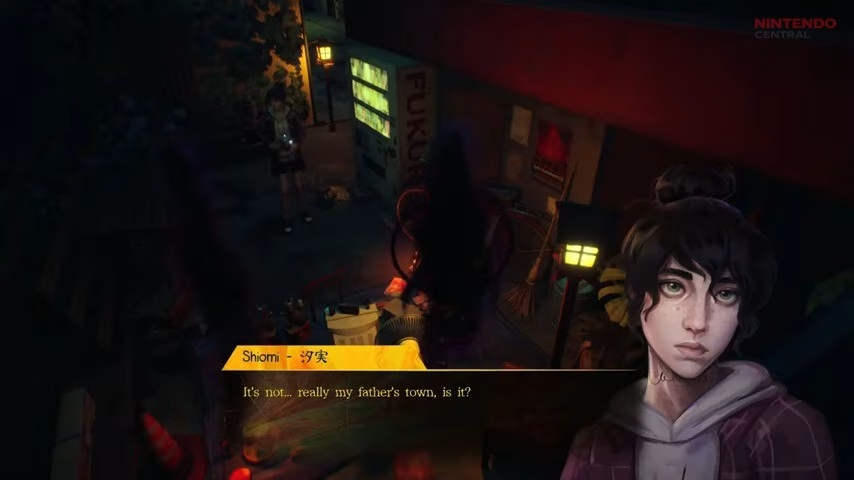
The game’s setting is described as a “dark mirror” of reality, where ordinary locations are transformed into eerie, dreamlike environments. This liminal world is populated by shadowy figures, alternate versions of Shiomi, and symbolic elements that reflect her internal struggles.
Players will encounter a mix of interactions, from befriending certain characters to fleeing from more hostile entities. These encounters create a balance between tension and storytelling, keeping the experience engaging without overwhelming players with constant danger.
The presence of occult objects, hidden secrets, and shifting environments adds to the sense of mystery. Each discovery brings Shiomi closer to understanding the nature of the world she is trapped in, and ultimately, herself.
In a genre often dominated by action-heavy or jump-scare-driven titles, Sombras: Negative Frames takes a more artistic approach. Its emphasis on narrative, combined with its unique photography mechanics, positions it as a distinct entry in the indie horror space.
The game’s hand-crafted atmosphere and focus on emotional storytelling may appeal to players looking for a slower, more immersive experience. By blending cultural themes with psychological horror, it offers something that goes beyond conventional gameplay.