A major breakthrough in retro gaming has arrived, as the entire Nintendo 64 library can now be played online using rollback netcode. The feature comes through a new update to the RMG-K emulator, offering a modern solution to one of the biggest issues that has long affected classic multiplayer games.
For years, fans of titles like Super Smash Bros. have struggled with outdated online systems that made competitive play frustrating. With this latest development, that experience could finally be transformed into something far smoother and more responsive.
A Game-Changing Update for Retro Multiplayer
The update arrives via RMG-K version 0.9.4, released on GitHub, and introduces rollback netcode across all multiplayer-supported Nintendo 64 games. Unlike previous solutions that relied on delay-based systems, this new approach significantly improves responsiveness during online matches.
Rollback netcode works by predicting player inputs and correcting them in real time if needed. This allows matches to feel fluid even when there are network inconsistencies, making it particularly valuable for fast-paced competitive games.
For players who have relied on emulators in the past, this marks a significant upgrade. Instead of dealing with input lag or inconsistent timing, they can now enjoy a much closer approximation of offline gameplay.
Why Rollback Netcode Matters for Competitive Games
In traditional delay-based netcode, every player’s input is delayed to keep the game synchronized. While this can work for slower-paced games, it creates major issues in competitive titles where timing is critical.
Even a small delay can impact performance in games like Super Smash Bros., where matches often come down to split-second decisions. Players have long criticized delay-based systems for making online play feel unresponsive and unreliable.
Rollback netcode addresses this by minimizing perceived delay. Instead of waiting for inputs to sync, the system predicts actions and adjusts when necessary, resulting in smoother gameplay. For many players, this is the gold standard for online fighting games.
Super Smash Bros. Community Drives Early Adoption
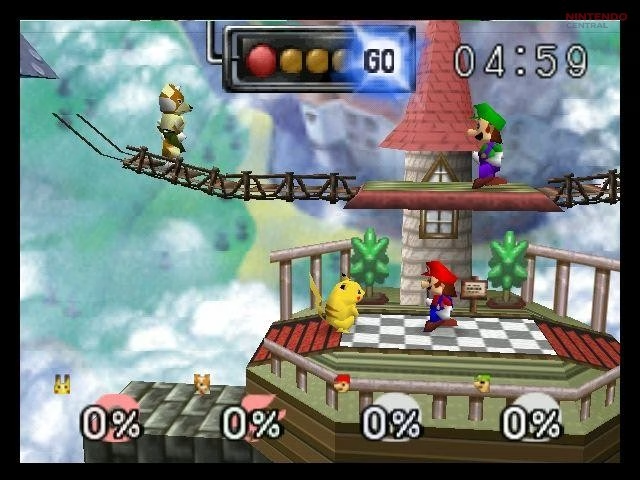
Although the update supports the entire Nintendo 64 library, early testing has largely focused on Super Smash Bros. The game’s dedicated competitive community has quickly embraced the new feature, with many players reporting significantly improved online matches.
This response is not surprising. The original Super Smash Bros. remains a fan favorite, with a strong player base that has continued to support the game decades after its release. For these players, rollback netcode represents a long-awaited improvement that could extend the game’s competitive lifespan even further.
Initial reports suggest that the system performs well, although broader testing across other games is still ongoing. Some players have also experimented with titles like Mario Tennis, with promising results.
Developers Behind the Breakthrough
The rollback implementation was developed collaboratively, with contributions from multiple creators within the emulator community. Among them, NyxTheShield has been highlighted as a key contributor, bringing both technical expertise and creative background to the project.
Interestingly, NyxTheShield is also known for work in music and fan-created content, including projects connected to the Undertale community. This crossover between creative and technical fields reflects the collaborative nature of modern emulation projects.
The update builds on the foundation of the original RMG emulator, showing how community-driven development continues to push retro gaming forward.
A New Era for Nintendo 64 Online Play
The introduction of rollback netcode could mark a turning point for how classic Nintendo 64 games are played online. By removing many of the limitations that previously held back competitive play, the update opens the door for a new wave of interest in retro multiplayer titles.
While the feature is still being tested across different games, its early success suggests strong potential. If it proves stable across the full library, it could become the preferred way to experience Nintendo 64 multiplayer in a modern setting.
For now, the focus remains on refining the system and expanding compatibility. But one thing is already clear. A technology once reserved for modern fighting games has now found its way into one of gaming’s most beloved retro libraries.