The collaboration between Monster Hunter Wilds and Final Fantasy XIV was one of the most ambitious crossover events Capcom and Square Enix have attempted in years. Expectations were extremely high because of the legendary Behemoth crossover in Monster Hunter: World, which successfully blended MMO raid mechanics with traditional Monster Hunter gameplay. When Omega was revealed as “Omega Planetes” for Wilds, many players expected a similar game-changing experience.
The crossover arrived with Title Update 3 in late 2025 and introduced a large-scale boss fight, Final Fantasy-inspired cosmetics, and mechanics clearly influenced by Final Fantasy XIV’s raid design. According to Capcom’s official collaboration page, the focus was on bringing Omega and elements from Eorzea into the Monster Hunter universe in a meaningful way. This made the event feel more like a full gameplay expansion rather than a simple cosmetic collaboration.
However, while the crossover impressed many players with its ambition, it also faced criticism for technical issues and design decisions. Let’s break down what worked, what didn’t, and why the community response ended up being so divided.
What Worked: Omega Planetes Delivered a True Raid Experience
The biggest success of the collaboration was Omega Planetes itself. Unlike many crossover bosses that only reskin existing mechanics, this fight felt like a true Final Fantasy XIV raid translated into Monster Hunter gameplay.
The encounter introduced mechanics such as large telegraphed area attacks, positioning-based movement requirements, multi-phase combat patterns, and moments that required tight team coordination. These elements were clearly inspired by Final Fantasy XIV’s Omega raid series, particularly high-end encounters that demand awareness and execution rather than just raw damage output.
Many players appreciated how the fight required learning patterns instead of simply reacting to monster behavior. This created a unique experience where success depended on understanding mechanics as much as weapon skill. RPG Site noted that the encounter felt exactly like something designed for Final Fantasy XIV players, which made it stand out among previous Monster Hunter crossover content.
This approach also helped the fight feel meaningful instead of gimmicky. It was not just about defeating a monster but about mastering a system, which is something both franchises are known for in different ways.
The Collaboration Showed Strong Respect for Both Franchises
Another major strength of the crossover was the level of detail and care put into its design. It was clear that both Capcom and Square Enix treated the collaboration as more than just a promotional event.
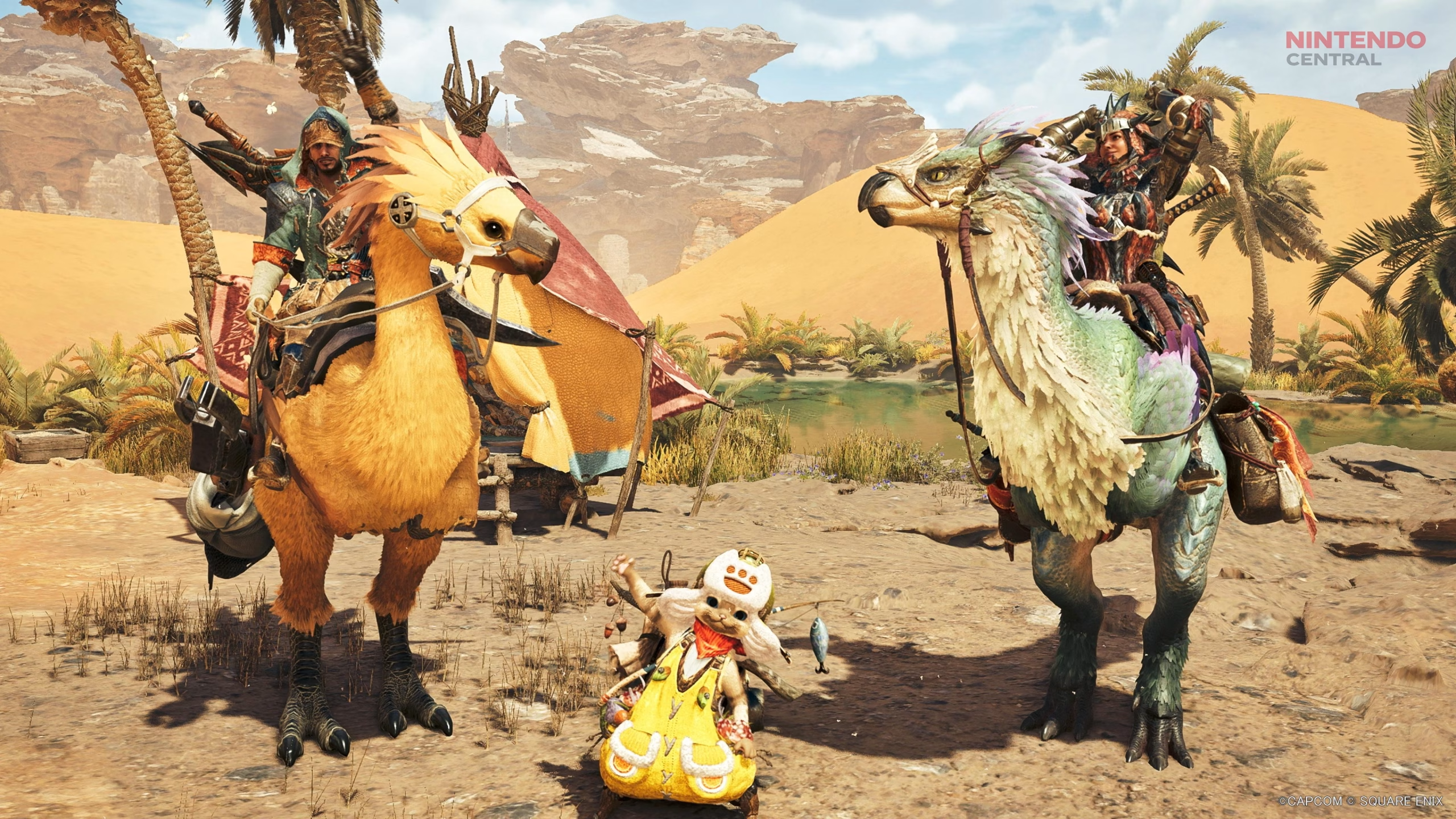
The crossover included Final Fantasy-inspired gear, Omega-themed equipment, Chocobo-inspired Seikret skins, and references to Final Fantasy XIV lore. These elements were integrated into the game world in a way that felt natural rather than forced.
TechRadar reported that Final Fantasy XIV director Naoki Yoshida explained that many developers working on Monster Hunter Wilds were active players of Final Fantasy XIV. This passion was visible in the way mechanics and visual design were handled. Omega Planetes was not simply copied into the game but reimagined to fit the Monster Hunter ecosystem.
This level of authenticity helped the collaboration feel like a genuine crossover rather than a surface-level partnership. Fans of both franchises could recognize the effort put into preserving the identity of each game.
Omega Planetes Addressed Difficulty Concerns in Wilds
Before the collaboration, one of the biggest criticisms of Monster Hunter Wilds was its relatively low difficulty. Many players felt that the game was too forgiving compared to earlier entries in the series.
Omega Planetes directly addressed this issue by introducing a much higher level of challenge. The fight required players to think carefully about positioning, react quickly to incoming mechanics, and coordinate effectively in multiplayer scenarios.
PC Gamer described the encounter as a significant difficulty spike that forced players to adapt their playstyle. Unlike standard hunts, players could not rely solely on damage output or familiar patterns. Instead, they needed to actively engage with the fight’s mechanics.
This shift was widely praised by veteran players who were looking for more challenging endgame content. It gave Wilds a sense of tension and unpredictability that had been missing for some players.
What Didn’t Work: Performance Issues Hurt the Experience
Despite its strong design, the collaboration suffered from serious technical problems at launch. Performance issues became one of the biggest talking points surrounding the update.
Reports from GamesRadar and player reviews on Steam highlighted problems such as frame rate drops, stuttering, and hardware strain. These issues were especially noticeable during the Omega Planetes fight because of its heavy visual effects and complex mechanics.
The encounter included multiple particle effects, large-scale attack indicators, and fast transitions between phases. While these elements enhanced the spectacle of the fight, they also pushed the game’s performance limits on many systems.
For some players, these issues made the fight frustrating rather than challenging. Technical instability can undermine even the best-designed content, and that was clearly the case here. Many players felt that performance improvements should have been prioritized before introducing such a demanding encounter.
MMO Mechanics Divided the Player Base
Another major point of debate was the use of MMO-style mechanics in a Monster Hunter game. While some players loved the innovation, others felt it conflicted with the core identity of the series.
Traditional Monster Hunter gameplay focuses on reading monster behavior, mastering weapon timing, and maintaining positioning through movement and stamina management. Omega Planetes introduced mechanics that required players to follow structured patterns and react to scripted events.
For Final Fantasy XIV players, this felt natural and exciting. For traditional Monster Hunter players, it sometimes felt restrictive. RPG Site noted that the fight could be controversial because it leaned heavily into MMO design rather than traditional hunting mechanics.
This difference in expectations created a clear divide within the community. Some players saw it as a refreshing evolution, while others viewed it as a departure from what makes Monster Hunter unique.
Missed Opportunities Limited the Collaboration’s Impact
Even with its strengths, the collaboration left some fans wanting more. While Omega Planetes was impressive, players expected additional content to match the scale of the crossover.
Some players felt that the collaboration could have included more armor sets, additional crossover monsters, or deeper story integration. Others pointed out that the Final Fantasy XIV side of the collaboration lacked equally impactful rewards, which made the crossover feel slightly unbalanced.
Comparisons to the Behemoth event in Monster Hunter: World also played a role in shaping expectations. That collaboration became iconic because it fundamentally changed multiplayer dynamics and introduced long-lasting content. While Omega Planetes was mechanically strong, some players felt it did not reach the same level of long-term impact.
GamesRadar also reported that fans noticed missed opportunities in reward design, which slightly reduced the excitement around the event.