Pokémon spawns are the foundation of gameplay in Pokémon GO. Every catch, shiny hunt, and event experience depends on how frequently Pokémon appear around you. While the system may seem random at first, spawn mechanics in Pokémon GO are actually influenced by several underlying factors such as location data, movement, weather, events, and in-game items.
For many players, especially those in rural areas or with limited mobility, one key question comes up repeatedly: can you increase Pokémon spawns at home? The answer is yes, but only to a certain extent and through specific legitimate methods supported by the game.
Over time, Niantic has refined spawn systems to encourage exploration while still allowing some level of stationary gameplay. Official Pokémon GO help documentation confirms that wild Pokémon appear based on real-world location data and activity patterns rather than purely random generation.
Understanding how spawns work is the key to improving encounter rates, whether you are playing from home or walking outdoors. Here is everything you need to know.
How Pokémon Spawn Points Actually Work
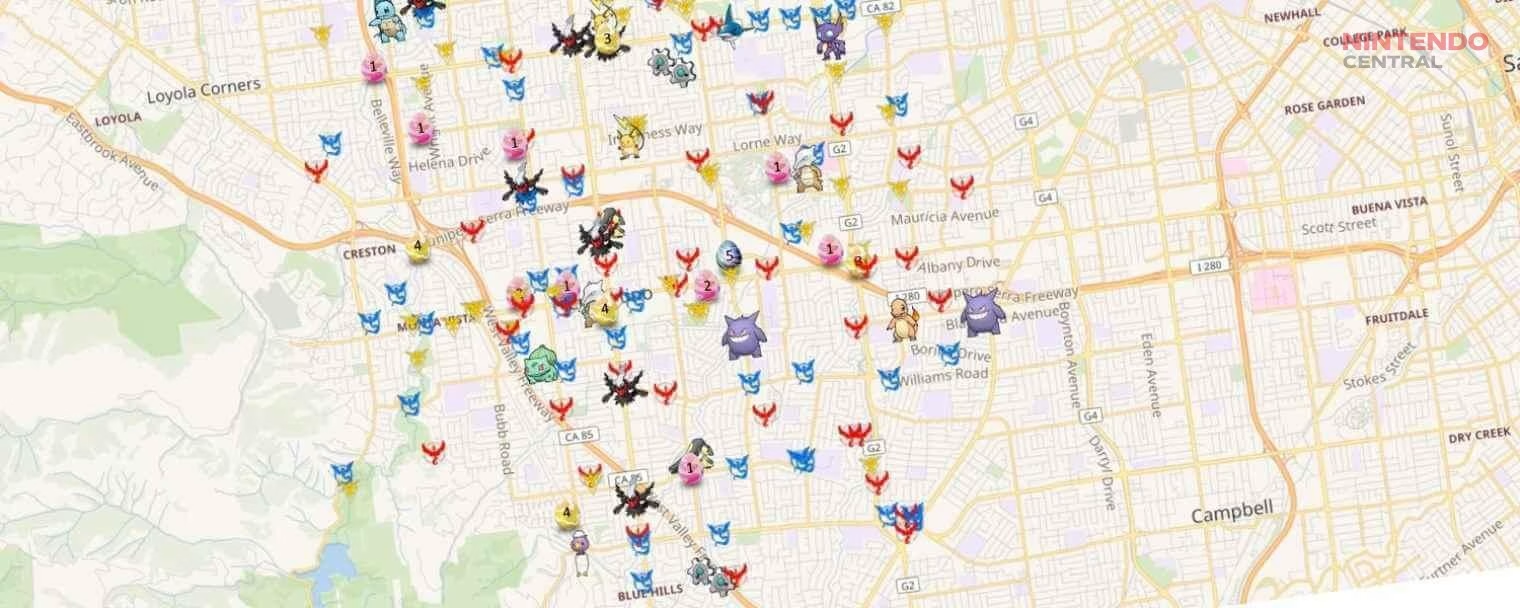
Pokémon GO uses a system of fixed spawn points mapped across real-world locations. These points are invisible to players but are based on geographic data originally derived from Niantic’s earlier AR game Ingress.
Each spawn point generates Pokémon at regular intervals, typically every 30 to 60 minutes depending on the location. Once a Pokémon appears, it remains active for a limited time before despawning.
Spawn density varies significantly depending on where you are playing. Urban areas with high player activity tend to have more spawn points, while rural areas often have fewer.
Community research over the years has shown that spawn points are influenced by historical activity data, including player movement patterns and map usage. This is why areas with frequent gameplay tend to develop stronger spawn clusters over time.
For players at home, this means your location either has spawn points or it does not. Some players naturally have multiple spawns near their house, while others may have none without additional tools.
Why Some Homes Have More Pokémon Than Others
Not all locations are equal in Pokémon GO. Some players regularly see multiple Pokémon spawning at home, while others struggle to find even one.
The main reason is map data density. Pokémon GO uses geographic information such as roads, landmarks, and player activity to determine spawn placement.
Homes located near PokéStops, Gyms, parks, or busy roads tend to have higher spawn rates. These areas are considered active zones within the game’s mapping system.
In contrast, remote or newly developed areas may have fewer spawn points because they lack historical data or player interaction.
Weather and biome systems also influence what types of Pokémon appear. While they do not increase the number of spawns directly, they affect spawn variety and frequency within certain categories.
Players cannot manually create spawn points at home, but they can influence how many Pokémon appear through other gameplay systems.
Can You Increase Pokémon Spawns at Home?
Yes, but only through legitimate in-game methods. While you cannot directly create new spawn points, you can increase the number of Pokémon appearing around you using specific tools and strategies.
The most reliable method is using Incense. Incense attracts Pokémon to your location for a limited time. According to official Pokémon GO support pages, Incense generates additional Pokémon spawns regardless of natural spawn points.
However, its effectiveness depends on movement. Players who walk while using Incense receive more frequent spawns compared to those who remain stationary.
Daily Adventure Incense is even more powerful. This version focuses on movement-based gameplay and can spawn rare Pokémon not commonly found in the wild.
Another method involves Lure Modules. If you have access to a nearby PokéStop within range of your home, placing a Lure Module significantly increases spawn rates in that area.
Events also play a major role. During Community Days, GO Fest, or seasonal events, spawn rates increase globally, making it easier to encounter Pokémon even in low-density areas.
The Role of Movement in Spawn Generation
Movement is one of the most important factors in Pokémon GO spawn mechanics.
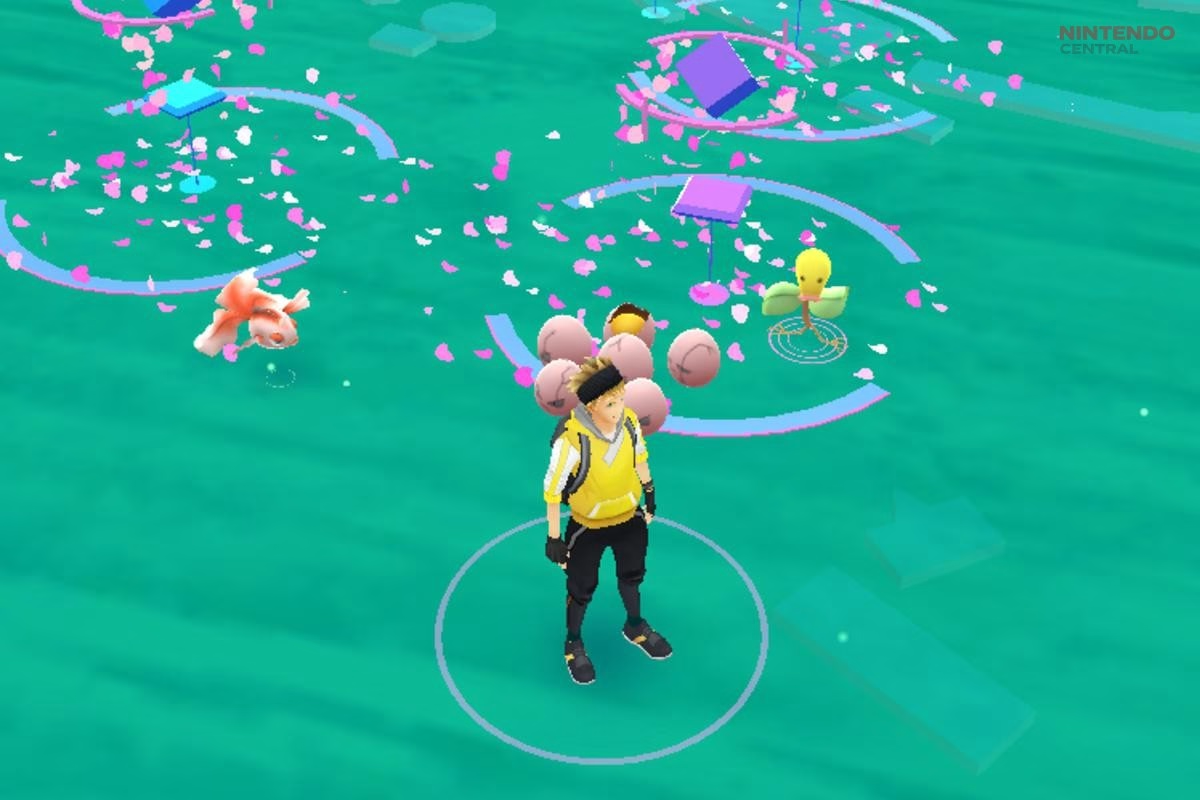
The game is designed to reward exploration, so players who walk consistently encounter more Pokémon than those who stay in one place. This is especially true when using Incense or Daily Adventure Incense.
Community research has shown that walking in straight lines produces more consistent spawn generation compared to pacing in small circles.
Driving at high speeds, however, can reduce spawn rates due to built-in safety restrictions. Pokémon GO limits gameplay features when players move too quickly to discourage unsafe behavior.
For players at home, this means that even small movements, such as walking around a house or yard, can slightly improve spawn frequency when using Incense.
While stationary gameplay is possible, it is always less efficient than active movement.
How Events and Seasons Affect Spawn Rates
Events are one of the biggest factors influencing Pokémon spawns in Pokémon GO.
During special events, spawn rates increase, and specific Pokémon appear more frequently. Community Days are the best example, where a single Pokémon dominates spawn pools for several hours.
Seasonal rotations also change which Pokémon appear in the wild. Niantic regularly updates spawn pools based on in-game seasons, which affects both variety and frequency.
Some events also boost Incense effectiveness, increase spawn duration, or introduce event-exclusive Pokémon.
Official announcements often confirm these bonuses in advance, allowing players to plan their gameplay accordingly.
For players trying to increase spawns at home, events provide the best opportunity to maximize encounters without relying entirely on natural spawn points.
Weather and Biomes Influence Spawn Quality
While weather does not directly increase spawn quantity, it significantly affects spawn quality.
Pokémon GO’s weather system boosts certain types depending on real-world conditions. For example, rainy weather increases Water-type spawns, while sunny weather boosts Fire and Grass types.
Weather boosts also increase Pokémon levels, making them stronger and more valuable for battles.
Biomes, although less visible in modern updates, still influence spawn pools. Areas near water produce more Water-type Pokémon, while parks tend to generate Grass-types.
Understanding these patterns helps players target specific Pokémon more effectively, even when playing from home.

Safe vs Unsafe Methods for Increasing Spawns
When discussing spawn increases, it is important to address safety.
Some players attempt to use spoofing or third-party apps to manipulate location data and access better spawn areas. However, these methods violate Pokémon GO’s terms of service.
Niantic has consistently enforced rules against location spoofing and unauthorized tools. Players caught using such methods risk warnings, suspensions, or permanent bans.
The safest approach is always using official features like Incense, Lures, events, and movement-based gameplay.
Community coordination through local groups and apps like Campfire can also help players find high-spawn areas without breaking rules.
The Best Strategy for Increasing Spawns at Home
For players looking to maximize spawns at home, the most effective strategy combines multiple systems.
Using Incense daily, especially Daily Adventure Incense, provides consistent additional encounters.
Playing during events ensures higher spawn density and better Pokémon variety.
If possible, positioning yourself within range of a PokéStop allows you to use Lure Modules for continuous spawn boosts.
Even small amounts of movement improve spawn rates, so walking short distances indoors or in nearby areas can help.
Most importantly, understanding that spawn systems are designed around exploration helps set realistic expectations.