Walking has always been one of the core mechanics of Pokémon GO. Unlike traditional Pokémon games, Pokémon GO encourages players to physically explore the real world to hatch Eggs, earn Buddy Candy, complete research tasks, and progress through events. Two of the game’s most important walking systems are Egg incubation and Buddy distance tracking.
Although these mechanics seem simple at first, many players still misunderstand how Pokémon GO actually measures distance. Factors like movement speed, GPS tracking, Adventure Sync, app activity, and route accuracy all affect whether your steps count toward Egg hatching and Buddy Candy progress.
Over the years, Niantic has also updated these systems with features like Adventure Sync, weekly walking rewards, and improved background tracking. These changes made walking progress much easier to maintain, even when the app is closed. Let’s break down exactly how Egg walking and Buddy distance work in Pokémon GO and what players should know to maximize their walking progress efficiently.
How Egg Walking Works in Pokémon GO
Egg hatching in Pokémon GO is based entirely on distance traveled. Players receive Eggs from PokéStops, Gifts, Team GO Rocket Leaders, Adventure Sync rewards, and special events. Once an Egg is placed inside an Incubator, walking contributes toward the distance required to hatch it.
Different Eggs require different walking distances. Standard Eggs commonly include 2 km, 5 km, 7 km, 10 km, and 12 km categories. The higher the required distance, the rarer the potential Pokémon pool usually becomes.
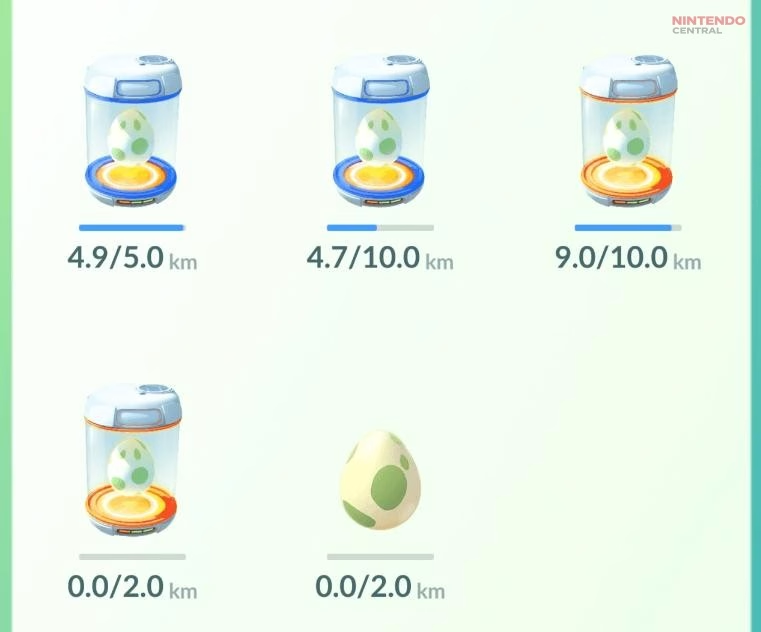
According to Niantic’s official Adventure Sync announcement, Pokémon GO tracks walking distance even when the app is inactive if Adventure Sync is enabled. This significantly changed Egg hatching because players no longer needed to keep the game constantly open while walking.
Before Adventure Sync was introduced, players had to actively keep Pokémon GO running for walking progress to count consistently. The feature now allows distance to sync through Google Fit on Android and Apple Health on iOS.
When enough distance is recorded, the Egg hatches automatically the next time the player opens the game. Players also receive Stardust, Candy, and the newly hatched Pokémon as rewards.
How Pokémon GO Measures Walking Distance
Pokémon GO primarily tracks movement using GPS location data rather than simple step counting. The game calculates the distance between one recorded location point and the next, then adds eligible movement toward Eggs and Buddy progress.
This system means accurate GPS tracking matters more than literal footsteps. Walking in areas with weak GPS signals can sometimes reduce tracked distance, even if the player physically moved much farther.
Niantic’s Help Center explains that Adventure Sync uses health app data to track movement while the game is closed. This allows Pokémon GO to import walking activity from Apple Health or Google Fit instead of relying entirely on active GPS usage.
Movement speed also affects tracking accuracy. Pokémon GO includes speed limits to prevent players from gaining walking progress while traveling in vehicles. If movement exceeds the game’s allowed speed threshold, Egg and Buddy progress may stop updating temporarily.
Community testing over the years suggests that moderate walking and jogging speeds work most reliably, while cycling or driving often causes inconsistent tracking. Exact speed thresholds are not officially detailed by Niantic, but slower movement generally produces the best results.
What Adventure Sync Actually Does
Adventure Sync became one of Pokémon GO’s most important quality-of-life features after its introduction in 2018. The system allows players to continue earning distance progress without keeping the app open constantly.
Niantic described Adventure Sync as a feature that records walking distance even while Pokémon GO is inactive. It connects directly to Apple Health or Google Fit to track movement data in the background.
This feature benefits multiple gameplay systems simultaneously. Distance recorded through Adventure Sync contributes toward Egg hatching, Buddy Candy, weekly walking rewards, and certain research tasks.
For players who walk frequently during work, school, or exercise, Adventure Sync dramatically increases efficiency. Instead of actively checking Pokémon GO during every walk, players can simply reopen the app later and receive synced progress automatically.
Adventure Sync also introduced weekly rewards tied to walking milestones. Players receive bonuses for walking 5 km, 25 km, and 50 km each week. These rewards can include Poké Balls, Stardust, Rare Candy, and special Eggs depending on the milestone achieved.
Because of these bonuses, Adventure Sync became essential for players trying to maximize both Egg hatching and Buddy Candy gains efficiently.
How Buddy Distance and Candy Work
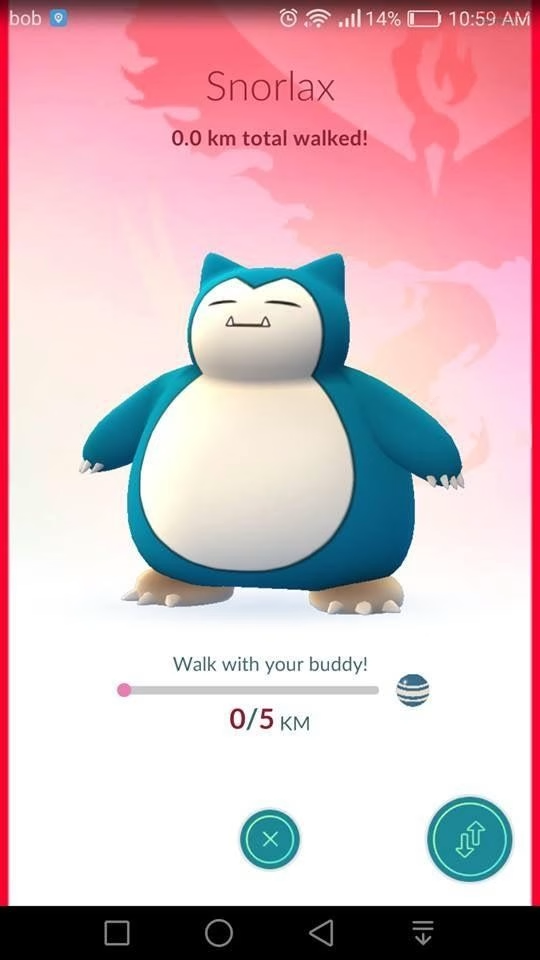
Buddy Pokémon operate using a separate but connected walking system. When a Pokémon is selected as a Buddy, players earn Candy after walking a required distance. Different Pokémon have different Buddy distance requirements.
Common Pokémon often require only 1 km or 3 km per Candy, while rarer Pokémon may require 5 km or even 20 km per Candy. Legendary Pokémon typically have the highest walking requirements.
According to Pokémon GO’s Buddy system overview from Pokémon.com, Buddy Candy allows players to evolve and power up Pokémon without relying entirely on wild catches or raids. This makes Buddy walking especially valuable for rare Pokémon with limited availability.
Buddy distance and Egg distance are tracked simultaneously. This means a player walking 5 km with an active Egg and Buddy can progress both systems at the same time.
Excited Buddy status can also reduce Candy walking requirements temporarily. When a Buddy becomes excited, the required distance per Candy is cut in half, allowing players to farm Candy much faster during active play sessions.
This mechanic is particularly useful for Legendary Pokémon or pseudo-Legendaries that normally require large walking distances.
Why Distance Tracking Sometimes Fails
One of the biggest frustrations in Pokémon GO is inconsistent distance tracking. Many players notice situations where their walking progress does not update correctly despite moving significant distances.
Several factors can cause this issue. Weak GPS signals, battery optimization settings, disabled fitness permissions, or unstable internet connections can interfere with tracking accuracy. Adventure Sync also depends on proper permissions inside Google Fit or Apple Health.
Niantic’s support documentation recommends ensuring location permissions are always enabled and verifying that health app integration is active. Background battery restrictions can also prevent Adventure Sync from updating correctly.
Another common issue involves movement speed. Pokémon GO may stop counting progress if the player moves too quickly. This is designed to discourage spoofing and vehicle-based progression.
Players often achieve the most reliable tracking by walking steadily with stable GPS connectivity and keeping fitness app permissions properly configured.
Tips to Maximize Egg and Buddy Progress
Efficient walking in Pokémon GO is less about exploiting the system and more about understanding how tracking works. Players who consistently hatch Eggs and earn Buddy Candy usually optimize their settings and routines carefully.
Adventure Sync should always remain enabled because it allows passive progress throughout the day. Keeping fitness permissions active and disabling aggressive battery-saving modes can also improve accuracy significantly.
Using Super Incubators strategically during events is another common tactic. These Incubators reduce required hatch distance, making them especially useful during Egg-focused events with boosted shiny rates or rare Pokémon pools.
For Buddy Candy farming, many players prioritize walking rare Pokémon that are difficult to raid or hatch consistently. Excited Buddy bonuses can dramatically reduce grind time when used properly.
Routes, community events, and daily walks also help players combine Egg hatching, Buddy Candy farming, and Adventure Sync rewards into one efficient gameplay loop.
Walking Remains Central to Pokémon GO’s Design
Even after years of updates, walking remains the foundation of Pokémon GO’s gameplay philosophy. Egg incubation and Buddy distance systems are designed to reward consistent exploration rather than stationary play.
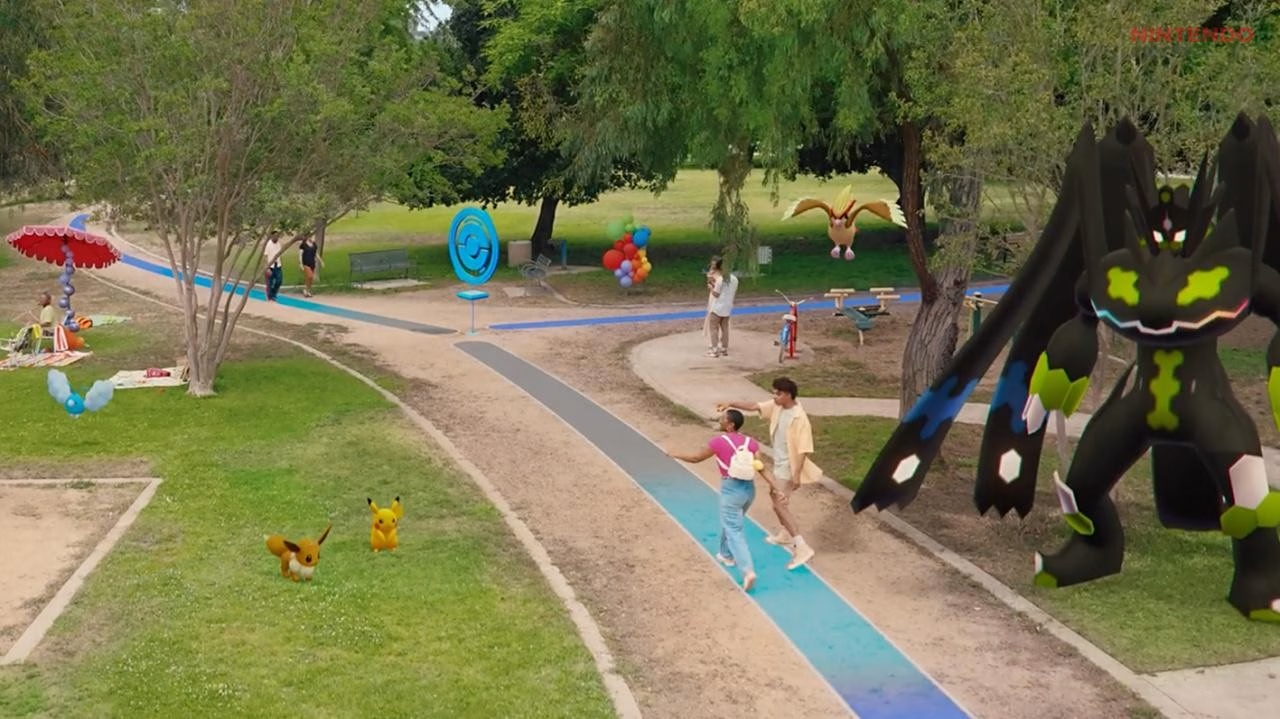
Niantic has continued expanding these systems through Adventure Sync, Routes, and walking-based events because physical movement is central to the game’s identity. Features like passive distance tracking made the experience more accessible while still encouraging outdoor activity.
Understanding how Egg walking and Buddy distance work helps players avoid tracking issues and maximize progression efficiently. Whether hatching rare Pokémon, farming Buddy Candy, or chasing weekly rewards, mastering these mechanics remains one of the most important parts of Pokémon GO today.