Baby Pokémon are some of the rarest and most collectible creatures in Pokémon GO. Unlike regular Pokémon, most Baby Pokémon cannot normally be found in the wild and are instead obtained primarily through Egg hatching. Pokémon like Riolu, Togepi, Pichu, Elekid, and Magby have remained highly desirable because of their rarity, evolutions, and shiny potential.
Since Pokémon GO launched, Baby Pokémon have played a unique role in the game’s collection system. Many evolve into powerful raid attackers or PvP Pokémon, while others are mainly valuable for Pokédex completion and shiny hunting. Because Egg pools rotate regularly during events and seasons, understanding how Baby Pokémon work is important for players trying to hatch specific species efficiently.
From Egg types and hatch distances to evolution requirements and shiny odds, Baby Pokémon mechanics can sometimes feel confusing for newer players. Let’s break down how Baby Pokémon work in Pokémon GO, which Baby Pokémon are available, how they hatch, and the best ways to evolve them.
What Are Baby Pokémon in Pokémon GO?
Baby Pokémon are pre-evolved forms of certain Pokémon species that are usually obtainable only through Eggs in Pokémon GO. Unlike standard Pokémon evolutions, Baby Pokémon sit at the beginning of special evolutionary families.
For example, Pichu evolves into Pikachu, which then evolves into Raichu. Similarly, Riolu evolves into Lucario, while Togepi evolves into Togetic and eventually Togekiss.
Pokémon GO Hub explains that Baby Pokémon in Pokémon GO are generally Pokémon that originally debuted primarily through Egg hatching rather than wild encounters. Many of them were introduced gradually during Gen 2 updates and later seasonal events.
Baby Pokémon are usually smaller, rarer, and harder to obtain than their evolved forms. Some, like Riolu, are especially valuable because their evolved versions become top-tier raid or PvP Pokémon. Others, like Pichu and Cleffa, are mainly popular among collectors and shiny hunters.
One important detail is that many Baby Pokémon cannot breed in the main Pokémon series games, reinforcing their unique role within Pokémon lore. Bulbapedia’s Baby Pokémon overview also notes that Baby Pokémon are treated as special pre-evolutions within the franchise.
Baby Pokémon Usually Hatch From Eggs
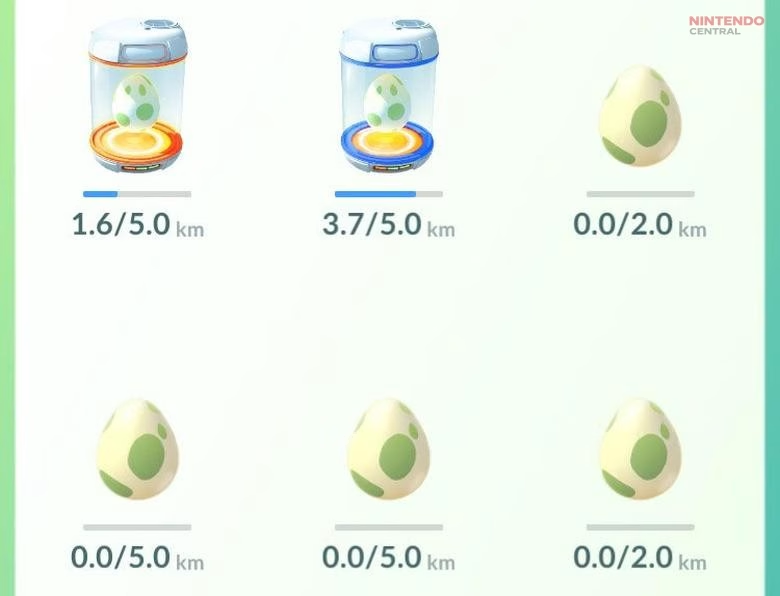
The main way to obtain Baby Pokémon in Pokémon GO is through Eggs. Different Baby Pokémon appear in different Egg pools depending on the current season, event, or rotation.
According to the Pokémon Eggs overview on the Pokémon GO Wiki, Eggs are obtained through PokéStops, Gifts, Adventure Sync rewards, and Team GO Rocket Leaders.
Historically, many Baby Pokémon have appeared in 2 km, 5 km, 7 km, or 10 km Eggs depending on the event structure. Riolu has often been tied to rarer Egg pools, which is one reason Lucario remains difficult to obtain for many players.
Some Baby Pokémon commonly associated with Eggs include:
Pichu
Cleffa
Igglybuff
Togepi
Tyrogue
Smoochum
Elekid
Magby
Azurill
Wynaut
Budew
Chingling
Bonsly
Mime Jr.
Happiny
Munchlax
Riolu
Mantyke
Egg rotations change frequently during seasonal events. Holiday events, Adventure Week, and special hatch-focused events often increase the appearance rates of specific Baby Pokémon.
Because Egg pools rotate regularly, players usually need to pay attention to event announcements if they are targeting a specific Baby Pokémon.
Riolu Is the Most Valuable Baby Pokémon for Many Players
Among all Baby Pokémon, Riolu is often considered the most valuable. That is because Lucario remains one of the strongest Fighting-type Pokémon in Pokémon GO.
Lucario performs exceptionally well in raids thanks to Counter and Aura Sphere, while also remaining highly relevant in PvP formats. Because Riolu is usually hatch-exclusive, obtaining enough Candy to evolve and power up Lucario can take significant time.
Pokémon GO Hub specifically highlights Riolu as one of the most desirable Baby Pokémon because Lucario cannot normally be found widely in the wild.
Shiny Riolu is even more valuable because hatch-exclusive shiny Pokémon are generally much harder to obtain than standard wild shinies. During special Egg hatch events, Riolu often becomes one of the most heavily hunted Pokémon in the game.
Because of Lucario’s long-term usefulness, many players prioritize hatching Riolu whenever it appears in event Egg pools.
How Baby Pokémon Evolution Works
Baby Pokémon evolve using Candy just like standard Pokémon. However, some require additional mechanics such as friendship, walking distance, or special conditions.
Most Baby Pokémon need relatively small Candy amounts for evolution. Pichu, Cleffa, and Igglybuff typically require 25 Candy, while Riolu and Munchlax require more.
Some notable Baby Pokémon evolution lines include:
- Pichu → Pikachu → Raichu
- Togepi → Togetic → Togekiss
- Riolu → Lucario
- Magby → Magmar → Magmortar
- Elekid → Electabuzz → Electivire
- Budew → Roselia → Roserade
- Munchlax → Snorlax
Several evolved forms require additional evolution items introduced in later generations. Electivire requires a Sinnoh Stone, while Togekiss also needs one alongside Candy.
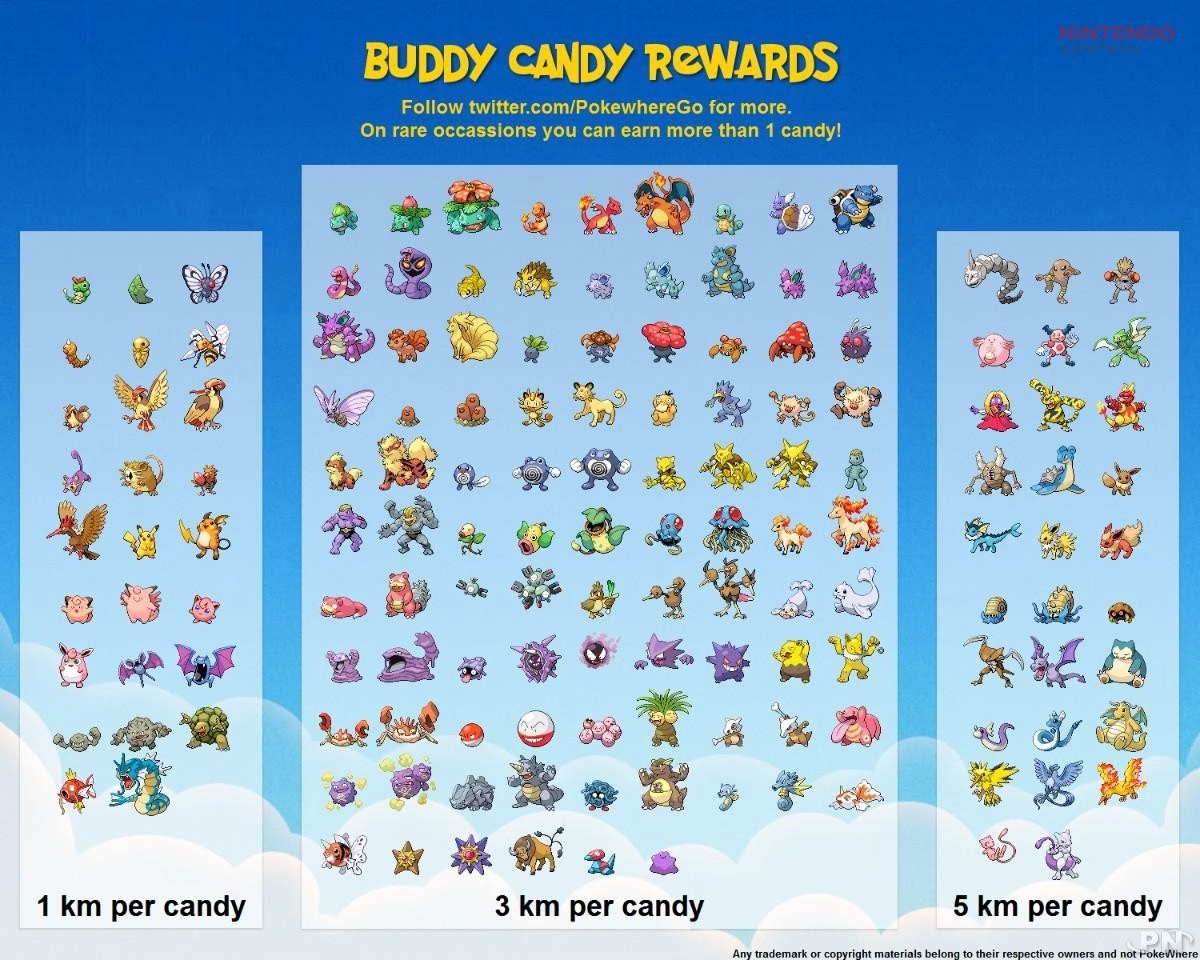
Buddy mechanics can also help players evolve Baby Pokémon faster. Walking with a Baby Pokémon as a Buddy earns Candy, which is especially useful for rare species like Riolu. Wired’s Pokémon Go egg-hatching guide noted that Buddy walking became one of the best ways to evolve rare hatch-exclusive Pokémon efficiently.
This system remains important today because some Baby Pokémon appear infrequently outside special events.
Baby Pokémon Are Important for Shiny Hunting
Baby Pokémon are highly important in Pokémon GO’s shiny hunting community because many of them have limited availability.
Unlike common wild Pokémon, Baby Pokémon are often restricted to Eggs and event pools. This automatically makes their shiny forms rarer and more desirable.
Shiny Riolu, shiny Togepi, shiny Pichu with costumes, and shiny Budew are among the most sought-after hatch-exclusive shinies in the game. Event-exclusive costume Baby Pokémon are even rarer because they may only appear for a limited time before disappearing entirely.
Because Egg hatching requires Incubators and walking distance, Baby Pokémon shiny hunts are often more resource-intensive than normal shiny hunting. Players frequently save Super Incubators specifically for hatch-focused events featuring Baby Pokémon.
This rarity is a major reason Baby Pokémon remain valuable years after their introduction. Even older Baby Pokémon still attract heavy attention whenever they return to Egg rotations.
Events Often Change Baby Pokémon Availability
One of the most important things to understand about Baby Pokémon is that their availability changes constantly. Pokémon GO rotates Egg pools frequently, meaning certain Baby Pokémon may disappear for months before returning during special events.
Holiday events, hatch events, Adventure Week, and GO Fest celebrations often feature boosted Baby Pokémon hatch rates. During these events, Niantic sometimes increases shiny chances or introduces new Baby Pokémon into Eggs temporarily.
This rotating availability is why players closely monitor event announcements before using large numbers of Incubators. Hatch-focused events can dramatically improve the chances of obtaining rare Baby Pokémon or shinies.
Certain regional Baby Pokémon, such as Mime Jr., can also be significantly harder to obtain outside specific regions or events.
Because Egg pools change regularly, long-term planning becomes important for collectors trying to complete their Baby Pokémon collection efficiently.
Are Baby Pokémon Worth Investing In?
The value of Baby Pokémon depends heavily on their evolutions. Some Baby Pokémon are mainly collectible, while others evolve into extremely powerful Pokémon.
Riolu is widely considered one of the best long-term investments because Lucario remains relevant in both raids and PvP. Togepi also evolves into Togekiss, which performs strongly in PvP formats and certain raid matchups. Budew eventually evolves into Roserade, another useful raid attacker.
Other Baby Pokémon, like Pichu or Igglybuff, are more valuable for collection purposes than competitive gameplay. Costume Baby Pokémon are especially important for collectors because of their limited-time availability.
For many players, Baby Pokémon represent a mix of rarity, nostalgia, and long-term progression. Their hatch-exclusive nature keeps them relevant even as Pokémon GO continues expanding its Pokédex.