God of War Ragnarök continues the journey of Kratos and Atreus a few years after the events of the 2018 reboot. Set during the harsh winter of Fimbulwinter, the story centers on the approaching Norse apocalypse and the role the father and son must play in it. The game leans heavily into cinematic storytelling, presenting its narrative in a seamless, unbroken camera style that enhances immersion and gives the experience a film-like quality.
The narrative is the strongest aspect of the game. Kratos and Atreus both show clear growth, not just as individuals but in their relationship with each other. Atreus moves closer to adulthood and begins to embrace his identity, while Kratos evolves beyond his past as a warrior and learns to become a more thoughtful father and ally. Their dynamic remains at the heart of the story, but the supporting cast plays a major role in enriching the experience. Characters such as Odin, Mimir, Brok, and Sindri are given depth and development, making them feel like essential parts of the world rather than simple side figures.
The storytelling succeeds because it blends emotional realism with mythological scale. Even though the setting is filled with gods, magic, and prophecy, the characters feel grounded. Their struggles, relationships, and personal conflicts resonate in a believable way. The game also offers creative interpretations of Norse mythology, which adds an extra layer of intrigue, especially for players familiar with the original myths. Many story moments are crafted in a way that encourages reflection, sometimes revealing deeper meaning only after key events unfold.
The presentation supports the narrative effectively. Voice acting is strong across the board, and the musical score enhances emotional and dramatic moments. The game frequently delivers memorable scenes that stay with the player long after they are completed. These cinematic qualities help create a sense of scale and importance throughout the journey.
While the story excels, the gameplay does not always match that level of quality. The combat system remains similar to the previous game. It still feels weighty and deliberate, focusing on timing, positioning, and control rather than fast button inputs. Kratos uses the Leviathan Axe and the Blades of Chaos, and switching between them adds a strategic layer to encounters. Companion characters like Atreus contribute actively during fights and can be upgraded with their own abilities.
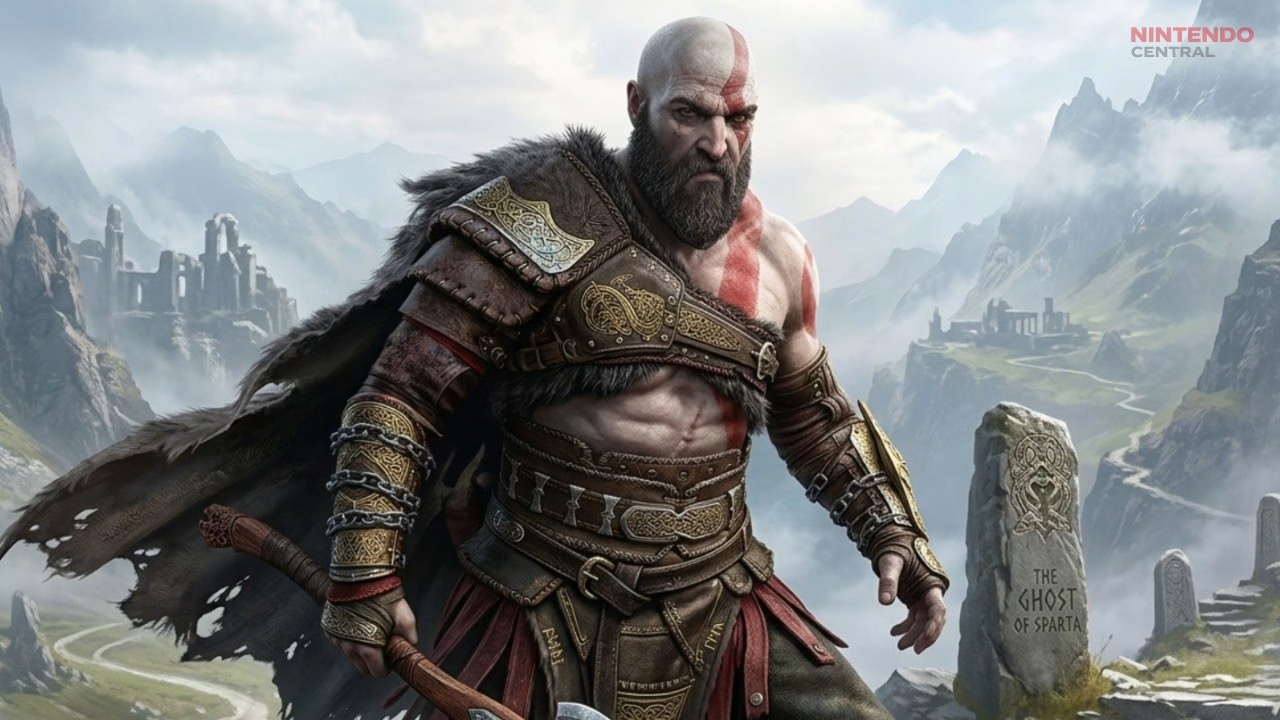
Repetitive Combat and Intrusive Puzzle Design Undermine Gameplay Depth and Player Engagement
Despite these strengths, combat can feel repetitive as the game progresses. Enemy variety is somewhat improved, but players often encounter similar types of foes repeatedly. This repetition leads to a sense of going through familiar motions rather than facing new challenges. The progression system also lacks impact. Players can upgrade armor and maintain the same set throughout the game, which reduces the feeling of growth. Changes in stats do not always feel meaningful, and acquiring new abilities can be unevenly paced.
Another issue is that the combat no longer feels fresh. Many of its mechanics were introduced in the previous game, and the sequel does little to expand or reinvent them. While the system remains solid, it does not introduce enough new ideas to maintain excitement over a long playtime. Boss fights are a notable exception, as they are cinematic, challenging, and often require players to adapt and learn patterns. These encounters stand out as some of the best gameplay moments.
The handling of puzzles is one of the most criticized elements. Puzzles are meant to provide variety and pacing, but they are often too simple and lack creativity. The larger issue is that companion characters frequently interrupt by giving hints or outright solutions almost immediately. This removes any sense of discovery or problem-solving. Instead of engaging with the puzzle, players are often told exactly what to do, which can feel frustrating and unnecessary.
The inability to turn off these hints makes the problem more noticeable. It creates the impression that the game does not trust the player to figure things out independently. This design choice reduces immersion and can make puzzle sections feel like obstacles rather than engaging challenges.
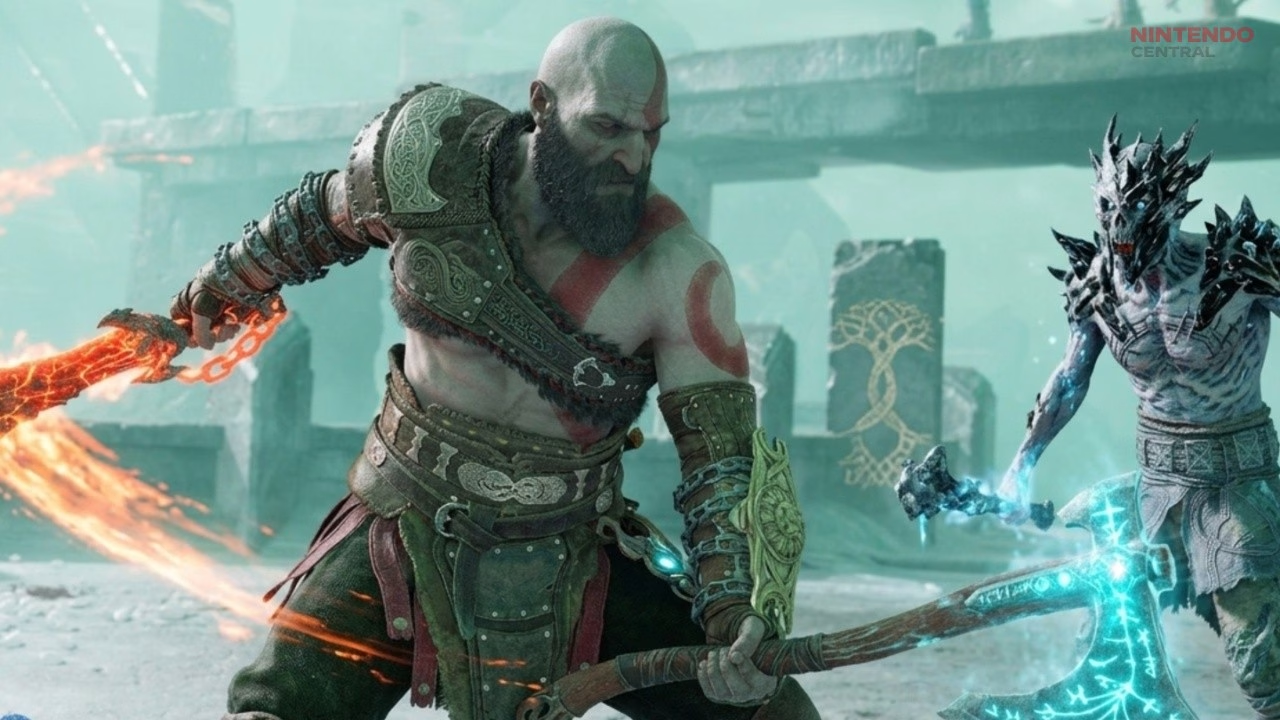
Pacing Issues and Repetitive Filler Content Weaken the Gameplay Experience Significantly
This problem connects to a broader issue with pacing and content design. Many parts of the game feel like filler placed between major story events. Puzzles, traversal sections, and some side activities exist mainly to extend playtime rather than to provide meaningful gameplay. Climbing sections, for example, often require minimal interaction, with players simply holding a direction while watching animations.
Side content adds more depth to the world and characters through additional storylines, but the gameplay tied to these activities can feel repetitive. Players often encounter the same types of puzzles and tasks, which can become tiring over time. While the narrative rewards can be worthwhile, the process of reaching them is not always enjoyable.
The world itself is visually impressive. Each realm is detailed and distinct, contributing to the sense of scale and variety. The environments are crafted with care, and the creatures and characters fit well within the mythological setting. The seamless camera presentation further enhances the experience by keeping the player continuously engaged in the world.
The game offers a large amount of content, with many hours of gameplay available through the main story and side activities. However, the quality of that content is uneven. Some sections feel meaningful and memorable, while others feel like they exist only to fill time. This imbalance can affect the pacing and make certain parts of the game feel slower than necessary.
The experience leaves a strong impression because of its narrative and presentation. The emotional moments, character development, and major story events stand out as highlights. At the same time, repetitive gameplay, lack of innovation, and intrusive puzzle hints prevent it from reaching the same level of excellence in all areas.
God of War Ragnarök delivers a powerful continuation of its story with memorable characters and cinematic storytelling. Its gameplay retains a solid foundation but struggles with repetition and limited evolution. The combination of strong narrative elements and weaker gameplay design creates a mixed experience that is both engaging and occasionally frustrating.