Even after nearly a decade of updates, Pokémon GO still experiences technical issues that regularly frustrate players. While the game has improved significantly since its unstable 2016 launch, bugs and glitches remain a consistent part of the experience. Problems such as GPS drift, raid freezes, login errors, and disappearing Pokémon continue to appear across both Android and iOS devices, especially during high-traffic events.
Many of these issues are linked to the game’s reliance on real-world GPS tracking and live server communication. Community discussions on platforms like Reddit’s The Silph Road and official Niantic support pages show that several long-running problems are still active in 2026. Niantic’s own GPS troubleshooting guide confirms that location inaccuracies and signal instability remain common, particularly in dense urban environments. These recurring issues often become more noticeable during major events when millions of players log in at the same time, placing heavy pressure on servers and systems.
GPS Drift Remains One of the Most Common Problems
GPS drift is one of the oldest and most widely reported issues in Pokémon GO. It causes the player’s in-game avatar to move even when the player is standing still. In some cases, the avatar may suddenly jump across the map before snapping back to its original position, which can disrupt gameplay and tracking accuracy.
According to Niantic’s official support documentation, GPS drift is more likely to occur in areas with tall buildings or weak signal conditions. These environments can interfere with location data, making it difficult for the game to determine a player’s exact position. Although this problem has existed since launch, it still affects many players today.
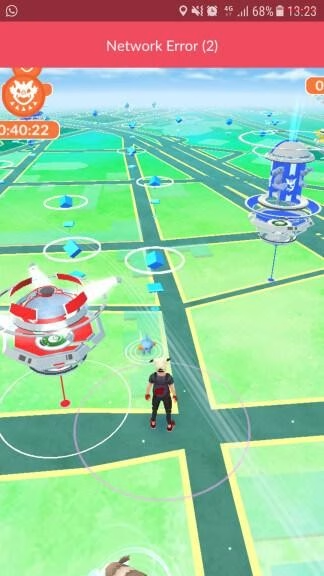
Interestingly, GPS drift has occasionally been seen as both a problem and a benefit. Some players have reported that small amounts of drift can help increase walking distance for eggs or buddy Pokémon. However, newer anti-cheat systems have made location inconsistencies more sensitive, and unusual movement patterns may sometimes trigger warnings or restrictions.
Raid Freezes and Network Errors Still Affect Battles
Raid battles are a central part of Pokémon GO, but they are also one of the most common sources of bugs. Players frequently report frozen screens, delayed damage registration, and sudden disconnections during raids, especially during major global events.
These issues are often linked to unstable internet connections or heavy server load. Community reports suggest that switching between apps or experiencing temporary signal drops can cause the game to freeze mid-battle. One of the most frustrating scenarios occurs when the game crashes after a raid boss is defeated, forcing players to restart the app before they can attempt the catch encounter.
Technical overviews of Pokémon GO have repeatedly highlighted server instability as a long-standing challenge for the game. Large-scale events place significant strain on servers, which can lead to delays, lag, or crashes. While Niantic has improved server performance over the years, raid-related bugs still appear during peak activity periods.
Loading Screen Issues and Login Errors Continue to Appear
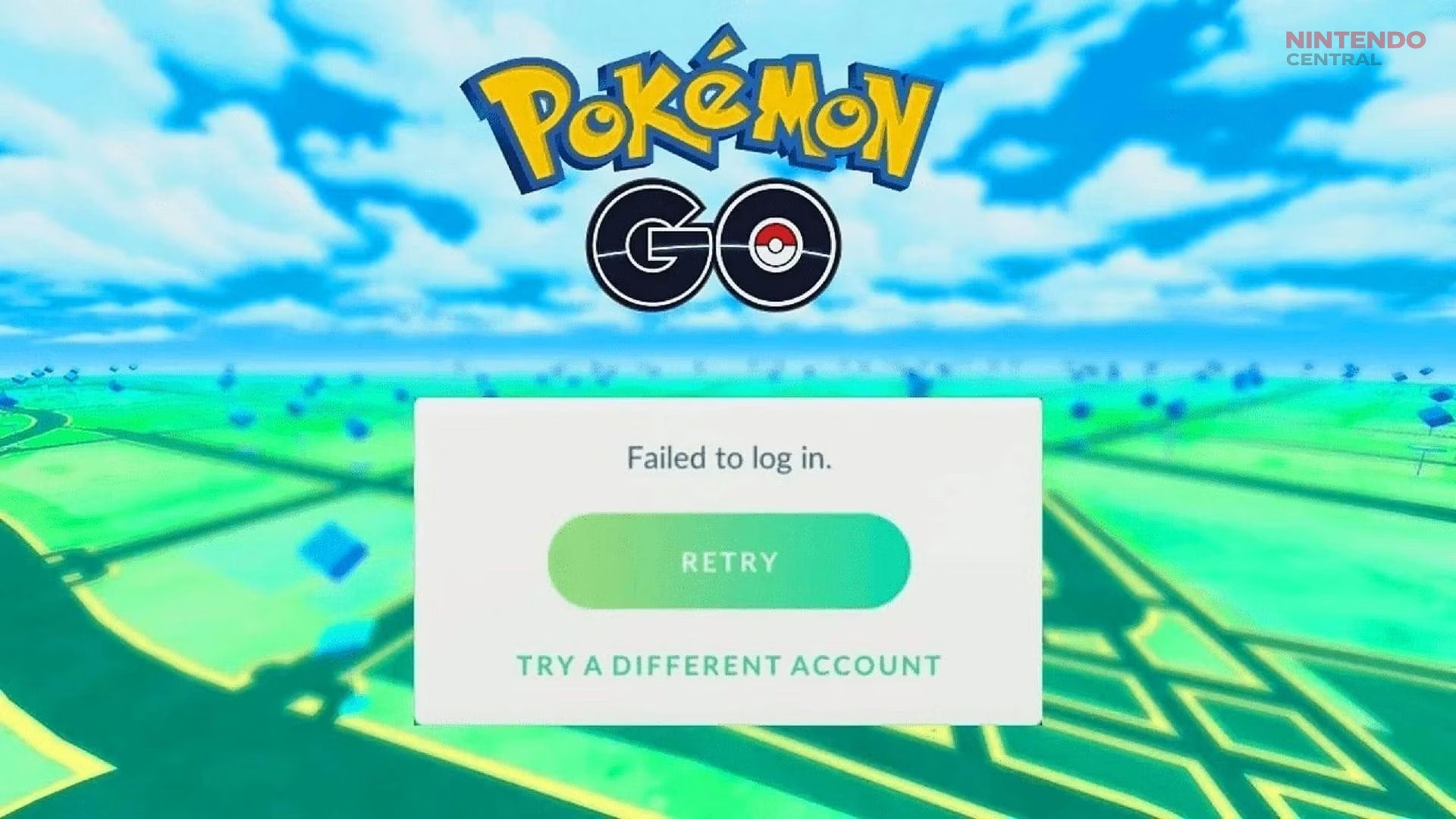
Loading screen freezes and login errors are another set of issues that continue to affect players. Some users find themselves stuck on the loading screen indefinitely, while others encounter authentication failures when trying to log in.
These problems often occur during major updates or seasonal events when large numbers of players are attempting to access the game at the same time. Troubleshooting guides suggest that corrupted cache data, outdated app versions, or server congestion are common causes of these issues.
In some cases, device performance also plays a role. Pokémon GO uses GPS, mobile data, and background processes simultaneously, which can strain certain devices. Overheating or limited memory can cause the app to crash or fail to load properly, especially during long play sessions.
Restarting the app, updating to the latest version, or clearing cached data usually resolves these problems, but server-related issues may still require players to wait until stability improves.
Visual Glitches Still Appear Across the Game
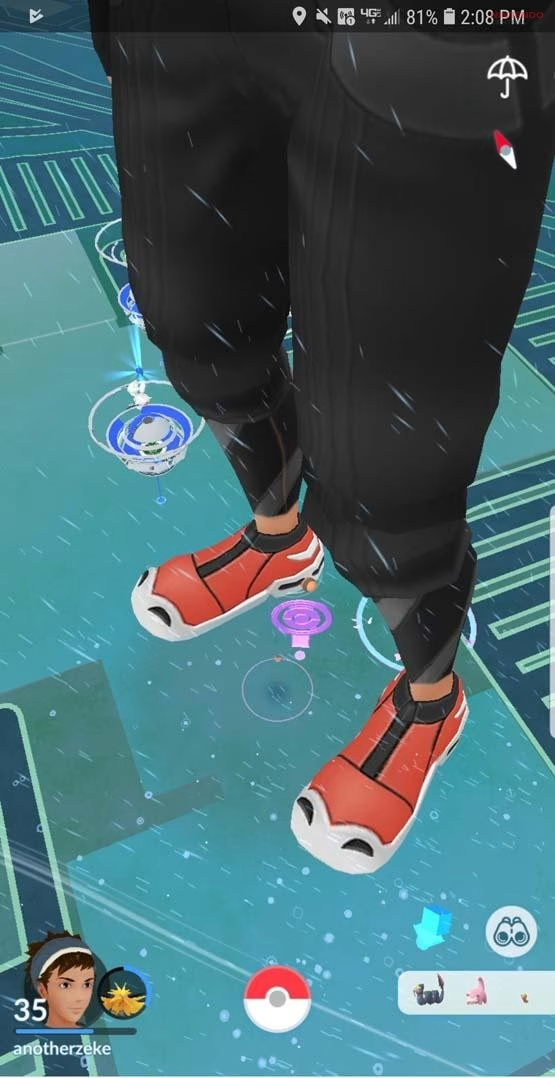
Visual glitches are less severe than gameplay-breaking bugs, but they still affect the experience. These issues can include invisible Pokémon, distorted avatars, overlapping menus, and frozen animations during encounters or battles.
Some visual bugs have become part of Pokémon GO’s history. The early “three-step tracking glitch” is one of the most famous examples, as it completely disrupted the nearby tracking system shortly after launch. Although that specific issue has been resolved, modern versions of the game still experience occasional rendering problems.
Most visual glitches are temporary and can be fixed by restarting the app. However, they can still be frustrating during important moments, such as catching a rare Pokémon or participating in a raid.
Spawn and Tracking Problems Still Frustrate Players
Spawn-related issues continue to be a common complaint among players. Sometimes Pokémon disappear immediately after being tapped, while other times nearby Pokémon fail to load correctly. These problems are often tied to GPS inaccuracies or unstable internet connections.
Niantic’s support documentation explains that poor location accuracy can interfere with spawn detection. If the game cannot accurately determine a player’s position, it may fail to generate or maintain Pokémon encounters properly.
Another related issue is speed-locking, where the game restricts interactions if it detects movement that appears too fast. However, GPS errors can sometimes trigger these restrictions even when the player is stationary, leading to missed encounters or blocked gameplay actions.
These problems become especially frustrating during limited-time events when every encounter matters. Even short disruptions can impact a player’s ability to complete research tasks or find rare Pokémon.
Event Updates Often Introduce New Bugs
One consistent pattern in Pokémon GO is that major updates often introduce new bugs. Seasonal events frequently modify core systems such as spawns, raids, and research tasks, which can unintentionally create technical issues.
Players often notice new problems immediately after updates go live. Community discussions typically highlight issues such as broken research tasks, incorrect spawn behavior, or temporary glitches in event features. While Niantic usually releases fixes quickly, some bugs can remain active for several days.
Despite these challenges, players continue to participate in events because of the rewards and exclusive content they offer. The live-service nature of Pokémon GO means that frequent updates are necessary, even if they occasionally introduce new problems.
Why Bugs Continue to Exist in Pokémon GO
Pokémon GO is a technically complex game that combines GPS tracking, real-time multiplayer systems, and live event updates. This combination makes it more difficult to maintain stability compared to traditional mobile games.
The game constantly processes location data, server communication, and player interactions simultaneously. Any disruption in these systems can result in glitches or performance issues. Large-scale events further increase the risk of instability because of the massive number of players accessing the game at once.
While Niantic continues to improve performance and fix issues, the nature of the game makes it unlikely that bugs will ever be completely eliminated.