When Diablo Immortal launched in 2022, it immediately became one of the most controversial games in modern gaming. On one hand, players praised its combat, visuals, smooth controls, and surprisingly polished adaptation of the Diablo formula to mobile devices. On the other hand, the game sparked massive backlash over its monetization systems, with critics accusing it of being aggressively pay-to-win.
The controversy surrounding Diablo Immortal quickly spread beyond the Diablo community. Discussions about Legendary Gems, Resonance, Elder Rifts, and microtransactions dominated gaming conversations for months after release. Some players argued that the game remained enjoyable without spending money, while others believed its progression systems were intentionally designed to pressure players into spending hundreds or even thousands of dollars.
Years later, the debate still continues. Diablo Immortal remains financially successful and maintains an active player base, but the criticism around its monetization has never fully disappeared. The key question now is whether the game’s pay-to-win mechanics are genuinely ruining the experience or whether the controversy has been exaggerated compared to other mobile RPGs.
Diablo Immortal’s Core Gameplay Is Widely Praised
One reason Diablo Immortal’s monetization became such a heated topic is because many players genuinely enjoyed the core gameplay. Combat feels fast, responsive, and visually impressive, especially for a mobile title.
Critics and players alike frequently praised the game’s presentation and gameplay systems at launch. IGN’s review noted that Diablo Immortal “feels great to play” and highlighted the game’s strong touch controls and satisfying combat mechanics.
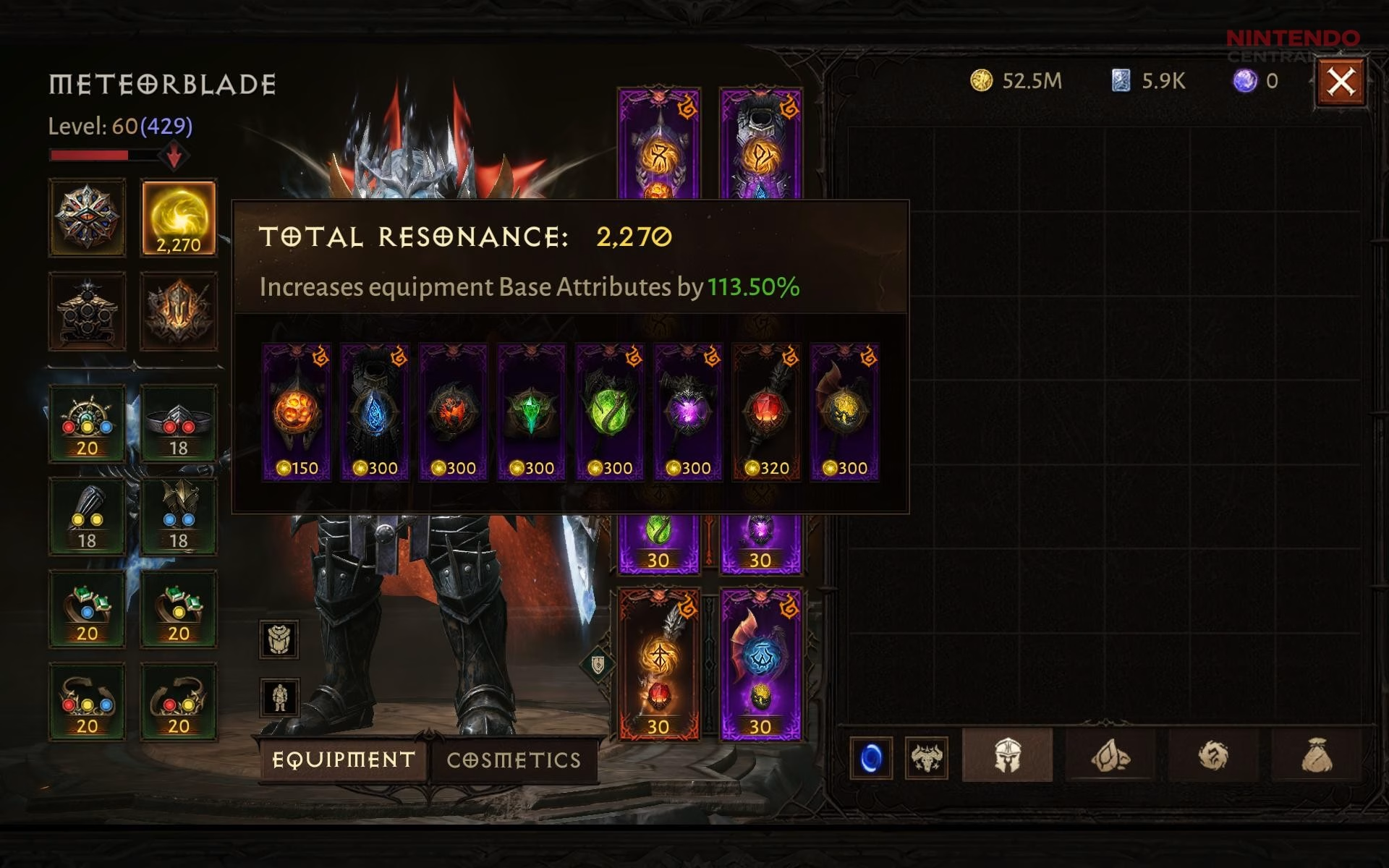
Even some players heavily critical of the monetization admit that the underlying game itself is strong. The dungeon design, class variety, progression systems, and social mechanics successfully capture much of what makes Diablo addictive.
This is important because Diablo Immortal would likely not have generated such intense backlash if the gameplay itself were poor. The controversy became larger precisely because many players felt the monetization was attached to a genuinely enjoyable action RPG.
The game also succeeded commercially despite criticism. Blizzard confirmed Diablo Immortal became the largest launch in franchise history shortly after release. Forbes later reported on the game surpassing 10 million downloads despite the monetization backlash.
This combination of strong gameplay and controversial monetization created the central conflict surrounding Diablo Immortal’s reputation.
Legendary Gems Became the Center of the Pay-to-Win Debate
The biggest criticism of Diablo Immortal focuses on Legendary Gems and Resonance. These systems significantly affect character power, especially in endgame content and PvP.
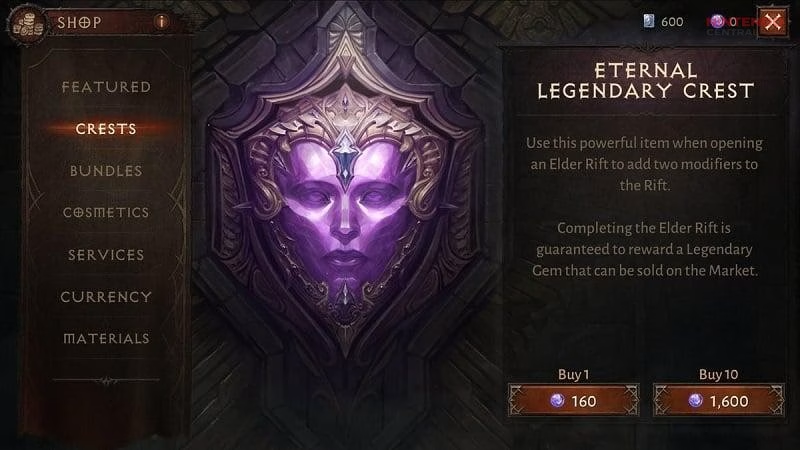
Legendary Gems can be upgraded to dramatically increase player stats, but obtaining the best versions often requires Legendary Crests tied heavily to premium spending. Multiple analyses and community breakdowns concluded that spending money provided enormous progression advantages.
The Washington Post’s analysis of Diablo Immortal’s monetization explained that the pay-to-win concerns extend beyond simple cosmetic purchases, with players able to purchase systems that directly increase combat power.
This is where much of the frustration originates. Diablo has traditionally been a franchise centered around grinding loot through gameplay. Diablo Immortal changed that formula by tying some of the most powerful progression systems to monetized mechanics.
Community discussions on Reddit repeatedly highlighted how Resonance creates massive power gaps between spenders and free-to-play players. Some players argued that competitive PvP becomes heavily skewed toward high spenders because their stats scale far beyond what free players can realistically achieve.
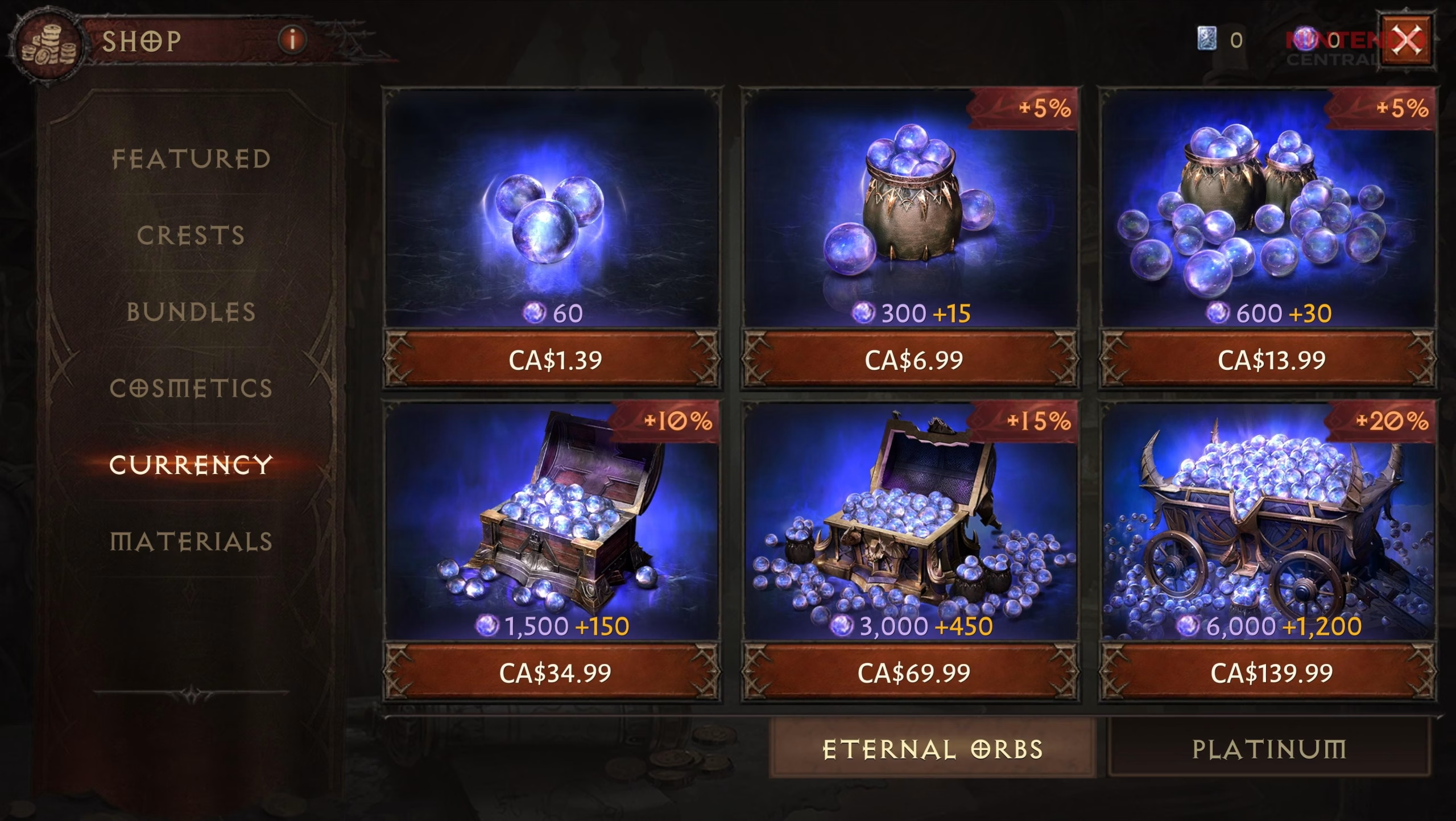
The issue is not simply that players can spend money. Many online games include microtransactions. The controversy comes from the perception that spending money directly translates into meaningful combat advantages.
PvP Is Where Pay-to-Win Problems Become Most Visible
Many players argue Diablo Immortal’s monetization feels most damaging in PvP modes.
In PvE content, free-to-play players can still complete much of the game through grinding and careful progression. Endgame dungeons, events, and story content remain accessible without major spending. However, PvP introduces direct competition between players with vastly different levels of paid progression.
This creates situations where high spenders, often referred to as “whales,” can dominate competitive modes through stat advantages tied to Resonance and upgraded Legendary Gems.
Reports highlighted cases of players spending enormous amounts of money to maximize character strength. Discussions around YouTubers and streamers spending tens of thousands of dollars became symbolic of Diablo Immortal’s monetization controversy. Multiple outlets reported calculations estimating extremely high costs for fully maxing out characters.
The PvP imbalance also affects perception. Even players who personally avoid spending may still feel frustrated when competitive modes appear strongly influenced by paid progression.
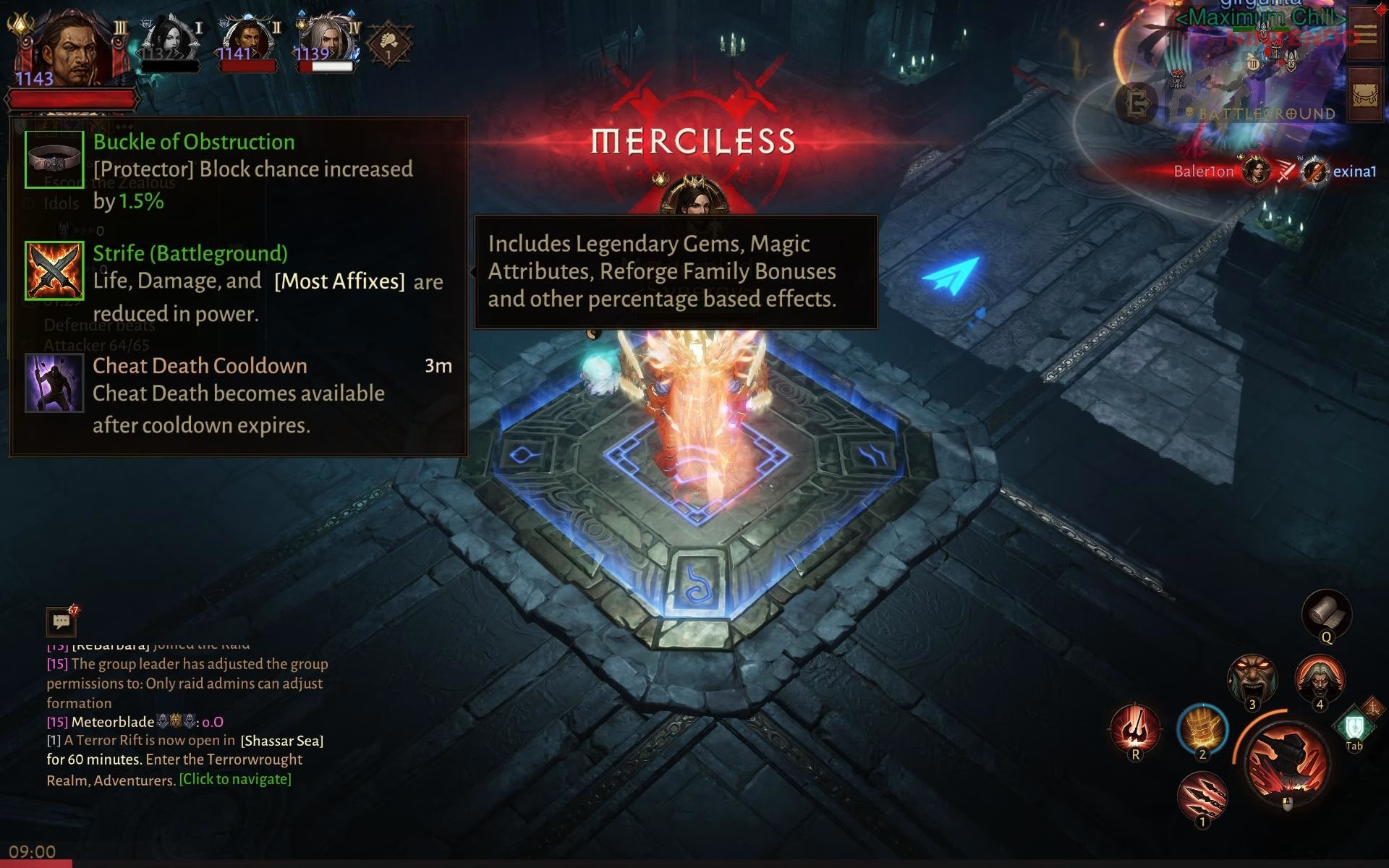
This issue became especially visible in Battleground matchmaking. Stories circulated about ultra-high-spending players becoming difficult to match because of their overwhelming power levels.
For many players, this crosses the line from “pay for convenience” into clear pay-to-win territory.
Blizzard Defended the Monetization Structure
Blizzard has repeatedly defended Diablo Immortal’s monetization approach. Company representatives emphasized that the campaign and core gameplay can be experienced without spending money.
Mike Ybarra, Blizzard’s former president, stated that “the monetization comes in at the end game,” arguing that most players could enjoy substantial portions of the game for free.
This defense reflects Blizzard’s broader argument that Diablo Immortal follows standard free-to-play mobile game practices rather than forcing purchases immediately.
And to some extent, this argument is valid. Many free players have reported enjoying the story, leveling experience, and casual gameplay without spending heavily. Some Reddit discussions even argue the game is more accurately “pay-to-progress-faster” rather than strictly pay-to-win.
However, critics argue that the distinction becomes meaningless when endgame systems and competitive modes strongly favor spending.
The monetization controversy therefore depends heavily on how players define “winning.” Casual PvE players may not feel heavily affected, while competitive players often experience the system very differently.
Diablo Immortal Reflects Larger Mobile Gaming Trends
Part of Diablo Immortal’s controversy comes from the fact that it introduced aggressive mobile monetization into a franchise historically associated with premium PC gaming.
Axios described the game as Blizzard’s first major Diablo experience “festooned” with the types of monetization systems common in mobile gaming.
For longtime Diablo fans, this represented a major cultural shift. Mobile free-to-play monetization systems already existed across countless games, but seeing them attached to Diablo created stronger emotional reactions.
This is why some players argue Diablo Immortal itself is not uniquely predatory compared to other mobile RPGs. Instead, it exposed how normalized aggressive monetization has become within mobile gaming.
At the same time, Diablo Immortal’s success demonstrated why publishers continue using these systems. Despite criticism, the game generated enormous revenue and maintained strong player engagement. Reports discussing the game’s earnings showed how profitable these monetization models can become.
This financial success likely reinforced concerns among players worried about the future direction of AAA gaming monetization.
Some Players Believe the Backlash Is Overstated
Not every Diablo Immortal player believes the game is ruined by pay-to-win mechanics.
Some players argue that free-to-play progression remains entirely possible if expectations are realistic. Casual PvE-focused players can still complete dungeons, participate in events, and experience new updates without spending heavily.
Others point out that nearly all major mobile RPGs contain monetization systems tied to progression. Compared to certain gacha games, some players even consider Diablo Immortal relatively standard for the genre.
This perspective often comes from players who primarily focus on PvE or social gameplay rather than competitive PvP rankings.
There is also an argument that the internet backlash exaggerated the average player experience by focusing mainly on extreme spending examples. Most players are not trying to max out characters or dominate PvP ladders fully.
Still, even many defenders of the game acknowledge that the monetization systems are extremely aggressive. The disagreement is usually about whether those systems fundamentally destroy the experience or merely limit competitive fairness.
The Controversy Has Lasted Longer Than Expected
One reason Diablo Immortal remains controversial years later is that the monetization debate never truly disappeared.
Additional concerns emerged over time involving hidden progression caps, third-party currency issues, and investigations into monetization practices. Reuters reported in 2026 that Italy’s competition authority investigated Activision Blizzard over allegedly aggressive sales practices tied to Diablo Immortal and other mobile games.
These ongoing controversies kept public attention focused on the game’s business model rather than purely its gameplay updates.
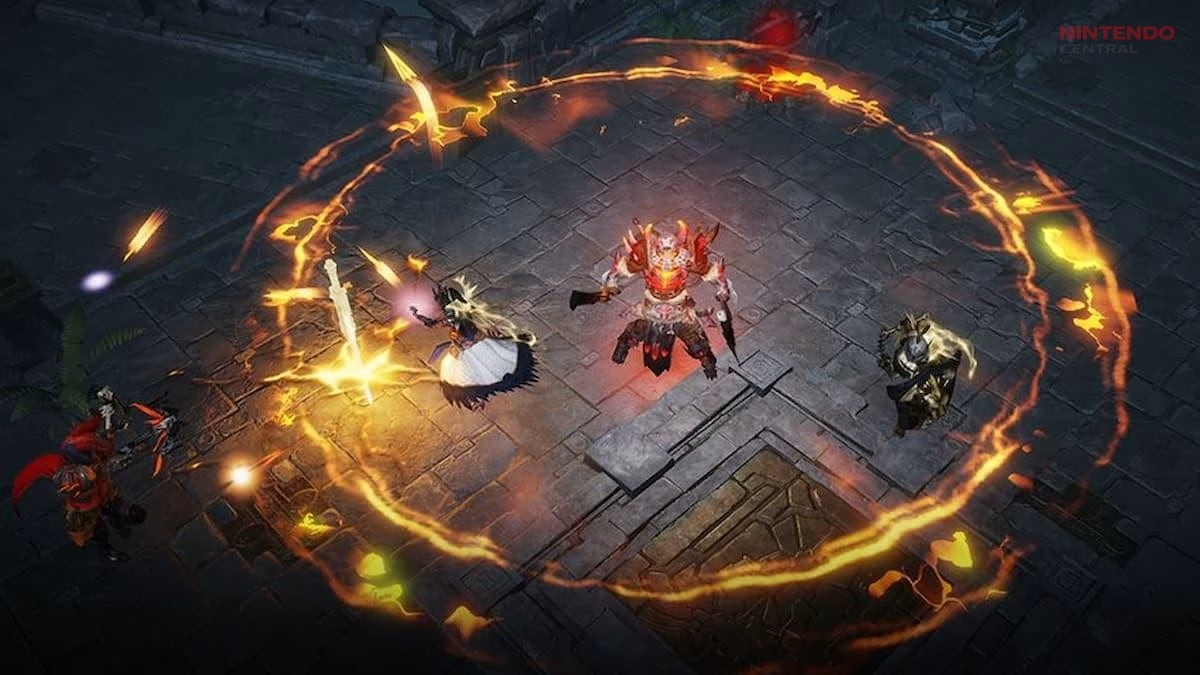
At the same time, Blizzard continued supporting the game with new content, classes, zones, and seasonal updates. This created an unusual situation where Diablo Immortal remained both commercially successful and deeply controversial simultaneously.
The game essentially became a symbol of modern live-service monetization debates across the gaming industry.
So, Are Pay-to-Win Mechanics Ruining Diablo Immortal?
The answer depends heavily on what players want from Diablo Immortal.
For casual players interested mainly in PvE gameplay, story content, and occasional grinding, Diablo Immortal can still be an enjoyable action RPG without major spending. The combat, visuals, and core gameplay systems remain genuinely strong.
However, for competitive players focused on PvP and endgame optimization, the pay-to-win concerns are difficult to ignore. Systems tied to Legendary Gems, Resonance, and paid progression create clear advantages for spenders, especially at higher levels of play.
The larger issue is not simply that Diablo Immortal contains microtransactions. It is those systems that directly affect player power in ways that many fans feel clash with Diablo’s traditional design philosophy.
Ultimately, Diablo Immortal is both a genuinely good action RPG and one of the most controversial monetization experiments in modern gaming. The game proves that strong gameplay can coexist with aggressive monetization, but it also shows how quickly player trust can erode when progression systems appear tied too closely to spending.